The first bath at home can feel surprisingly high stakes. You are holding a tiny, wiggly baby, protecting a healing belly button, and trying to remember whether the water is too warm, too cool, or simply too much for today. If you are asking, when should newborns avoid tubs, the short answer is: during the umbilical-cord healing stage and any time a full bath is not the safest or simplest choice.
A tub bath is not required for a clean, comfortable newborn. In the first days and weeks, gentle spot cleaning and sponge bathing are often the better fit. No tub, no stress, just love – with a little practical preparation.
When should newborns avoid tubs?
Most babies should have sponge baths until the umbilical cord stump falls off and the area has healed. This commonly happens within the first one to three weeks, though every baby has their own timeline. Keeping the cord area clean and dry helps it heal naturally, while soaking it in a tub can leave the area damp longer than necessary.
During this period, clean your baby’s face, neck, hands, diaper area, and skin folds as needed. You do not need to scrub. Newborn skin is delicate, and a gentle wipe-down is usually plenty. Focus on the places milk, spit-up, sweat, and diaper messes collect: under the chin, behind the ears, in neck rolls, under the arms, around the thighs, and between little fingers and toes.
A newborn should also avoid a standard tub bath if a clinician has given specific instructions after a procedure or because of a medical concern. For example, circumcision care, a healing skin condition, prematurity, or a baby who has difficulty maintaining body temperature may call for a different bathing plan. Follow your pediatric clinician’s instructions over general advice.
If the cord area becomes increasingly red, swollen, tender, foul-smelling, or starts draining pus, call your baby’s health care provider. The same applies if your newborn has a rectal temperature of 100.4 F or higher. A bath cannot treat illness, and a fever in a newborn deserves prompt medical guidance.
Why sponge baths make sense in the newborn stage
A full bath is not automatically harmful once it is done safely, but it has trade-offs. Newborns get cold quickly, and managing wet skin, slippery hands, and bathwater can feel especially difficult when you are recovering from birth, short on sleep, or caring for baby alone.
Sponge bathing lets you uncover and clean one small area at a time, then cover it again. That helps preserve warmth and makes the process more manageable. It also gives you a close look at your baby’s skin, including dry patches, milk rash, or irritation hiding in a fold.
For many families, the practical concern is not whether a tub is available. It is whether a tub bath is realistic right now. At 2 a.m. after a diaper blowout, after a big spit-up episode in the car seat, or at Grandma’s house without your usual setup, a careful no-rinse clean-up can be exactly what the moment calls for.
How to clean a newborn without a tub
Choose a warm, draft-free spot and gather what you need before undressing your baby. A flat, stable surface is essential. Keep one hand on your baby at all times, even for a quick clean-up. Never place a baby on a changing table, bed, couch, or counter unattended.
Start with the cleanest areas and move toward the diaper area. Use a soft, clean cloth lightly dampened with warm water, or a no-rinse bathing cloth made specifically for head-to-toe baby cleansing. Use gentle strokes. There is no need to rinse a newborn repeatedly or use scented products that can irritate sensitive skin.
For a simple routine, clean the face first without soap around the eyes. Then move to the neck, ears, hands, arms, chest, back, legs, and skin folds. Save the diaper area for last, wiping front to back for girls. Pat each area dry, especially folds, before putting on a fresh diaper and clean clothes.
The umbilical stump needs a lighter touch. Keep it dry and exposed to air as much as practical. If urine or stool gets on it, gently clean away the mess and pat the area dry. Do not pull the stump, even when it is hanging by a thread. It will fall off on its own.
Baby Batherz® no-rinse bamboo bathing cloths are designed for these in-between moments: a full, gentle clean without a tub, sink, or separate water source. Made with 99% purified water, aloe, vitamin E, and coconut soap without fragrances or harsh chemicals, the extra-thick cloth can help parents clean from head to toe while keeping newborn care calm and simple.
A gentle four-step no-tub bath
- Warm the room and place your supplies within reach. If you prefer a warmer cloth, follow the package warming instructions carefully and always test the temperature on your wrist first.
- Keep your baby wrapped in a towel or blanket, uncovering one area at a time to prevent chilling.
- Clean gently from face to feet, paying close attention to milk and moisture trapped in skin folds.
- Pat skin dry, put on a clean diaper and clothes, and check that the cord stump remains dry.
When a tub bath becomes a good option
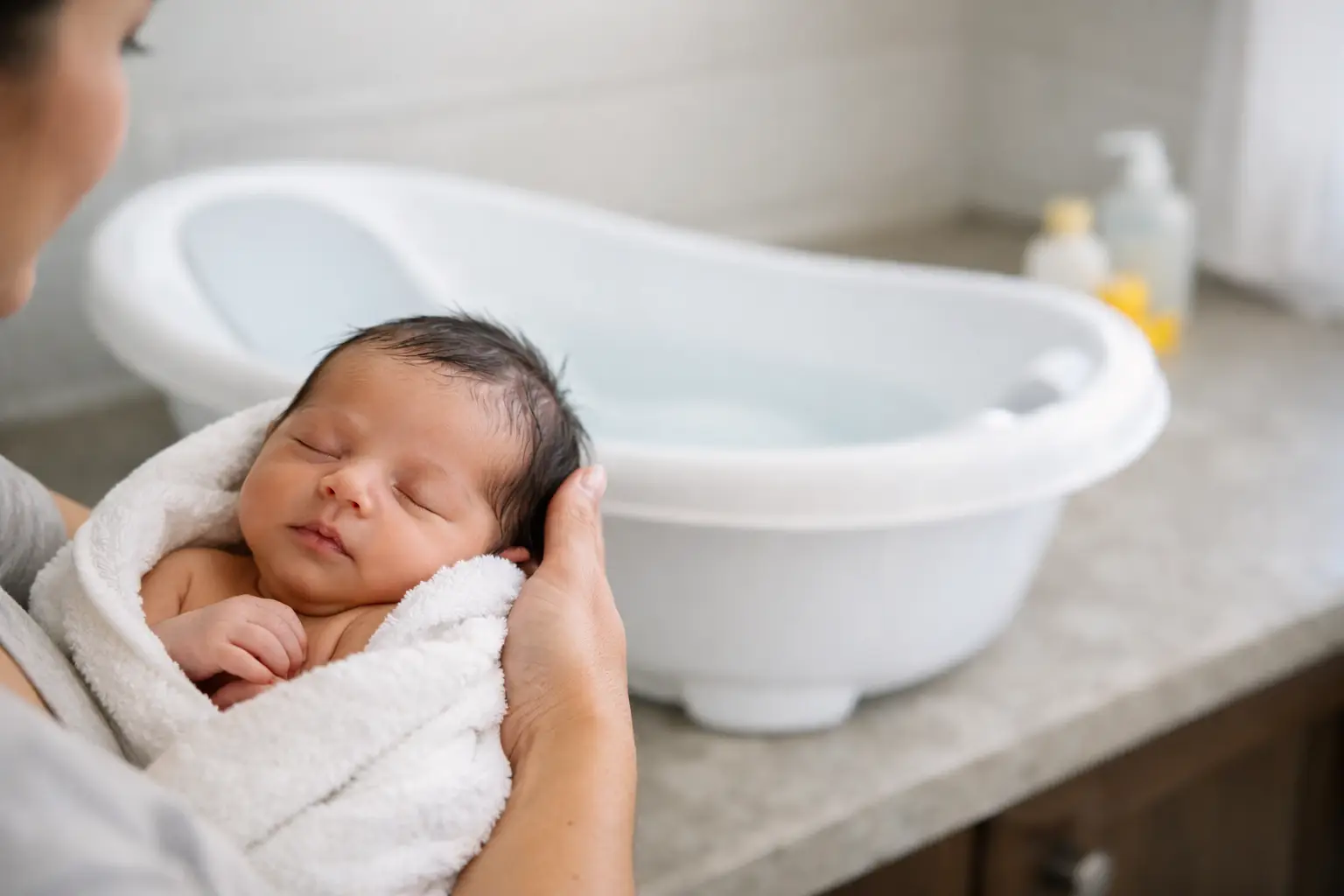
Once the cord stump has fallen off and the belly button is healed, many babies can begin brief tub baths. Your pediatric clinician can confirm the right timing if you are uncertain, especially if the cord area looked irritated or took longer to heal.
Start slowly. A small infant tub or clean sink basin can be easier to control than a large bathtub. Use only a few inches of comfortably warm water, not hot water. Test it with your wrist or elbow before baby goes in. Bathwater should feel warm, never hot, and the room should be comfortably warm too.
Keep the bath short – often five to 10 minutes is enough. Too much bathing can dry newborn skin, particularly in winter or in homes with dry indoor air. Two or three baths a week is generally enough for many young babies, with spot cleaning in between. Babies who have frequent spit-up, diaper leaks, or warm-weather sweating may need more frequent cleansing in specific areas, not necessarily more full baths.
Never leave a baby alone in water, not even for a second. If the doorbell rings, your phone buzzes, or you realize the towel is across the room, wrap your baby in a towel and take them with you. A bath seat or infant insert can support your hands, but it is not a substitute for an adult’s touch and full attention.
Real-life moments when skipping the tub is smart
Even after the cord heals, there will be days when a tub bath is more trouble than help. Postpartum recovery is one of them. If you are sore, healing from a C-section, managing bleeding, or simply exhausted, lifting and leaning over a tub can be uncomfortable. Your partner, a grandparent, or another support person can take over a quick no-tub clean-up while you rest nearby.
No-tub bathing is also useful after a messy feeding, during travel, on an overnight visit, or when your toddler comes home coated in sand, sunscreen, and playground grime. A traditional bath can wait when the goal is simply getting baby comfortable, clean, and back to sleep.
That is why a practical newborn care basket can be more helpful than another tiny outfit. Include clean diapers, a soft towel, diaper cream, extra onesies, and gentle bathing cloths. It is a thoughtful baby shower, hospital, or new-grandparent gift because it supports the moments families do not always plan for.
Your baby does not need a picture-perfect bath routine to be well cared for. They need warmth, clean skin, a dry healing cord, and a calm adult close by. On the days a tub works, enjoy it. On the days it does not, a gentle head-to-toe clean can still be exactly the care your baby needs.