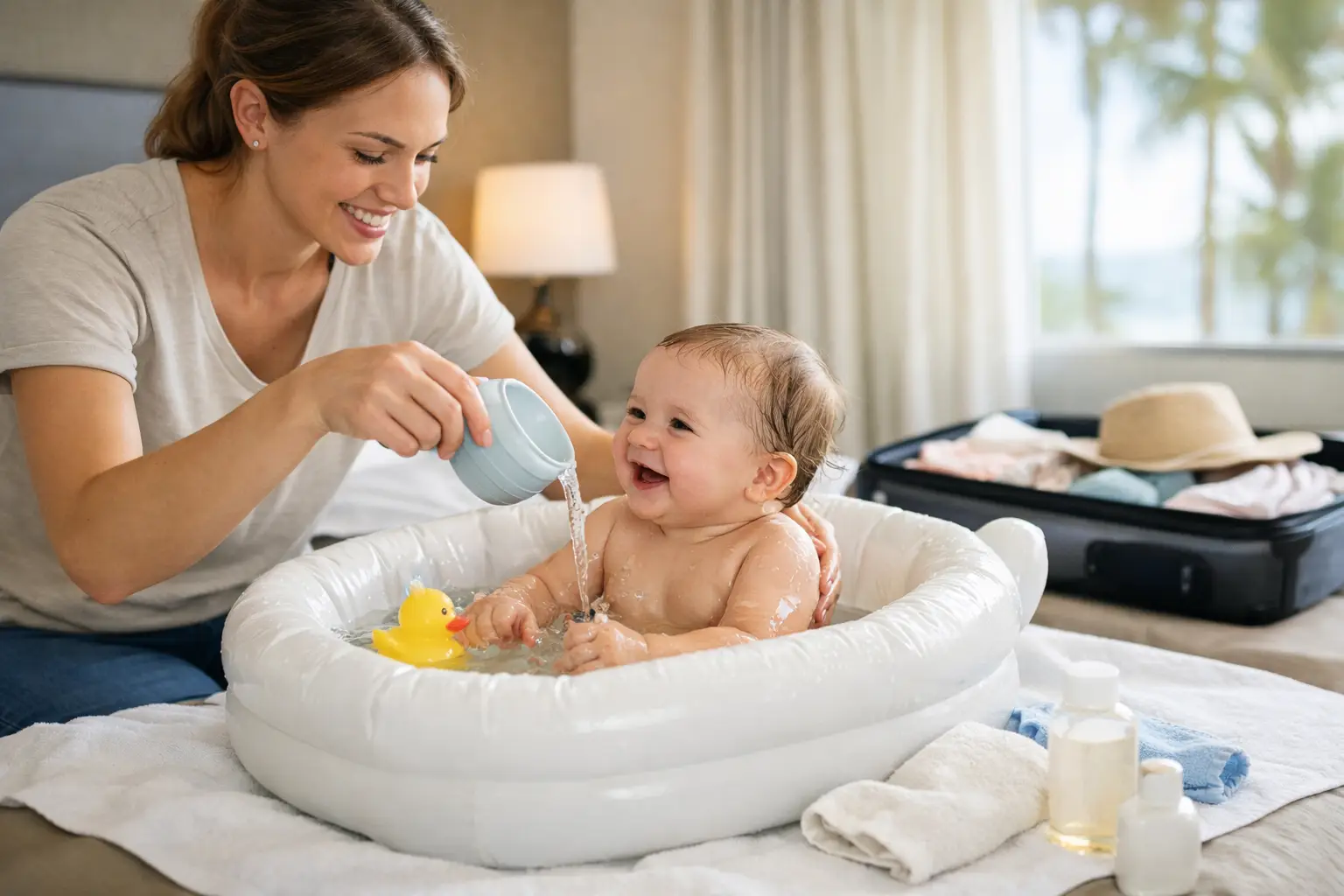
A travel day can turn a freshly dressed baby into a sticky, sandy, milk-dribbled little mess before you reach your destination. Knowing how to bathe baby while traveling gives you one less thing to solve when naps are off schedule, the hotel bathroom feels unfamiliar, or a traditional bath simply is not practical.
For most babies, travel bathing does not need to look like bath time at home. The goal is gentle, comfortable hygiene: clean the areas that need attention, protect delicate skin, and keep your baby warm and calm. No tub, no stress, just thoughtful care wherever your family lands.
How to Bathe Baby Traveling: Keep It Simple
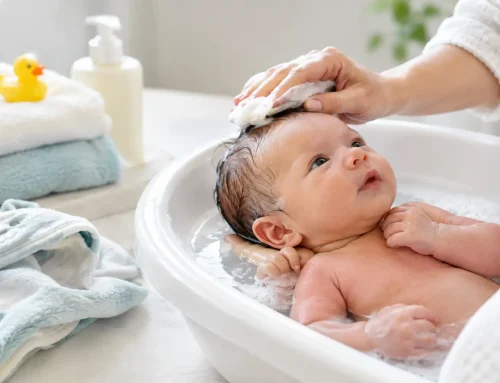
A full tub bath is not required every day, especially for young babies/toddlers. During travel, a gentle wipe-down can be a practical way to clean the face, neck folds, hands, diaper area, and any spots affected by spit-up or sweat. If your baby has gotten especially dirty from sunscreen, sand, food, or a long day of exploring, you can do a more complete head-to-toe clean with a safe surface and the right supplies.
The most important rule is to choose a stable place and keep one hand on your baby at all times. A bed, changing pad on the floor, or clean towel spread over a secure flat surface can work well. Avoid bathing a baby on a high hotel counter, in a sink that has not been cleaned to your standards, or anywhere you may need to step away for even a moment.
Travel routines work best when they are flexible. A newborn may only need a calm wipe-down before pajamas, while an active toddler may need a quick cleanup after a beach stop or a restaurant meal. Let the day, your baby’s age, and their skin needs guide you.
Build a Small, Reliable Bath Kit
Packing a separate travel bath kit prevents the frustrating search through suitcases when your baby needs cleaning now. Keep it in a zip pouch or the outer pocket of your diaper bag so it is easy to reach in a hotel, airport, family home, or car.
Your kit should include a few clean diapers, a changing pad or large clean towel, a spare outfit, diaper cream if you use it, and a gentle baby-safe cleanser. No-rinse bathing cloths are especially helpful because they remove the need to find a tub, manage water temperature, or carry a separate basin. Choose cloths made specifically for a full-body baby bath rather than relying on standard diaper wipes, which are designed for a much narrower job.
Baby Batherz bathing cloths are designed for this exact in-between moment: a complete no-rinse clean without a tub, sink, or separate water source. The extra-thick, ultra-soft 100% bamboo cloths are infused with 99% purified water, aloe, vitamin E, and gentle coconut soap, without fragrances or harsh chemicals. For families who prefer a warmer wipe-down, warm the unopened package according to its instructions first. Always test the cloth against the inside of your wrist before it touches your baby’s skin. Baby Batherz are great to keep in your purse, diaper bag, car, suitcase for anytime that unexpected clean-up is needed.
Bring a small wet bag or sealable bag for dirty clothes and used supplies. This is not glamorous, but it makes travel days feel far more manageable when you are dealing with a blowout in a parking lot, vomit or sandy pajamas after sunset.
A Gentle Four-Step Travel Bath
Before you begin, wash your hands or use hand sanitizer and let your hands dry fully. Set out everything you need first. Once your baby is undressed, you should not have to open drawers, search through luggage, or leave their side.
- Start with the face and hairline. Use a fresh, gentle section of the bathing cloth to clean your baby’s forehead, cheeks, chin, and behind the ears. Wipe from the inner corner of each eye outward with a separate clean area. Do not scrub, and avoid getting product directly into the eyes.
- Clean the little folds. Move to the neck, underarms, hands, wrists, behind the knees, and thigh creases. Milk, drool, heat, and lint tend to collect here. Pat carefully rather than rubbing, especially if your baby has sensitive or dry skin.
- Wash the body from cleanest to messiest. Clean the chest, tummy, back, legs, and feet. If your baby is in the umbilical cord stage, follow your pediatrician’s guidance and keep the cord area clean and dry. Do not soak it or cover it with heavy products unless your clinician has advised you to do so.
- Finish with the diaper area. Use a fresh cloth or clean section for the diaper area, wiping front to back. Dry any visible moisture with a soft towel if needed, apply your usual diaper cream, and put on a clean diaper and outfit.
A no-rinse bath should leave your baby clean and comfortable, not wet or chilled. Give them a few quiet seconds before dressing, particularly in skin folds. If the room is cool, cover the parts of your baby’s body you are not cleaning with a light towel and work one area at a time.
Hotel Rooms, Family Homes, and Long Drives
Each travel setting brings a different challenge. In a hotel, clear a clean area on the bed or use your own changing pad on the floor. Hotel tubs can be useful for older babies when you have time to clean and fill them safely, but they are not mandatory for a good bath. A no-rinse cleanup can be the easier choice after a late arrival.
At a relative’s house, well-meaning family members may offer a sink bath or a favorite old towel. Use what feels safe and comfortable to you. Your baby’s routine does not have to match someone else’s idea of how bath time should look. A clean, calm setup matters more than doing things the traditional way.
In the car, wait until you are safely parked. Never attempt a bath or diaper change with a baby in a moving vehicle, and do not leave your baby unattended on a seat or bench. A quick wipe-down on a portable changing pad can handle sweaty hands, a messy face, or a diaper emergency between stops.
For beach days and outdoor outings, wipe off sand, saltwater, grass, food, and sunscreen as soon as practical. Pay close attention to neck, skin folds, the diaper line, and toes. If sunscreen needs more thorough removal, use a gentle cleansing cloth and dress your child in clean, dry clothing afterward.
Protect Baby Skin While You Travel
New environments can be tough on baby skin. Dry hotel air, heat, pool water, unfamiliar laundry detergent, and disrupted routines may all contribute to irritation. This is why fewer, gentler products are often the better travel choice.
Skip heavily fragranced products and avoid vigorous rubbing. If your baby has eczema, a rash, broken skin, or a known skin sensitivity, follow the care plan provided by their pediatrician and introduce any new product cautiously. A small patch test may be helpful when you are trying a new cleanser for the first time.
Call your pediatrician for guidance if you notice a spreading rash, blisters, fever, oozing skin, or an umbilical cord area that becomes increasingly red, swollen, foul-smelling, or drains pus. Travel can make parents second-guess themselves. Trust your instincts when something seems different from normal.
Let Bath Time Be a Reset, Not Another Task
A travel bath can be a small pause after a loud airport, a long car ride, or an overstimulating day with relatives. Lower the lights, speak softly, and make the cleanup unhurried when you can. Your baby does not need a perfect bathroom or a carefully staged routine to feel cared for.
Sometimes the best travel bath is a complete head-to-toe clean before bed. Sometimes it is simply wiping milk from a neck fold and changing into a fresh sleeper. Both count. Every baby deserves a gentle beginning, wherever the day takes your family.