
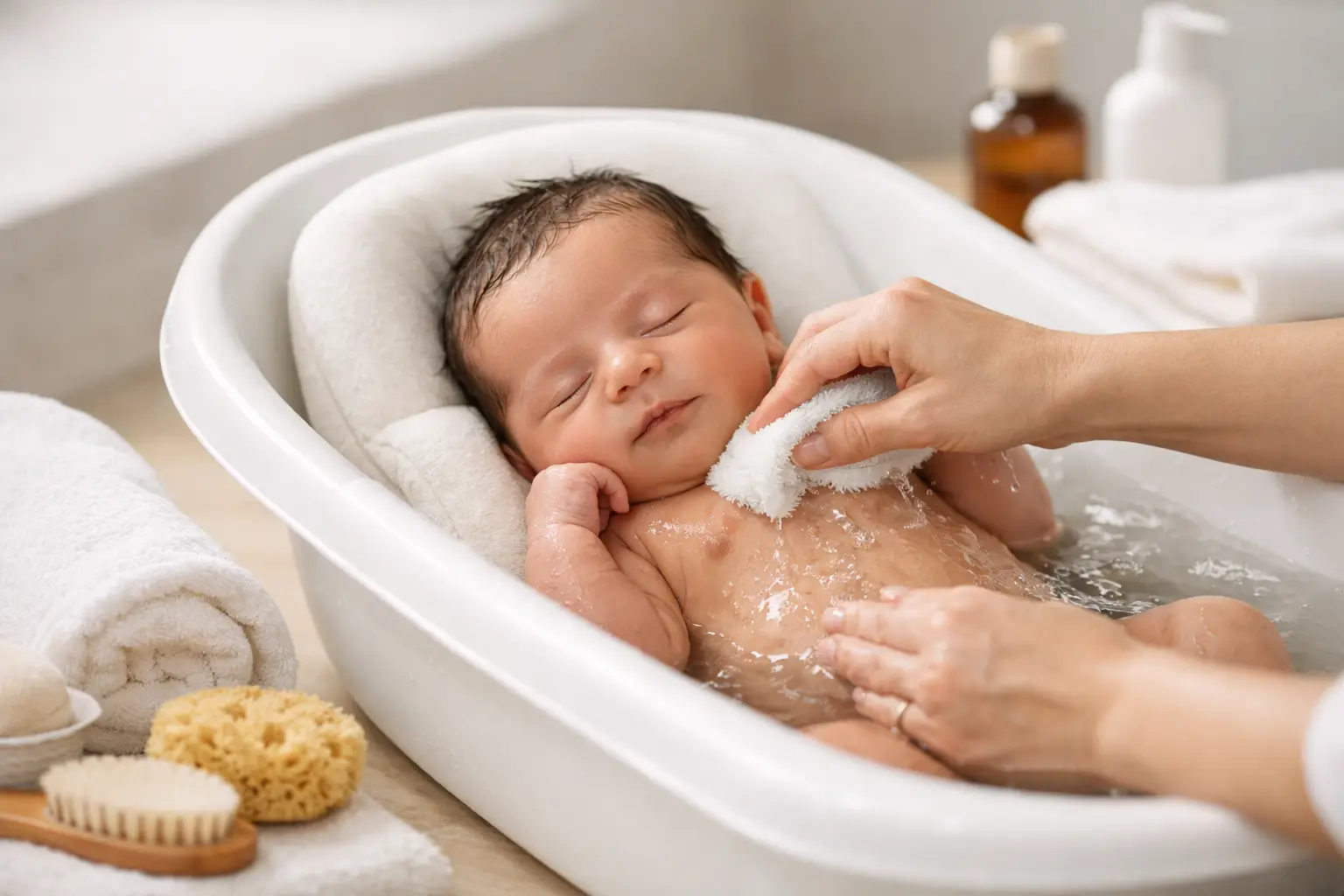
The first time you clean your newborn at home can feel surprisingly high-stakes. You are learning your baby’s tiny cues, healing from birth, and trying to keep a slippery little person warm and comfortable. This newborn first bath checklist keeps the focus where it belongs: gentle care, a safe setup, and no unnecessary stress.
A newborn does not need a daily tub bath. In the early weeks, simple spot cleaning around the diaper area, neck folds, hands, and face is often enough. Many families wait until the umbilical cord stump has fallen off and the area has healed before giving a full immersion bath. Follow the guidance from your baby’s pediatric clinician, especially if your baby was born early, has sensitive skin, or has specific care instructions.
Newborn First Bath Checklist: What to Gather
Set everything up before you undress your baby. Once bath time starts, keep one hand on your newborn at all times. If you need an item you forgot, wrap your baby in a towel and bring them with you rather than stepping away.
For a traditional sponge bath or tub bath, gather these essentials:
- A clean, flat, stable surface or an infant bath placed securely where you can reach it comfortably
- Two soft washcloths, plus a clean towel or hooded towel
- A fresh diaper and clean outfit
- Gentle, fragrance-free baby cleanser if you plan to use one
- A small cup for rinsing during a tub bath
- A clean diaper-area cloth or cotton pads for wiping around the eyes and face
- A warm room, ideally free from drafts
Keep your phone out of reach and save photos for later. A baby can slip quietly and quickly, even in very shallow water. The safest bath is the one where your attention stays fully on your baby.
If bending over a tub feels difficult during postpartum recovery, a no-rinse full-body bathing cloth can be a practical option. Baby Batherz bathing cloths are made for gentle head-to-toe cleanup without a tub, sink, or separate water source. This can be especially helpful during the umbilical cord stage, after a long feeding, or when you need a calm clean-up at the changing table instead of a full bath routine.
Decide Whether It Is a Sponge Bath or Tub Bath Day
For most newborns, sponge baths are the simpler choice until the cord stump falls off and the skin around it is dry and healed. A sponge bath lets you clean one small area at a time while keeping the rest of your baby wrapped in a towel. That helps prevent chills and avoids soaking the cord area.
When your pediatric clinician says tub baths are appropriate, use only a few inches of warm water in an infant tub or clean sink designed for bathing. Test the water with the inside of your wrist or elbow. It should feel comfortably warm, never hot. Hot water can burn delicate skin faster than many parents expect, so set your home water heater to a safe temperature and check bath water every time.
There is no prize for a long bath. Five to 10 calm minutes is plenty for most newborns. If your baby is hungry, overtired, shivering, or crying hard, pause and try again later. A gentle wipe-down and a clean diaper are enough for today.
A note about the umbilical cord stump
Keep the stump clean and dry, and avoid pulling at it, even when it looks loose. During a sponge bath, gently clean around the area only if needed, then pat dry. If the stump becomes increasingly red, swollen, foul-smelling, or drains pus, contact your baby’s pediatric clinician promptly. A small amount of dried blood or mild oozing as it separates can happen, but trust your instincts if something does not look right.
A Calm, Head-to-Toe Bath Routine
Start with the cleanest areas and work toward the diaper area. This reduces the chance of spreading germs and gives you a straightforward order to follow when you are tired.
1. Keep baby warm and supported
Undress your baby only when the room and supplies are ready. Wrap them in a towel, uncovering one area at a time for a sponge bath. For a tub bath, support your baby’s head and neck with one hand while using the other hand to wash. Never rely on a bath seat or infant tub as a substitute for your hand-on support.
2. Clean the face first, without soap
Use a soft damp cloth to wipe each eye from the inner corner outward, using a different clean area of the cloth for each eye. Wipe the face, then clean behind the ears and in the folds of the neck. Milk and spit-up love to collect there, so a gentle daily check can help prevent irritation.
3. Wash the body gently
Clean the arms, hands, chest, back, legs, and feet with plain water or a small amount of mild baby cleanser. Pay attention to skin folds, but do not scrub. Newborn skin has a developing protective barrier, and too much soap or rubbing can leave it dry and irritated.
For hair, a quick wipe with a damp cloth is often all a newborn needs. If you use cleanser on the scalp, use a tiny amount and rinse or wipe it away carefully. Avoid getting product in your baby’s eyes.
4. Finish with the diaper area
Clean the diaper area last. For girls, wipe from front to back. For uncircumcised boys, do not pull back the foreskin. For circumcised babies, follow the aftercare instructions from your clinician until the area heals. Pat the skin dry, put on a fresh diaper, and dress your baby in a clean, comfortable layer.
What to Skip During Your Baby’s First Baths
Newborn care works best when it stays simple. Skip bubble bath, strongly scented soaps, adult body washes, essential oils, and exfoliating products. These can irritate sensitive skin and are not needed for a clean baby.
Avoid using cotton swabs inside ears or the nose. Wipe only the outer ear. You also do not need to clean under fingernails aggressively during every bath. A soft cloth and regular handwashing are usually enough, and newborn nails are attached closely to the skin.
Lotions are optional. If your baby has dry patches, choose a simple, fragrance-free moisturizer and ask your pediatric clinician for guidance if dryness is severe, cracked, widespread, or paired with a rash. Newborn rashes are common, but they are not all treated the same way.
Make the Checklist Work for Real Life
The best newborn bath routine is not necessarily the one that looks picture-perfect. It is the one you can do safely when you are running on little sleep. Some families enjoy a brief evening tub bath as part of a bedtime rhythm. Others find that a morning sponge bath, a warm no-rinse cloth, or cleaning as needed fits their baby better.
Keep a small bath basket stocked near your changing area with clean cloths, diapers, and a towel. If you use ready-to-go bathing cloths, store the package where you do the most diaper changes and keep one in the diaper bag for appointments, travel, and unexpected messes. For a slightly warmer feel, you may warm a sealed package according to its instructions, never in a microwave and never until it feels hot.
Most of all, give yourself permission to keep it easy. Your newborn does not need a complicated ritual to feel cared for. Warm hands, a clean cloth, careful support, and your steady presence are more than enough for a gentle beginning.