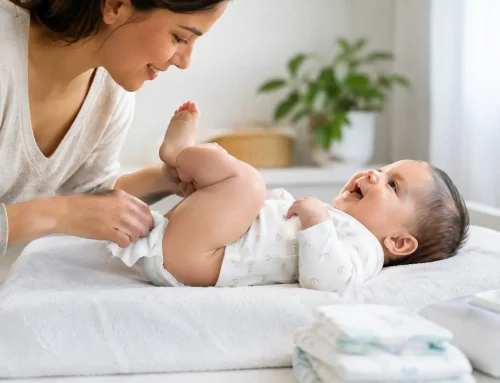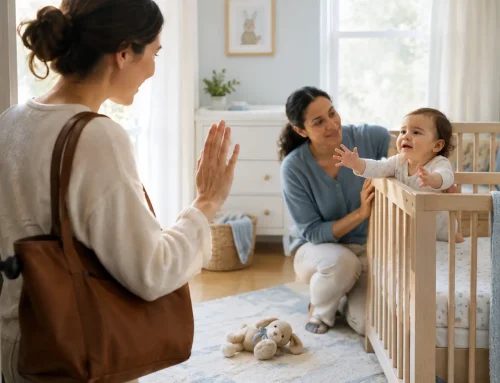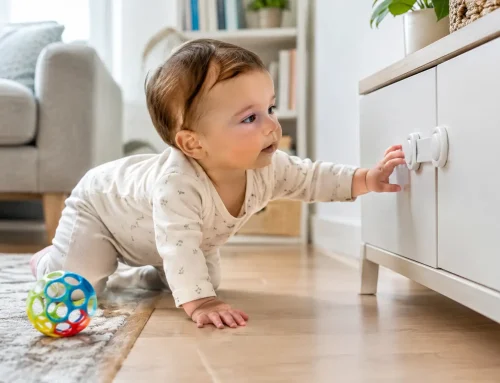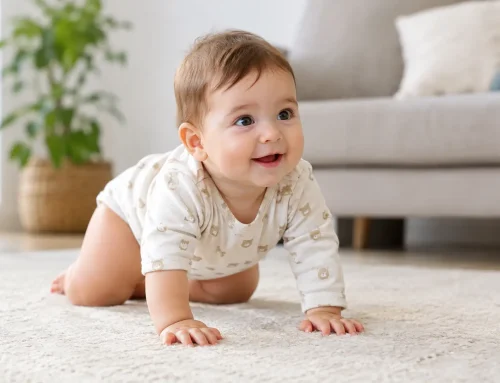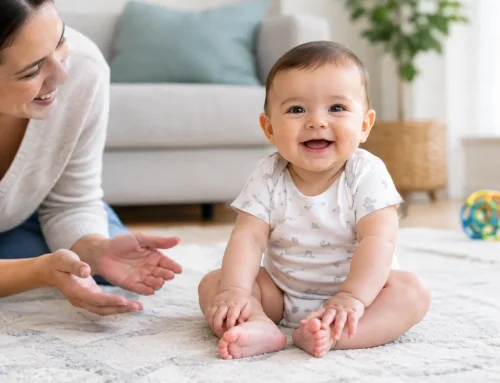
Your baby may suddenly be studying your face, grabbing at your shirt, kicking hard on the changing pad, and answering your smile with a wide, gummy grin. These small moments are meaningful learning. The best activities for a 3–6 month old baby for developmental play do not require a packed playroom or a complicated schedule. They are brief, responsive moments that help your baby feel safe enough to move, look, listen, and connect.
At this age, babies develop at very different rates. One may be working hard on head control while another is rolling early or reaching for every toy in sight. Rather than trying to “teach” a milestone, offer simple opportunities to practice and follow your baby’s cues. A few calm minutes of play, repeated throughout the day, is plenty.
What Developmental Play Looks Like at 3-6 Months
Developmental play is not about keeping your baby busy. It is about giving them a safe chance to use emerging skills while you provide comfort, conversation, and encouragement. During this stage, many babies are beginning to hold their heads steadier, bring hands to their mouths, track moving objects, recognize familiar voices, laugh, reach, and possibly roll.
The best play is usually face-to-face and low-tech. Your voice, your expressions, a clean floor, and a few simple objects can support physical, social, language, and sensory development all at once. Keep sessions short. A baby who turns away, rubs their eyes, stiffens their body, fusses, or loses interest is telling you they need a break.
Best Activities for 3-6 Month Developmental Play
Make tummy time part of ordinary life
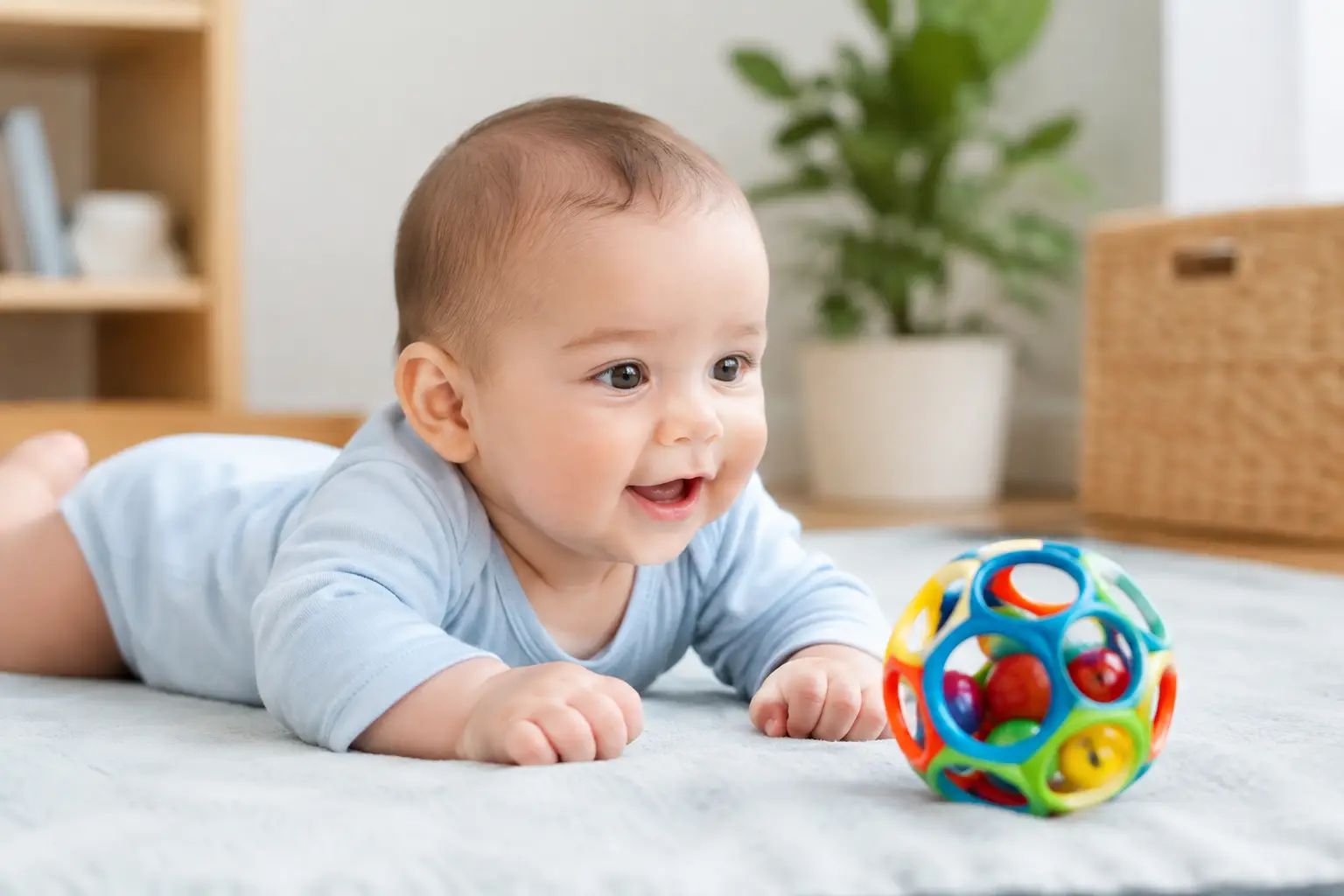
Tummy time is still one of the most valuable activities at this age. It helps strengthen the neck, shoulders, arms, back, and core muscles your baby will later use for rolling, sitting, crawling, and reaching. It also gives your baby a new view of the room.
Try placing your baby on a clean, firm floor surface for several short sessions each day while they are awake and closely supervised. Get down at eye level, talk to them, or place a baby-safe mirror or a simple high-contrast toy just within view. If floor tummy time feels frustrating, lay your baby across your chest or over your lap for a gentler variation.
Never use tummy time for sleep. If your baby falls asleep, move them to their own firm, flat sleep surface on their back.
Have a real conversation
Your baby does not need words to participate in a conversation. Pause after they coo, smile, squeal, or move their arms, then answer as if they have said something important. This back-and-forth teaches the earliest rhythm of communication.
Describe what you are doing in ordinary language: “I see your toes kicking,” or “You found the soft blanket.” Use a warm, natural voice rather than trying to perform. Singing a familiar song, repeating a gentle rhyme, and naming family members in photos also build listening skills and connection.
Let hands do the learning
Between 3 and 6 months, babies become fascinated with their hands. They may clasp them together, swipe at objects, hold a lightweight toy for a moment, and bring nearly everything to their mouths. This is normal sensory exploration, not a habit you need to stop.
Offer one or two clean, baby-safe items with different textures, such as a soft cloth book, a large easy-to-grasp rattle, or a smooth teether designed for your baby’s age. Keep objects large enough that they cannot be swallowed and inspect them regularly for loose pieces. Avoid tying toys, teethers, or pacifiers around your baby’s neck, wrist, or crib.
Encourage reaching and tracking
Hold a toy about 8 to 12 inches from your baby’s face, then slowly move it from side to side. Let your baby watch it first. As their control improves, hold it close enough for them to reach, but do not place it directly in their hand every time. The little effort to swipe, stretch, and grasp is part of the learning.
A play gym can be useful, but it is not necessary. You can also lie beside your baby and use your face, hands, or a brightly colored scarf. Choose calm, simple visual experiences over a crowded mix of lights, music, and motion. Too much stimulation can make it harder for some babies to settle into play.
Practice gentle rolling opportunities
Many babies begin rolling from tummy to back sometime in this window, while rolling from back to tummy often comes later. You can support the movement by placing a toy slightly to one side during supervised floor play. If your baby turns their head and shifts their weight toward it, give them time to work it out.
You can also gently help them roll from side to side during a diaper change or on the floor, narrating what is happening: “You’re rolling over to see the ball.” Never prop a baby on pillows or leave them on a couch, bed, changing table, or other raised surface. Rolling can appear unexpectedly.
Read short, sturdy books together
Babies this age will not sit through a full story, and that is completely fine. Hold a board book close enough for them to see, point out one or two pictures, and let them look, touch, or try to grab the pages. The goal is not finishing the book. It is hearing your voice, seeing images, and building a comforting routine around reading.
Books with clear faces, simple shapes, bold contrast, and everyday objects tend to hold attention well. Re-reading the same favorite book is helpful. Familiarity is soothing, and repetition helps babies connect sounds with patterns.
Explore safe sounds and music
Soft singing, clapping, tapping a gentle beat on your knees, and shaking a rattle can help your baby notice cause and effect. Make a sound, pause, and watch for their response. They may widen their eyes, kick, smile, or try to imitate you.
Keep volume low. Babies do not need loud toys to learn, and constant background noise can make it difficult for them to notice the sounds that matter most, including your voice. A quiet song while you fold laundry or a few minutes of rhythmic clapping after a feed can be more than enough.
Build Play Into the Moments You Already Have
The easiest developmental routine is one that fits the day you are actually having. A few minutes on the floor after a diaper change, a song while getting dressed, and a conversation during a stroller walk all count. You do not need to set aside an hour of uninterrupted play, especially when naps, feeding, and household demands are changing week to week.
Bath and cleanup routines can also be a calm sensory moment. Let your baby feel a soft washcloth on their hands and feet while you name body parts and make eye contact. On days when a traditional bath is not practical, Baby Batherz® no-rinse bamboo bathing cloths offer a gentle, pediatrician-approved way to clean up spit-up, milk dribbles, and the little creases where babyhood seems to collect. Keep the interaction slow and reassuring rather than turning it into another task to rush through.
Keep Developmental Play Safe and Comfortable
At this age, play safety is mostly about close supervision and setting up the space before your baby gets moving. Use a firm floor surface for tummy time and rolling practice. Keep cords, plastic bags, small objects, pet toys, hot drinks, and medications out of reach. If an older child wants to join, help them practice gentle hands and give them a simple role, such as singing a song or showing a book.
Avoid placing your baby in a seated position for long stretches before they can get there on their own. Brief supported sitting on your lap is fine, but too much time in seats, swings, loungers, or activity devices can limit floor movement. These tools may be useful for short, supervised moments when you need both hands, but free movement on the floor is where much of the practice happens.
Talk with your child’s pediatrician if you notice your baby consistently using only one side of their body, struggling to move their head, seeming unusually floppy or stiff, losing skills they previously had, or if you simply have a concern. You know your baby best, and early questions are always worth asking.
Your baby does not need a perfect activity plan. They need your steady presence, a safe place to move, and the freedom to try again tomorrow. A smile returned, a toy reached for, or one extra minute of tummy time can be a very good day of learning.