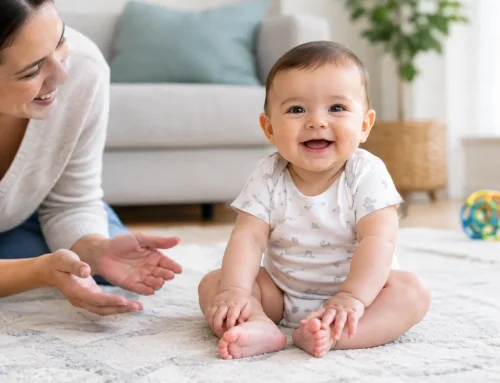
Your friend’s baby may be zooming across the living room at 7 months while yours is perfectly content to roll, sit, and inspect every crumb within reach. So, when do babies crawl? And is it okay if my baby doesn’t? For many families, the reassuring answer is yes. Crawling is common, but it is not a required developmental milestone, and babies often take very different routes toward getting around.
What matters most is not whether your baby uses hands and knees in the classic crawling position. It is whether they are gaining strength, coordinating both sides of their body, exploring movement, and continuing to make progress in their own way.
When do babies crawl?
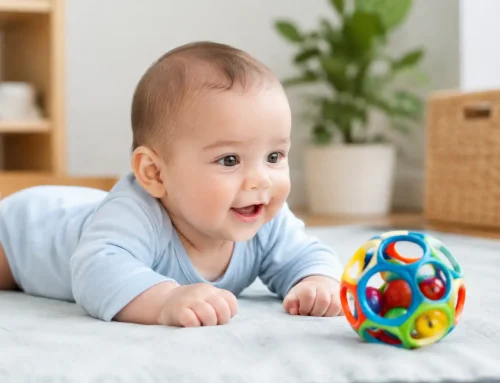
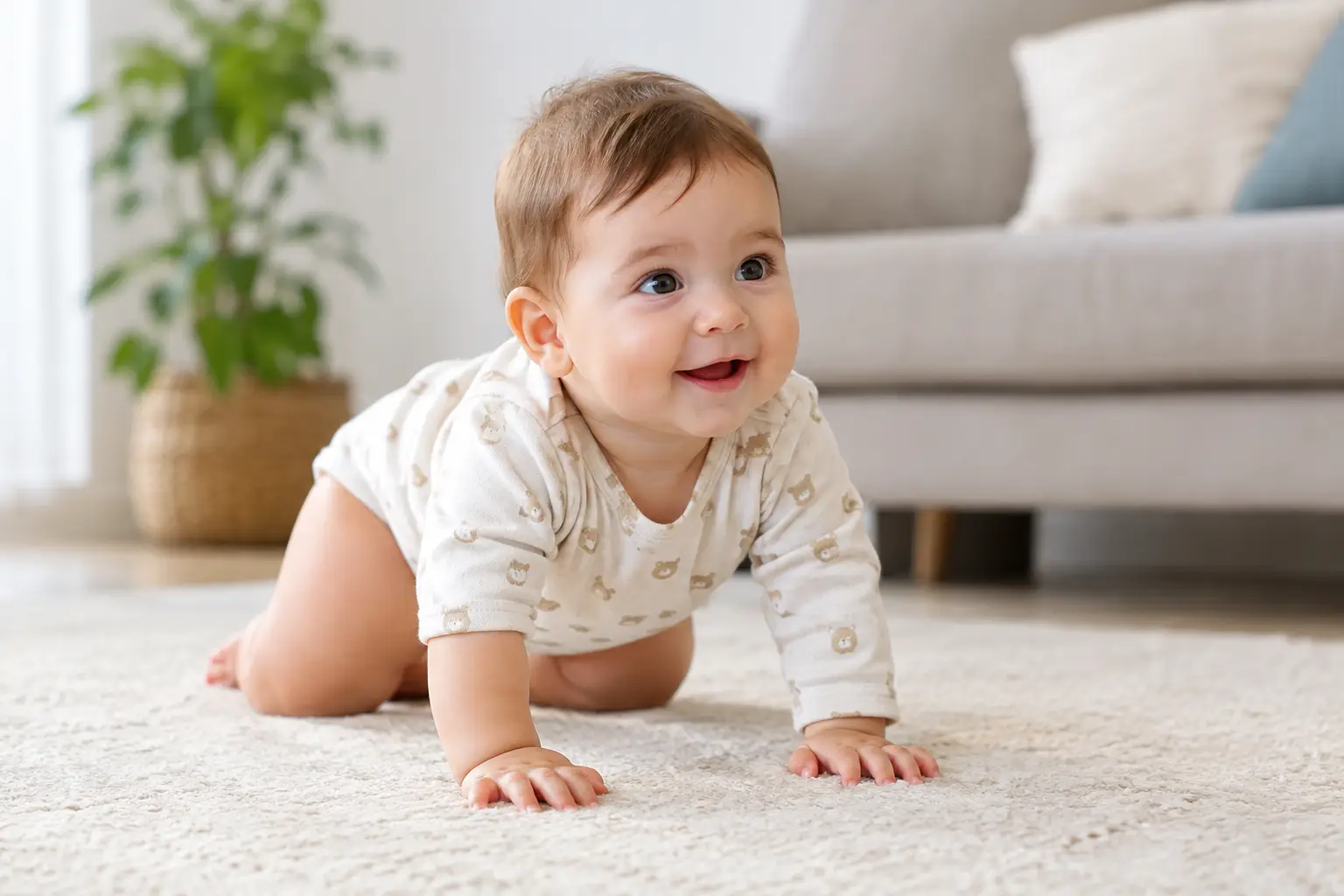
Many babies begin crawling somewhere between 6 and 10 months, though the range can be wider. Before crawling, you may see your baby push up during tummy time, pivot in a circle, roll to reach a toy, rock on hands and knees, or scoot backward. These early efforts can look awkward, but they are meaningful practice.
Some babies crawl on hands and knees. Others belly crawl, army crawl, bottom scoot, bear crawl with straighter legs, or move sideways first. A baby may also roll everywhere for a while, then pull to stand and cruise along furniture with very little crawling in between.
There is no prize for the earliest crawler. Babies learn movement through a mix of temperament, opportunity, body size, muscle strength, and simple preference. A cautious baby may spend more time watching before trying a new move. A determined baby may skip a method that seems inefficient and head straight for standing.
Crawling is a skill, not a deadline
Crawling supports coordination, balance, shoulder strength, and the ability to use both sides of the body together. Those are helpful skills, but your child can develop them through other kinds of movement too. Rolling, reaching, sitting, pulling up, cruising, climbing safely, and eventually walking all build a growing body and brain.
The key is steady development over time. A baby who is actively trying to move and learning new ways to reach people and toys is generally telling you more than a calendar ever could.
Is it okay if my baby doesn’t crawl?
Yes, it can be completely okay if your baby does not crawl in the traditional way or skips crawling altogether. Some babies move from sitting to pulling up and cruising, then begin walking. This is especially common in babies who are highly motivated to stand or who spend a lot of time around older siblings they want to follow.
Still, “skipping crawling” should not mean “not moving at all.” Your baby should have regular chances to move freely on the floor, change positions, bear weight through their legs when supported, and practice new skills. Bring up any questions at well-child visits, even if they seem small. Your pediatrician can look at your baby’s whole developmental picture, including muscle tone, strength, symmetry, vision, and social engagement.
When to check in with your pediatrician
Trust your instincts if something feels off. It is worth contacting your pediatrician sooner rather than waiting for the next routine appointment if your baby:
- Is not rolling, sitting with support, or trying to move in any way as they approach 9 months
- Uses one side of the body much more than the other, or consistently drags one side
- Seems unusually floppy, very stiff, or has trouble bearing weight through their legs
- Loses a skill they previously had
- Seems upset by movement or avoids using an arm or leg
These signs do not automatically mean there is a serious problem. Some babies simply need more support, practice, or an evaluation by a pediatric physical therapist. Early guidance can be incredibly helpful, and asking does not make you an overthinking parent. It makes you an attentive one.
How to encourage crawling without pushing it
The best crawling practice is usually simple, supervised floor time. Babies need room to wiggle, fail, try again, and figure out how their bodies work. A clean blanket or firm play mat on the floor is more useful than trying to “teach” crawling with lots of equipment.
Start with short, frequent tummy-time sessions from the newborn stage onward, always while baby is awake and supervised. If your baby dislikes tummy time, begin with a minute or two on your chest, across your lap, or beside you on the floor. Gradually build from there. The goal is not to make your baby endure it. The goal is to help them become comfortable using their neck, back, shoulders, and arms.
Place an interesting toy just beyond reach, then give your baby time to problem-solve. You can lie on the floor nearby, make eye contact, and offer encouragement, but resist moving their arms and legs through the motion for them. Babies learn more from their own attempts than from being placed in a crawling position.
Limit long stretches in containers when possible. Car seats are essential for travel, and a high chair has its place at meals, but babies also need unrestrained time between those necessary moments. Walkers are not recommended because they can create serious safety risks and do not help babies learn to walk sooner.
Bare feet or grippy socks can make it easier for a baby to push against the floor. Loose, comfortable clothing helps too. If slippery floors make movement frustrating, a textured play mat or blanket may offer better traction.
Make the floor a safe place to explore
Once your baby starts moving, life gets messier fast. A crawler will find dust under the sofa, crumbs near the table, and the one spot of dirt you missed by the back door. This is normal exploration, not a parenting failure.
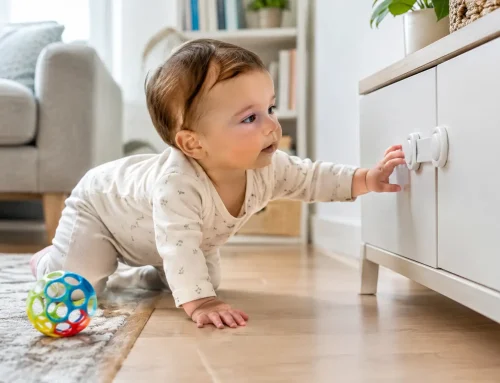
Focus on the practical safety basics: block stairs, cover outlets, secure furniture that could tip, keep cords and small objects out of reach, and sweep areas where your baby plays. Get down at your baby’s level occasionally. You will quickly notice hazards that are easy to miss from standing height.
Crawling also means more frequent little cleanups, especially after playground trips, travel days, visits with grandparents, or a determined crawl across a sandy patio. When a tub bath is not realistic, Baby Batherz no-rinse bamboo bathing cloths offer a gentle head-to-toe cleanup with 99% purified water, aloe, vitamin E, and a coconut-derived cleanser. They are made for bathing and cleansing, not for replacing diaper wipes, and can be especially handy for dirt, sand, sunscreen, and sticky hands before getting back to play.
A note on shoes, floors, and germs
You do not need to create a perfectly sterile floor for your baby to crawl. Ordinary household dust and everyday messes are part of family life. Clean obvious dirt, food spills, pet accidents, and outdoor grime, then let your baby explore.
Shoes can track in more than you want near a crawling baby, so many families choose a shoes-off area or reserve one clean zone for floor play. If that is not realistic in a busy home, a washable mat can create a simple designated space. The goal is reasonable cleanliness, not an exhausting standard no parent can maintain.
Keep your eyes on progress, not comparisons
Developmental timelines can make even calm parents feel like they are behind. One baby sits early and crawls late. Another says a few sounds early but takes longer to feel steady on hands and knees. Premature babies may also follow an adjusted age for developmental expectations, based on their due date rather than their birth date.
Try to notice the small signs of forward motion: a stronger push during tummy time, an extra second of sitting balance, a roll toward a favorite toy, a new attempt to get onto hands and knees. Those moments count.
Your baby does not need to follow someone else’s path across the living room. They need safe space, patient encouragement, and a caregiver who notices their effort. Stay close, cheer them on, and let their next move arrive in its own time.