A suddenly drooly baby who wants to chew every clean finger, bib, and toy can make parents wonder what changed overnight. When do babies start teething? Signs, symptoms & safe ways to help are often on parents’ minds because teething can look different from one baby to the next – and it can arrive before you feel ready.
For most babies, the first tooth appears between 4 and 7 months old. That is a wide window, and healthy babies may start earlier or later. Some begin showing teething behavior around 3 months, while others do not get a first tooth until closer to their first birthday. A few babies are even born with a tooth. The timing itself is usually far less important than your child’s overall growth, feeding, and comfort.
When Do Babies Start Teething?
The two bottom front teeth are often first, followed by the two upper front teeth. From there, teeth tend to come in gradually over the next couple of years. Most children have all 20 primary teeth by age 3.
Teething is not always a quick event. A tooth can move under the gums for days or weeks before it breaks through. You may notice a stretch of chewing, fussiness, and drool, followed by a few calmer days, then another difficult patch. That stop-and-start pattern is normal.
Family timing can play a role, so a parent who teethed late may have a baby who does too. If your baby is nearing 18 months with no teeth, or you have concerns about their development or feeding, bring it up with their pediatrician or pediatric dentist.
Common Teething Signs and Symptoms
Teething pressure can be uncomfortable, particularly in the hours before a tooth emerges. Babies cannot tell us that their gums ache, so the clues are usually behavioral.
Common signs include extra drool, a strong urge to chew, swollen or tender-looking gums, and more fussiness than usual. Your baby may rub their face or pull at an ear because jaw discomfort can travel toward the ears. Sleep can also be bumpier, and some babies temporarily want more comfort or shorter, more frequent feeds.
You might see a tiny white edge under the gumline or a small bluish bump called an eruption cyst. These are usually harmless, but call your child’s clinician if a bump looks infected, bleeds significantly, or seems to cause severe pain.
Drool is one of the most noticeable signs, and it can irritate the skin on the chin, cheeks, neck, and chest. Gently pat the area dry instead of rubbing. A clean bib changed when damp can help, and a simple barrier ointment recommended for babies may protect sensitive skin from moisture.
For a quick cleanup after a drooly car ride, stroller nap, or meal, Baby Batherz® no-rinse bamboo bathing cloths can gently cleanse the skin around the mouth, chin, and neck. Keep cleansing products out of your baby’s mouth, and use a fresh, soft cloth for the skin only.
Symptoms that are easy to mistake for teething
Teething may make a baby a little more irritable, but it should not explain serious illness. A true fever of 100.4°F (38°C) or higher, especially in a baby under 3 months, needs prompt medical guidance. Vomiting, frequent watery diarrhea, a widespread rash, a persistent cough, or unusual sleepiness are not typical teething symptoms either.
Babies often begin teething during a stage when they are also putting everything in their mouths and encountering more everyday germs. It is understandable to connect a new symptom to a tooth, but illness can happen at the same time. Trust your instincts if your baby seems genuinely unwell.
Safe Ways to Help a Teething Baby
The best teething comfort measures are simple, supervised, and age-appropriate. You do not need a crowded cabinet of remedies. Start with gentle pressure and cool temperatures.
Wash your hands, then use a clean finger to massage your baby’s gums for a minute or two. Some babies love this; others will clamp down or pull away. Let their response guide you.
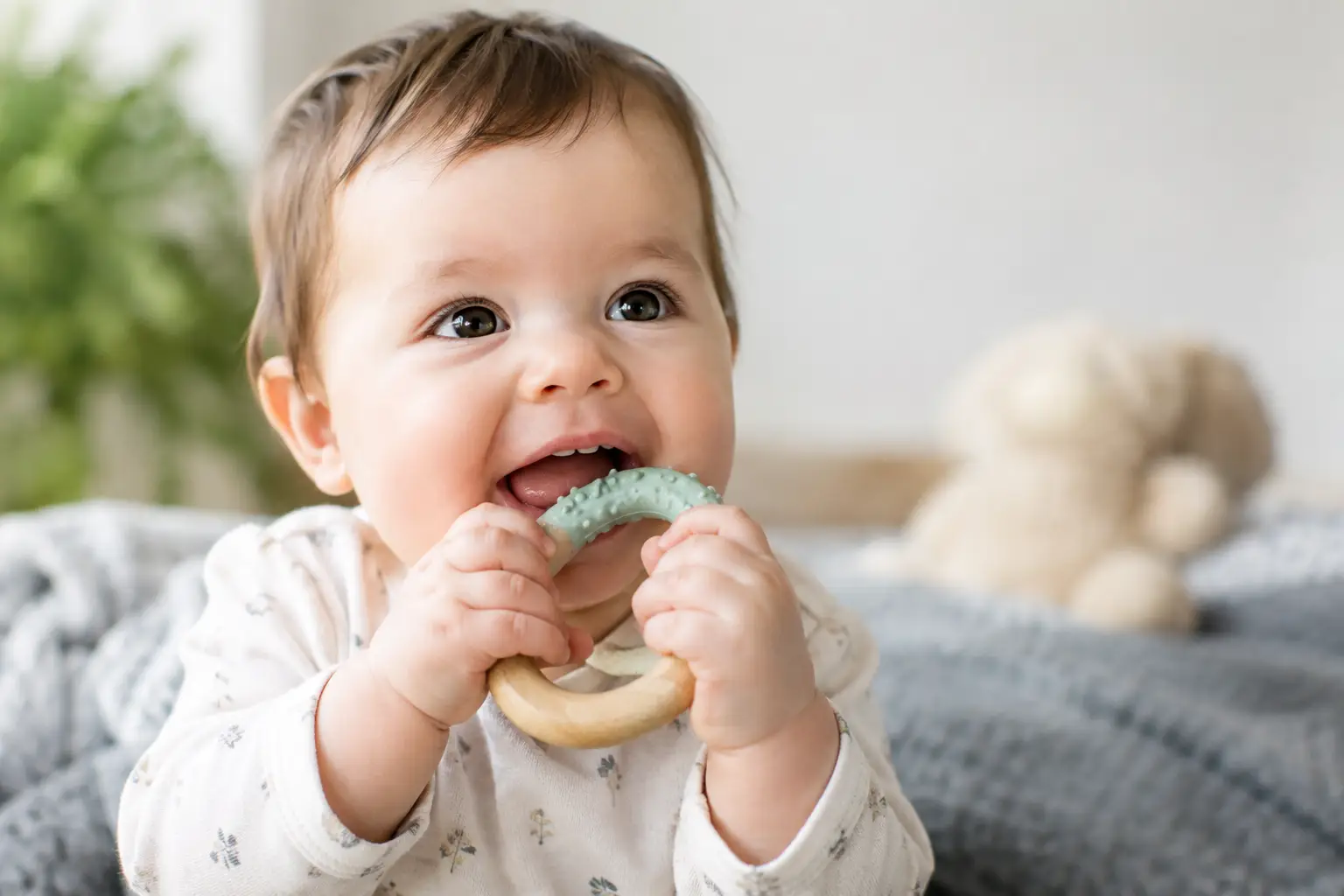
A firm rubber teething ring chilled in the refrigerator can also soothe sore gums. Refrigerated is better than frozen. A frozen ring can become too hard and may hurt delicate gums. Offer it while your baby is awake and nearby, then wash it according to the manufacturer’s instructions.
If your baby has started solids and can safely manage appropriate textures, a chilled washcloth for supervised chewing may help. Tie it securely in a simple knot, wet it with clean water, chill it, and stay with your baby while they use it. Avoid food pieces or hard items that could become choking hazards.
Comfort can matter as much as the tool. Extra cuddles, a walk outside, a calm song before sleep, or a few minutes in a dim room can lower the stress of a rough teething day. If your baby is feeding well and has normal wet diapers, a temporary increase in clinginess is usually something you can meet with patience.
Medication and teething products to avoid
Avoid teething gels or sprays containing benzocaine or lidocaine unless your child’s clinician specifically directs their use. These ingredients can cause serious side effects in young children. Homeopathic teething tablets and gels are also not considered reliable or safe choices.
Skip amber teething necklaces, bracelets, and anklets. They can create strangulation and choking risks, and there is no good evidence that they relieve pain. Also avoid tying teethers, pacifiers, or toys around your baby’s neck, crib, or wrist.
If your baby seems very uncomfortable, ask their pediatrician about whether an infant pain reliever is appropriate and what dose is safe for your child’s current weight. Never guess a dose. Acetaminophen may be recommended in some situations; ibuprofen is generally only for babies 6 months and older, with clinician guidance. Do not use aspirin for children.
Keep New Teeth Clean From Day One
Once the first tooth appears, it is time to begin a tiny dental routine. Twice a day, gently brush with a soft, infant-sized toothbrush and a smear of fluoride toothpaste no larger than a grain of rice. This small amount helps protect enamel without requiring your baby to spit.
If no teeth have arrived yet, you can still wipe gums gently with a clean, damp cloth after feeds when it fits your routine. Avoid putting your baby to bed with a bottle containing milk, formula, juice, or anything sweetened, since frequent contact with sugars can contribute to early tooth decay. Water is the safer choice after brushing, if needed.
Plan a first dental visit by your child’s first birthday or within six months of the first tooth appearing, whichever comes first. That first appointment is often brief and practical: a chance to check tooth development, discuss brushing, and get answers before a small concern turns into a bigger one.
When to Call the Pediatrician
Call your pediatrician for fever, signs of dehydration such as fewer wet diapers, trouble feeding, repeated vomiting, severe diarrhea, or a baby who is difficult to wake or console. You should also call if your child’s gums are very swollen, have pus, or if mouth pain lasts without a visible reason.
Teething can be tiring for everyone, especially when you are already running on interrupted sleep. A cool teether, a clean finger, and a little extra comfort are usually enough to carry your baby through the next sore-gum day. You do not have to fix every fussy moment – being close, observant, and gentle is already powerful care.