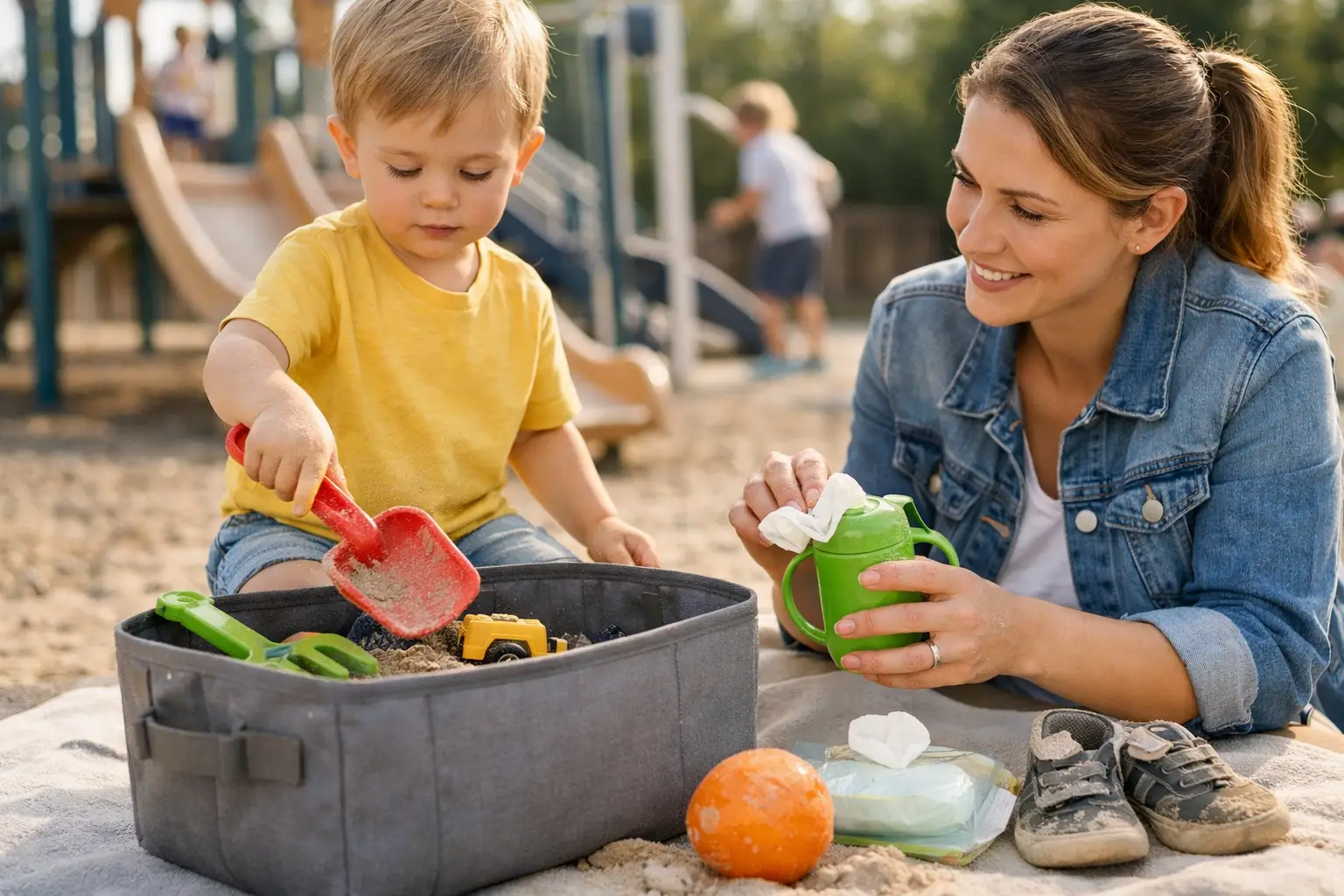
The playground is supposed to end with big smiles, not a frantic search for a bathroom sink. But sand in shoes, sticky hands, grass-stained knees, and layers of sunscreen can make toddler cleanup after playground time feel like one more hard task at the end of a long outing. A simple, gentle routine helps your child get comfortable before the car ride home without turning the parking lot into a full bath. If your baby is like mine, the car ride home is often naptime!
Why a Quick Playground Cleanup Helps
Toddlers explore with their whole bodies. They crawl through tunnels, sit in mulch, touch railings, dig in sand, and then rub their faces or reach for a snack. Some dirt is a normal part of play, and there is no need to chase a spotless child every time they go outside. The goal is practical comfort and basic hygiene, especially before eating, getting into a car seat, or heading to another errand.
A quick wipe-down can remove visible dirt, loose sand, sweat, and sunscreen residue from the places that tend to bother toddlers most: hands, face, neck, arms, legs, and feet. It can also keep sand from spreading through the car, stroller, and diaper bag. For a child prone to sensitive skin, removing gritty particles and sticky residue sooner may feel better than waiting until bath time.
The key is to keep this routine calm. You do not need to scrub, rush, or make your toddler feel as if getting dirty was a mistake. Outdoor play is valuable. Cleanup is simply the gentle reset that comes afterward.
A Toddler Cleanup After Playground Routine in Four Steps
1. Start with hands before snacks or the car seat
If your child is ready for a snack, hands come first. Use soap and running water when a sink is available, especially after using a public restroom or before eating. When that is not practical, use a gentle no-rinse bathing cloth (Baby Batherz) to lift away dirt until you can wash hands properly.
Wipe palms, backs of hands, between fingers, and around fingernails. Toddlers often resist when they feel like they are being held still, so make it quick. A simple phrase such as, “Hands clean, then crackers,” gives the moment a predictable purpose.
2. Clean the face gently
Faces collect a surprising amount during playground time: sunscreen, sweat, food, dust, and the mystery smudge that appears after five minutes near a slide. Use a soft cloth with light pressure, working around the cheeks, chin, forehead, and behind the ears.
Avoid rubbing directly into the eyes. If your child has sunscreen near their eyes or is already upset and sweaty, slow down and use a clean section of the cloth for each pass. A gentle approach matters more than getting every last trace of dirt in the moment.
3. Focus on high-contact skin
Next, wipe the neck, arms, knees, lower legs, and feet. Pay attention to skin folds, the back of the neck, and ankles, where sand and sweat tend to linger. If your toddler wore sandals, their feet may need more than one pass before going back into socks and sneakers.
For a diapered toddler, check the diaper area during the next change. Sand or grit near the diaper can be uncomfortable. Clean the outer skin gently and change into a fresh diaper if needed. A no-rinse cloth is helpful for an on-the-go refresh, but use a separate clean cloth from the one used on muddy legs or shoes.
4. Handle clothes and gear before loading up
Shake out shoes, empty sand from socks, and brush off loose mulch before your child climbs into the car seat. If clothes are wet with sweat, water-play splashes, or a spilled drink, changing into a dry shirt can prevent a cranky ride home.
Keep particularly messy items in a wet bag or separate pouch rather than tossing them loose into the diaper bag. This small step protects clean snacks, extra clothes, and the items you will want later.
What to Keep in Your Playground Cleanup Kit
The best cleanup kit is small enough that you will actually bring it. A large tote packed with every possible item can be useful for a full day out, but a short playground visit calls for a few dependable essentials.
Keep a pack of gentle no-rinse bathing cloths, a change of clothes, a diaper and disposal bag if your child still wears diapers, and a small pouch for sandy items. Add water for drinking and any sun-protection items your family uses. If your toddler is especially prone to scraped knees, include basic first-aid supplies according to your pediatrician’s guidance.
Baby Batherz bathing cloths are designed for quick head-to-toe cleanup when a tub or sink is not available. The extra-thick, ultra soft 100% bamboo cloths are infused with 99% purified water, aloe, vitamin E, and coconut soap without harsh chemicals, making them a practical option for lifting playground dirt, sand, sweat, and zinc sunscreen lotion from toddler skin.
Keep the package closed between uses so the cloths stay moist. On very hot days, do not leave products in a car for hours if you can avoid it. Heat can make any caregiving item less pleasant to use, and a cool cloth often feels especially comforting after outdoor play. Baby Batherz can be cooled in the refrigerator during the summer (or when your child is hot) and warmed in the microwave for 5-7 seconds in winter or when your child is cold.
Sunscreen, Sand, and Sensitive Skin
Sunscreen is doing an important job while your child plays outside, so there is no need to remove it halfway through an outing unless it is causing discomfort or you are changing activities. At the end of play, a gentle wipe-down can take off the sticky film and attached dirt from exposed skin.
Some sunscreen formulas, especially mineral or zinc-based options, can leave a visible white cast or cling to dry patches. A soft, damp no-rinse cloth may remove much of the residue, though a regular bath later can be better for a full cleanse after a long, sweaty day. It depends on how much product was applied, how dirty your toddler became, and how their skin is behaving.
If your child has eczema, a rash, broken skin, or a history of skin reactions, keep their individual care plan in mind. Avoid aggressive rubbing and fragranced products that have bothered them before. New skin-care products are best tested on a small area first. Call your child’s pediatrician for guidance if you notice swelling, hives, a spreading rash, signs of infection, or irritation that does not settle.
When a Wipe-Down Is Enough and When Bath Time Makes Sense
A playground wipe-down is not meant to replace every bath. It is a practical bridge between outdoor fun and the rest of your day. It is usually enough when your child has ordinary dust, sand, sweat, snack residue, or sunscreen on exposed skin and needs to get clean enough for the ride home, a meal, or a nap.
A tub or shower may be the better choice after splash-pad play, heavy mud, insect repellent, a major sunscreen buildup, or a full-body mess. If your toddler is happy, comfortable, and only lightly dusty, you may be able to skip the immediate bath and save it for the evening routine.
This flexibility matters. Toddlers do not need a complicated hygiene ritual after every outing. They need caregivers who can respond to the mess in front of them with safe, gentle care.
Make Cleanup Easier for a Reluctant Toddler
Toddlers often protest cleanup because it interrupts play. Give them a small job: ask them to hold the clean shirt, choose which foot gets wiped first, or help shake sand from their shoes. A little control can turn resistance into cooperation. You may also allow them to assist in the clean-up by giving them a no-rinse bathing cloth and instruct them where and how to use it.
It also helps to make the routine consistent. Try the same order each time: hands, face, feet, car seat. When your child knows what happens next, cleanup becomes less of a negotiation. Keep your voice light and your expectations realistic. A mostly clean toddler is often the win.
The best playground days leave room for mud pies, brave climbs, and tired little legs. With a few gentle essentials within reach, the mess can stay part of the memory instead of becoming the hardest part of getting home.