Milk can dry along a newborn’s chin surprisingly fast. By the time you notice it, it may be tucked into a neck crease or near the corner of the mouth, turning a simple feeding into one more thing to worry about. Safe baby face cleaning is not about scrubbing every tiny spot away. It is a gentle, observant routine that keeps your child comfortable while protecting delicate skin.
Newborn skin is thinner and more sensitive than adult skin. That is why a calm touch, clean materials, and a simple approach matter more than a complicated lineup of products. Whether your baby is a few days old, learning to eat solids, or coming home sandy from the playground, a quick face clean can be a small act of care that helps everyone reset.
Why Baby Faces Need a Different Approach
A baby’s face collects more than parents expect: breast milk or formula, drool, spit-up, food, sunscreen, tears, and the everyday grime that comes with being held, kissed, and carried through the world. Moisture can also settle in the folds beneath the chin, around the neck, and behind the ears. Left sitting there, it may contribute to irritation or a sour smell.
The goal is not to wash your child’s face after every moment of play or every feeding. Too much cleansing, especially with fragranced products or rough cloths, can dry or aggravate sensitive skin. Instead, clean visible messes promptly, check folds during diaper changes and outfit changes, and use a gentle full-face refresh when it makes sense.
For a newborn, this is especially helpful during the umbilical-cord stage, when families may be following their pediatrician’s guidance to avoid a traditional bath until the cord stump falls off and the area heals. A face-and-body clean with no need for a sink or tub can make those first days feel much more manageable.
Safe Baby Face Cleaning, Step by Step
Start by washing your own hands. Then choose a soft, clean cloth made for sensitive baby skin. A cloth dampened with plain water is often enough for a small mess. For broader cleanup, a no-rinse cloth with gentle, simple ingredients can be useful, particularly when you are away from home or managing a middle-of-the-night spit-up situation.
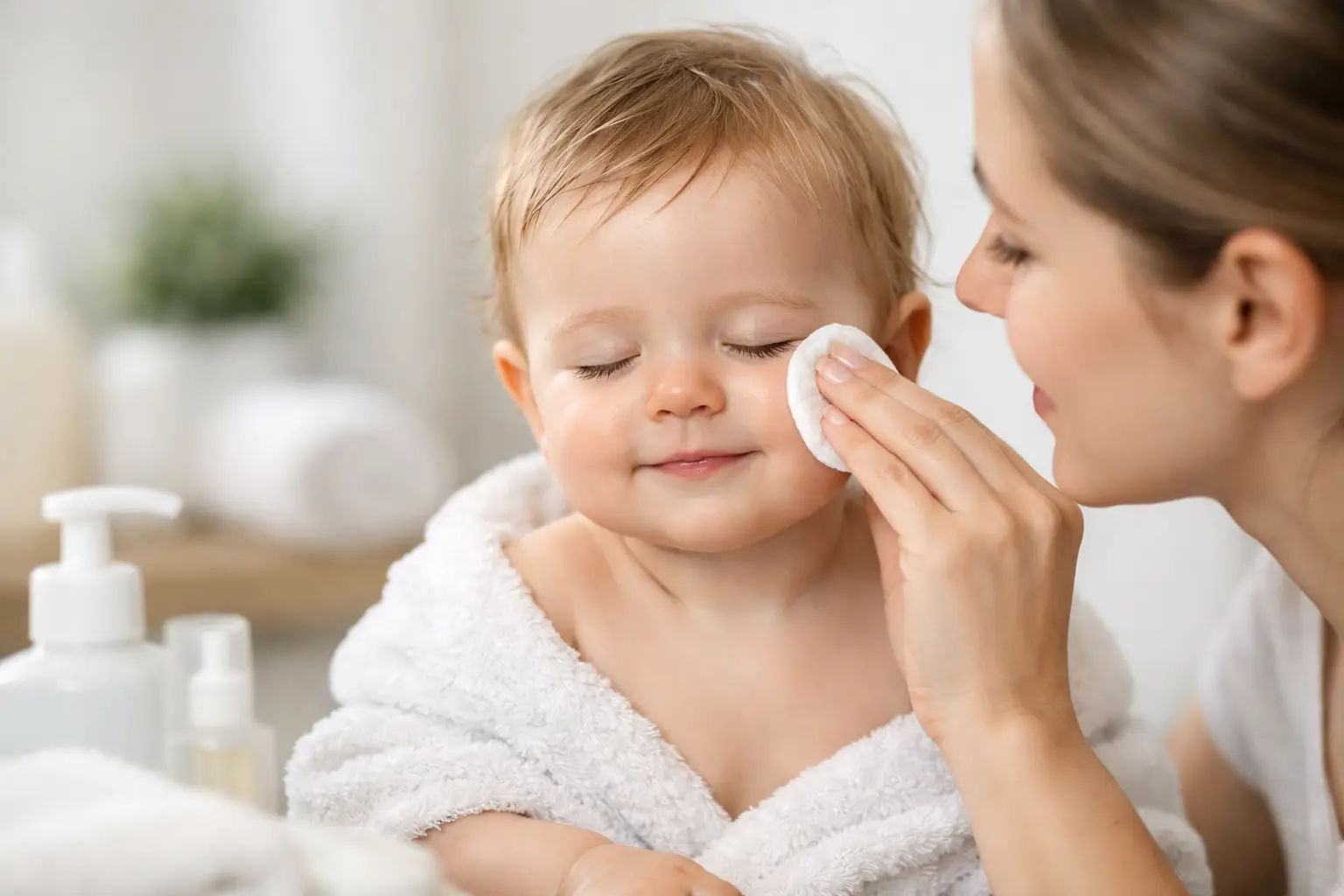
- Begin with the eyes. Use a fresh corner of the cloth for each eye, wiping gently from the inner corner outward. Do not rub the eyeball, and do not use the same area of the cloth on both eyes if there is crusting or drainage.
- Clean the cheeks, forehead, and around the mouth. Use light strokes rather than friction. Pay close attention to milk dribbles at the mouth and chin, where residue often dries.
- Check the folds. Lift the chin gently and clean the neck folds, jawline, and behind the ears. Pat these areas dry if they remain damp. Skin folds need gentle attention, not aggressive rubbing.
- Finish with a comfort check. If skin looks calm, you are done. If you notice dryness, a persistent rash, cracking, or weeping skin, skip additional products unless your child’s clinician has recommended them.
Keep cleansing products away from the inside of the nose, ear canals, and mouth. Those areas do not need routine cleaning with a cloth. A little dried mucus at the nostril opening can be softened with a damp cloth, but do not insert anything into your baby’s nose.
When a Quick Clean Is Better Than a Full Bath
Traditional baths have their place, but they are not always practical or necessary. Some days, a full bath adds more work than comfort, especially when your baby is overtired, you are recovering from birth, or the only available bathroom is not set up for infant bathing.
A gentle no-rinse cleanup can handle the real-life moments between baths: formula on the cheeks, a diaper blowout that reaches the collar, spit-up in the car seat, or a 2 a.m. mess when turning on the tub feels impossible. It can also be a useful option at Grandma’s house, in a hotel room, during a long flight, or after a pediatrician visit.
Baby Batherz® bamboo bathing cloths were created by Vicki McCalmont, RN, MS, NP and her daughter Trista after they experienced the uncertainty of newborn bathing firsthand. The extra-thick, single-use cloths are infused with 99% purified water, aloe, vitamin E, and gentle coconut soap, without fragrance or harsh chemicals. They are designed for a head-to-toe no-rinse clean, not simply a quick diaper wipe.
If your baby prefers warmth, you can warm a sealed package according to the product instructions and test the cloth on your inner wrist first. It should feel comfortably warm, never hot. That small step can turn a cleanup into a soothing part of the bedtime routine.
What Changes as Your Child Grows
The same gentle principles apply well beyond the newborn stage. Infants begin drooling, teething, and rubbing food into their cheeks. Toddlers discover finger paint, playground mulch, berries, and the impressive reach of yogurt-covered hands. Young children come home with sand in their hairline, zinc sunscreen on their faces, and evidence of a very good day outdoors.
For older babies and children, use a soft cloth to lift away dirt, grime, sand, and sunscreen lotion when a shower or bath is not an option right away. After a beach day or a heavy sunscreen application, a regular bath later is still a good idea when possible. A quick cloth cleanup is a practical bridge, not a replacement for normal bathing forever.
This is also a chance to teach gentle self-care. A toddler can help wipe their own cheeks after lunch, while you handle the eyes, neck, and areas they miss. Keeping the language simple helps: “We wipe gently. We do not scrub.” These small routines build confidence without making cleanliness feel stressful.
When to Pause and Call the Pediatrician
Most milk residue, drool rash, and everyday messes improve with gentle cleaning and keeping the area dry. But face cleaning should never cover up a symptom that needs medical attention.
Call your child’s pediatrician for spreading redness, warmth, swelling, blisters, pus, fever, a rash that does not improve, or eye drainage that is yellow or green. Seek prompt care for facial swelling, trouble breathing, hives, or signs of an allergic reaction. For newborns, it is always appropriate to call when something feels off. You know your baby best, and early questions are part of good caregiving.
If your child has eczema, acne-like newborn bumps, or a diagnosed skin condition, follow the care plan from their pediatrician or dermatologist. Plain water and minimal handling may be best in some cases. “Gentle” does not mean every product is right for every child.
A Small Essential for New Parents and Gift Givers
A reliable face-cleaning solution is the kind of newborn essential families may not think to add to a registry, then reach for constantly. It belongs in the hospital bag, diaper bag, car, postpartum care basket, and the drawer at a grandparent’s house.
For a partner, keeping supplies within reach can be a meaningful way to share newborn care. They can handle the post-feed cleanup, refresh baby’s face while you rest, or take over after an unexpected mess without needing to run a bath. For gift givers, practical support often feels more loving than one more tiny outfit.
Your baby does not need a perfect routine. They need clean hands, a soft touch, and a caregiver who feels equipped for the next little mess. No tub, no stress, just love – one gentle clean at a time.