The first days home with a baby can make even a small mess feel like a major event. A thoughtful postpartum baby cleanup routine gives you a calm, repeatable way to handle diaper changes, milk dribbles, spit-up, and those in-between moments when your newborn needs freshening up but a tub bath feels like too much.
This is not about keeping a baby perfectly spotless. Newborn skin is delicate, postpartum bodies need care too, and early days are often unpredictable. The goal is simple: keep your baby comfortable and clean with as little lifting, rushing, water hauling, and stress as possible.
Start With a Comfortable Cleanup Station
Choose one reliable place for most cleanups, such as a changing table, a firm bed with a protective pad, or a clean floor mat. Keep the basics within arm’s reach so you are never tempted to turn away from your baby: clean diapers, a fresh outfit, a soft cloth or no-rinse bathing cloth, diaper cream if you use it, and a small bag or bin for soiled items.
For postpartum recovery, the location matters. If you are sore, tired, healing from a C-section, or moving carefully after delivery, set up where you can sit or stand comfortably. A cleanup routine should support your recovery rather than add another physically demanding task to the day.
Before beginning, wash your hands. Lay your baby on their back on a secure surface, keep one hand close at all times, and speak softly as you work. The sound of your voice and the warmth of your hands can make a quick cleanup feel reassuring instead of disruptive.
Your Postpartum Baby Cleanup Routine, Step by Step
1. Check what your baby actually needs
Not every mess calls for a full bath. Start by looking at your baby’s face, neck folds, hands, diaper area, and clothing. Milk can collect under the chin and in neck creases. Tiny fingers hold onto lint. Diaper leaks may reach the legs or lower back. A targeted cleanup is often enough.
If your baby has had a diaper change only, focus on the diaper area. If there is spit-up on the neck and chest, clean those areas and change the outfit if it is damp. A head-to-toe freshening can be helpful after a bigger mess, a hot day, travel, or a difficult night when a traditional bath simply is not practical.
2. Clean from the cleanest area to the messiest
Begin with the face, using gentle strokes around the cheeks, forehead, and outside of the ears. Avoid putting product or excess moisture directly into the eyes, nose, or ears. Then move to the neck, hands, arms, torso, legs, and feet.
Save the diaper area for last. For girls, wipe from front to back. For boys, clean gently around the penis and scrotum without forcing back an uncircumcised foreskin. Clean every visible skin fold, then allow the area to air dry briefly before putting on a fresh diaper. Trapped moisture can contribute to irritation, especially during frequent newborn diaper changes.
3. Give special attention to skin folds
Newborns have wonderfully soft rolls and creases, and milk, sweat, lint, and moisture can settle there quickly. Check under the chin, around the neck, under the arms, behind the knees, at the wrists, and in the groin area. Use a gentle touch rather than rubbing. Patting dry with a clean, soft cloth can help if an area is damp.
A little redness in a fold can happen, but persistent redness, weeping skin, a strong odor, blisters, or a spreading rash deserves a call to your pediatrician. Home cleanup is helpful for everyday care, but it is not meant to replace medical guidance when something looks or feels concerning.
4. Keep umbilical cord care simple
Until the umbilical cord stump falls off and the area has healed, follow your pediatrician’s instructions. In general, the cord area should be kept clean and dry. Avoid soaking it, covering it tightly, or applying products unless your baby’s clinician has advised you to do so.
Fold the front of the diaper down so air can reach the stump and so urine is less likely to irritate it. If the area gets soiled, use only the cleaning approach recommended by your pediatrician and gently pat it dry. Seek care for redness spreading onto the surrounding skin, foul-smelling drainage, swelling, or bleeding that does not stop with gentle pressure.
When a No-Rinse Bath Makes Sense
Traditional baths can be lovely, but they require time, preparation, a safe water temperature, and two steady hands. Some days you have those things. Some days you are feeding a cluster-feeding newborn, recovering from birth, caring for older children, or working with a baby who has finally fallen asleep on your chest.
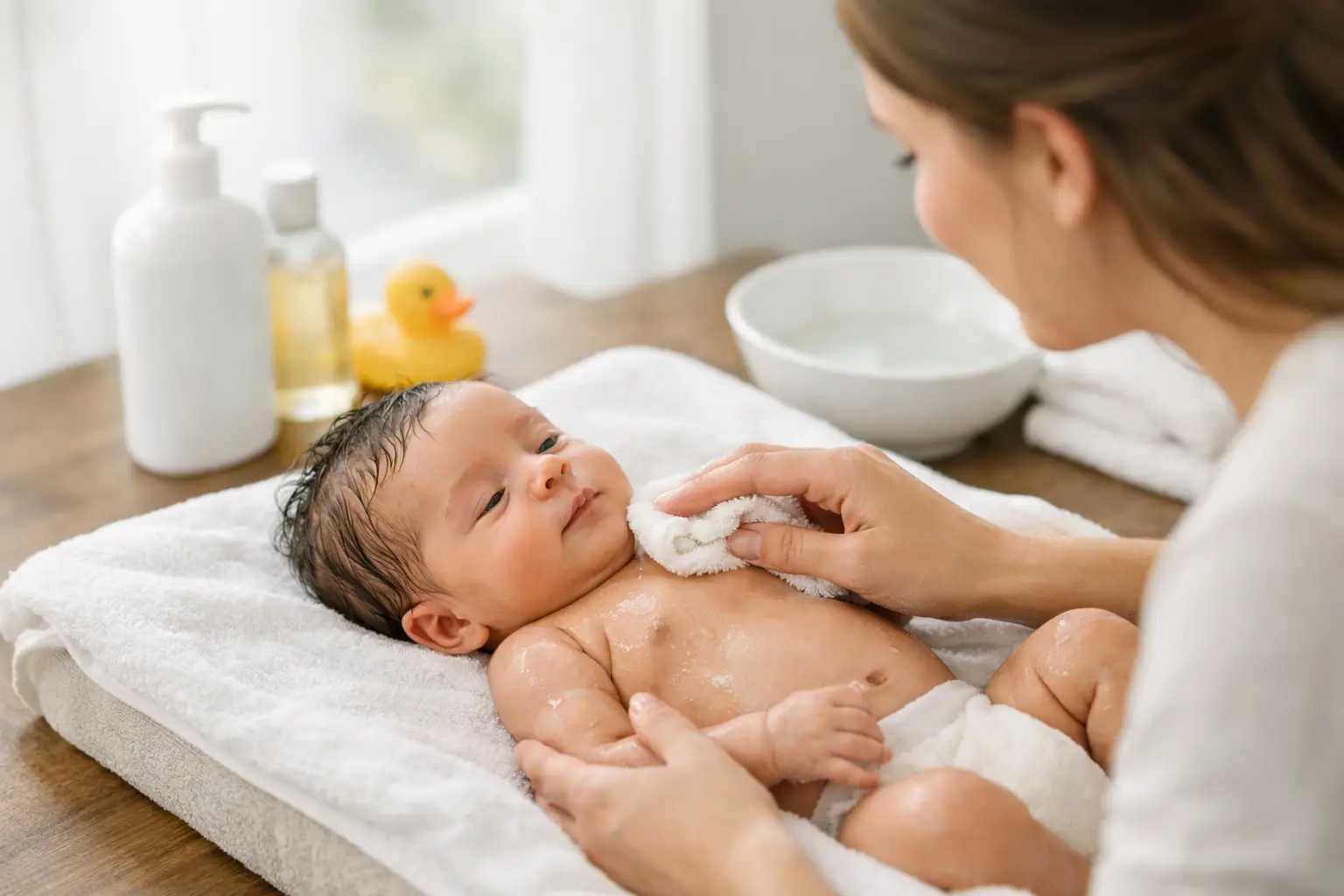
A no-rinse bathing cloth can make a practical middle ground. Baby Batherz bathing cloths are designed for a gentle head-to-toe cleanup without a tub, sink, or separate water source. Made with 99% purified water, aloe, vitamin E, and coconut soap, they offer a convenient option when you need more than a standard diaper wipe but a bath is not realistic.
If you use a no-rinse cloth, test the temperature against the inside of your wrist first. Some parents prefer a room-temperature cloth; others may warm the unopened package according to its instructions for a more comforting experience. Never microwave a baby cleansing product, and never use anything that feels hot.
A full no-rinse cleanup can be especially useful during the umbilical cord stage, after a diaper blowout, while traveling, after a messy feeding, or when your baby is too tired for a bath. It can also help grandparents, partners, and caregivers feel confident handling cleanup without setting up a bath.
Protect Baby Skin Without Overdoing It
Newborn skin does not need a long list of products. In fact, using too many scented lotions, soaps, or cleansing products can make it harder to identify what is causing irritation if a rash appears. Choose gentle, baby-appropriate products formulated without harsh chemicals, and use only what is needed.
You also do not need to bathe a newborn every day. For many families, a few traditional baths per week plus daily diaper-area care and spot cleaning is enough. The right frequency depends on your baby’s skin, the season, how often they spit up, and your family’s routine. If your baby has eczema, very dry skin, or a persistent rash, ask your pediatrician for individualized guidance.
After cleaning, dress your baby in a fresh, breathable layer and check that their diaper is snug but not tight. A calm cuddle, feed, or quiet moment afterward helps signal that cleanup is simply part of being cared for.
Make the Routine Easier on Hard Days
The best routine is one you can keep when you are exhausted. Put a small set of supplies in the rooms where you spend the most time, such as your bedroom, living room, and nursery. Keep a compact cleanup kit in the diaper bag for appointments, walks, road trips, and visits with family.
It also helps to let go of the idea that every cleanup must happen immediately. A damp shirt should be changed promptly so your baby stays warm and comfortable, and a dirty diaper needs attention. But a little dried milk on a sleeve or a smudge on a foot can wait until your baby is settled and you have both hands free.
Every baby deserves a gentle beginning, and every recovering parent deserves care that feels manageable. A simple cleanup routine creates more room for the moments that matter most: feeding, resting, holding your baby close, and learning each other one day at a time.