A newborn can go from peaceful to furious in the few seconds it takes to open a diaper. Newborn diaper area cleaning is one of those small, frequent jobs that can feel unexpectedly high-stakes when your baby has delicate skin, a healing umbilical cord, and a very determined set of kicking legs.
The good news is that it does not need to be complicated. A calm routine, a clean surface, and gentle materials are usually enough. No tub, no stress, just love – even when it is 2 a.m. and the diaper has leaked through the sleeper.
Why gentle diaper-area care matters
Newborn skin is thinner and more sensitive than adult skin. The diaper area also stays warm and moist, which means leftover stool, urine, fragrance, or repeated rubbing can quickly lead to irritation. The goal is not to scrub your baby perfectly clean after every change. It is to remove mess gently, keep skin as dry as practical, and avoid adding more irritation.
For most diaper changes, use a soft cloth or wipe made without harsh chemicals or heavy fragrance. Clean water and a gentle cleanser are often all a young baby needs. If the skin looks healthy and your baby has only urinated, a full wipe-down is not always necessary. A quick check, a fresh diaper, and a little air time may be enough.
Stool needs more thorough cleaning because it can irritate skin quickly. Breastfed stool can be loose and spread easily into skin folds. Formula-fed babies may have thicker stool that takes a little more wiping. Either way, slow and gentle wins over aggressive rubbing.
A simple newborn diaper area cleaning routine
Set up before opening the diaper whenever possible. Keep your fresh diaper, clean cloths, diaper cream if you use it, and a change of clothes within reach. Newborns are surprisingly quick when they decide it is time to wiggle.
1. Keep one hand on baby
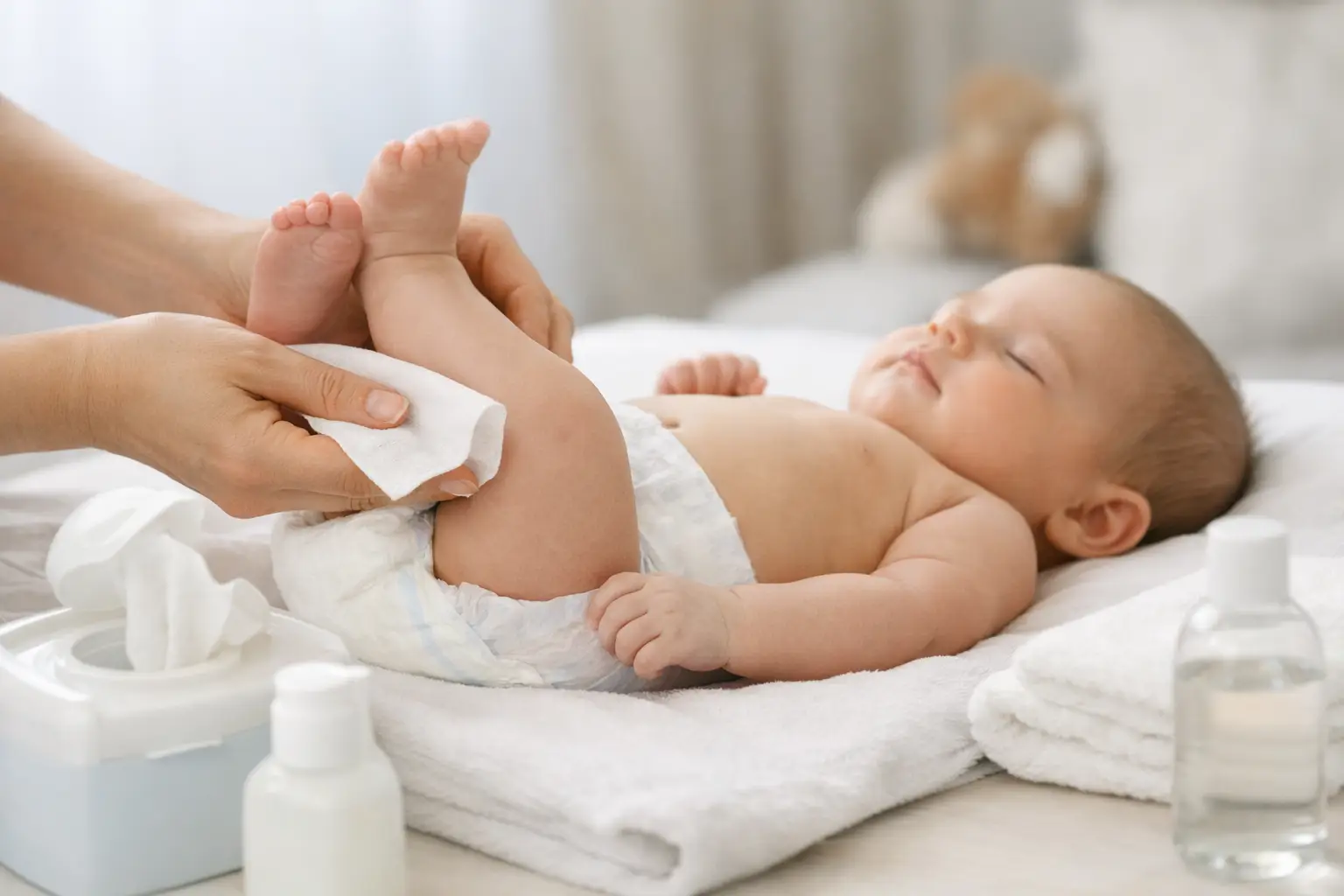
Place your baby on a flat, stable changing surface and keep one hand on them at all times. Open the soiled diaper, then use the front of it to lift away as much stool as you can before reaching for a cloth. This reduces how much wiping their tender skin needs.
For a baby assigned female at birth, wipe from front to back. This helps keep stool away from the urethra and vaginal area. For a baby assigned male at birth, gently clean around the penis and scrotum, including the small creases where stool can hide. Do not forcibly retract an uncircumcised penis. Clean only what is visible from the outside.
2. Clean folds without rubbing
Use light, single-direction strokes rather than going back and forth. Pay attention to the groin creases, buttocks, upper thighs, and any folds where moisture or stool may remain. Lift the legs gently by the ankles or roll baby slightly to one side instead of pulling hard on the feet.
A thick, soft no-rinse bathing cloth can be especially useful for messy changes because it handles more cleanup than a thin standard wipe. Baby Batherz® bathing cloths are made from 100% bamboo and infused with 99% purified water, aloe, vitamin E, and coconut soap without fragrances or harsh chemicals. They are designed for head-to-toe cleansing, so one can also help with a diaper-area mess that has traveled up the back, onto the legs, or into those tiny neck folds.
3. Pat dry when skin is damp
Moisture is a common contributor to diaper rash. After cleaning, let the area air dry for a few moments or pat gently with a clean, dry cloth. Avoid rubbing. If your baby is prone to irritation, this small pause before putting on the fresh diaper can make a real difference.
If you use a barrier cream, apply a thin protective layer to clean, dry skin. There is no need to completely remove every trace of cream at each change unless it is soiled. Repeated vigorous wiping to get skin squeaky clean can cause more redness than the remaining cream.
4. Fasten the diaper with room to breathe
A diaper should be snug enough to contain messes but not tight enough to leave deep marks around the waist or legs. For babies with an umbilical cord stump, fold the front of the diaper down so it does not rub against the cord. Keeping the stump clean and dry is generally the priority during those early days.
Umbilical cord care and diaper changes
The umbilical cord stage is one reason many new parents feel nervous about bathing and cleanup. The stump can look dark, dry, or a little strange as it heals. That alone is usually not a reason to panic.
Keep diapers folded away from the cord and avoid soaking the area. If urine or stool gets on nearby skin, clean around the stump carefully with a gentle damp cloth, then allow the area to dry. A no-rinse cloth gives you a practical way to freshen your newborn without managing a sink bath or getting the cord area unnecessarily wet.
Call your baby’s pediatrician if you notice redness spreading onto the surrounding skin, swelling, foul-smelling drainage, pus, fever, or bleeding that does not stop with gentle pressure. Trust your instincts, too. You know when your baby seems different.
When a diaper change becomes a full cleanup
A newborn blowout rarely arrives at a convenient time. It happens right as you are buckling the car seat, when you have just gotten comfortable after a C-section, or five minutes into a visit at Grandma’s house. The best response is not perfection. It is having a small, ready-to-grab plan.
Keep a spare outfit, diapers, a changing pad, and gentle cleansing cloths in the diaper bag, car, and the room where you spend most of your day. For a major blowout, clean the diaper area first, then work outward to the legs, back, and any soiled clothing. If your baby needs more than a spot-clean but a tub bath feels like too much, a warm no-rinse cloth can turn a stressful mess into a manageable reset.
To warm a sealed cloth, follow the package directions closely and always test it on your inner wrist before it touches baby. Warmth should feel comfortably mild, never hot. A warmed cloth can be especially comforting during nighttime changes, when a cold wipe may wake an already unsettled baby.
This is also where partners and family members can make a meaningful difference. Refill the diaper station. Take the change after a feeding. Wash the soiled sleeper. Bring water and a snack to the recovering parent who has been pinned under a sleeping baby. Newborn care becomes lighter when it is shared in practical ways.
What to do when skin looks irritated
Mild redness can happen, especially after frequent stools, a new diaper brand, or a long stretch in a wet diaper. Change diapers promptly, clean gently, let the skin dry, and use the barrier product recommended by your pediatrician if needed. Avoid introducing several new products at once, since that makes it harder to identify what may be irritating your baby’s skin.
Ask your pediatrician for guidance if a rash is severe, blistered, bleeding, spreading, accompanied by fever, or not improving after a few days of attentive care. A bright red rash with small red spots beyond the main area can sometimes need a different approach than ordinary irritation.
A small care essential that helps new parents breathe easier
During postpartum recovery, the easiest routine is often the one that actually gets done. A ready-to-use cleansing option belongs beside diapers and burp cloths because newborn messes do not wait for a bath schedule. It also makes a thoughtful addition to a baby shower gift, hospital bag, new-mom basket, or a practical gift for grandparents who want to feel prepared.
You do not need a picture-perfect changing station to care well for your baby. You need a safe place to lay them down, a gentle way to clean them, and the reassurance that one messy diaper is simply one more moment of care. Every baby deserves a gentle beginning, and every exhausted parent deserves tools that make that beginning feel a little calmer.