At 2 a.m., after a diaper blowout or a spit-up-soaked onesie, newborn bathing is not about creating a picture-perfect routine. It is about helping your baby feel clean and comfortable while protecting their delicate skin and conserving your own energy. In those early days, especially when you are healing and sleeping in short stretches, a gentle clean-up can be enough.
Newborns do not need a daily tub bath. In fact, too much bathing can dry their sensitive skin. What they do need is consistent care in the places that collect milk, moisture, and messes: the diaper area, neck folds, underarms, behind the ears, hands, and tiny toes. A calm, practical approach lets you care for baby without making every mess a major production.
What newborn bathing really looks like at home
The first few weeks rarely go according to the plan you imagined during pregnancy. Maybe the bathroom is crowded, your baby cries when undressed, or you are recovering from a C-section and bending over a tub feels impossible. Maybe your partner is back at work, or you are trying to get through a feeding before the next nap.
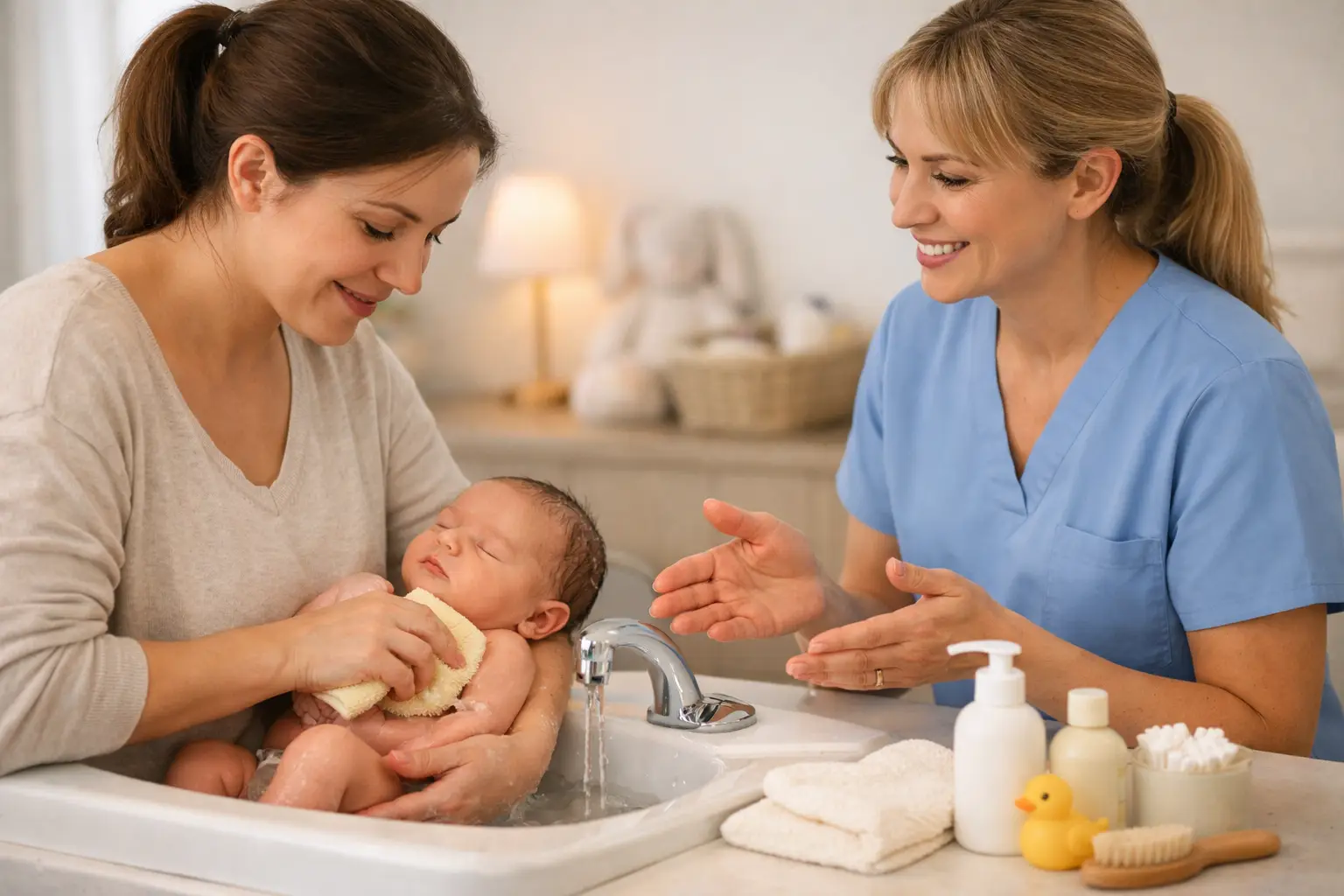
For many families, newborn bathing is a mix of occasional full baths and frequent spot cleaning. A soft washcloth and warm water can work well when you have time and a clean setup. But there are plenty of moments when gathering supplies, filling a basin, and managing a slippery newborn simply is not practical.
A no-rinse, full-body bathing cloth can make those in-between moments much easier. Baby Batherz® were designed by a nurse practitioner for gentle head-to-toe cleansing without a tub, sink, or separate water source. The extra-thick, 100% bamboo cloths are infused with 99% purified water, aloe, vitamin E, and coconut soap, with no added fragrance or harsh chemicals. They are a bathing solution, not a standard diaper wipe.
That distinction matters. A newborn’s skin is thin, easily irritated, and still adapting to life outside the womb. Choose products made specifically for gentle, broad cleansing, and avoid heavily scented products or harsh ingredients that can leave skin dry or uncomfortable.
Newborn bathing during the umbilical-cord stage
The umbilical cord stump needs simple care: keep it clean and dry, and let it fall off on its own. Your baby’s pediatrician may have specific instructions based on your baby’s health and birth history, so follow those first.
Until the cord falls off and the area heals, sponge-style bathing is usually the easiest approach. Clean around the stump gently rather than rubbing it. If the area gets soiled with urine or stool, use a clean, damp cloth or a gentle no-rinse bathing cloth around the surrounding skin, then pat carefully dry. Do not pull at the stump or cover it tightly.
A small spot of blood when the stump is separating can happen. Call your pediatrician if you notice spreading redness, swelling, warmth, foul-smelling drainage, pus, persistent bleeding, or if your baby has a fever or seems unwell. Trust your instincts. You know when something does not look right.
Give extra attention to skin folds
Milk dribbles, sweat, and lint love to hide in newborn folds. During a quick clean-up, gently open and wipe the neck creases, underarms, groin folds, behind the knees, and between fingers and toes. Use a fresh area of the cloth as you go, then pat folds dry. Moisture left in these areas can lead to redness and irritation.
The diaper area deserves its own clean pass, especially after a bowel movement. Wipe front to back for baby girls. For uncircumcised baby boys, clean only the outside of the penis and do not force the foreskin back. If diaper rash is developing, follow your pediatrician’s advice and allow the area to dry before applying any recommended barrier cream.
A four-step no-tub routine for messy moments
A quick newborn clean-up can be gentle and thorough without turning into a bath-time event. Set baby on a secure, flat surface and keep one hand on them at all times. Gather what you need before undressing them, including a clean diaper, fresh clothes, and a dry towel.
- Start with the cleanest areas. Wipe baby’s face gently, avoiding the inside of the eyes. Clean around the ears, neck, hands, and chest before moving to messier areas.
- Work down the body. Clean underarms, belly, legs, feet, and skin folds. Be especially gentle around the cord stump until it has healed.
- Save the diaper area for last. Use a fresh section of the cloth and clean thoroughly. For a major blowout, you may need more than one cloth. That is normal.
- Pat dry and get cozy. Dry any damp folds with a soft towel, add diaper cream if needed, and dress baby in a clean layer. A warm room and a prepared outfit make the whole process feel calmer.
If you prefer a warm cloth, follow the product’s warming directions carefully. Check the temperature against the inside of your wrist before it touches baby’s skin. It should feel comfortably warm, never hot. Newborns lose heat quickly, so keep the clean-up brief and cover the parts of their body you are not washing.
When real life makes a regular bath unrealistic
A tub bath can be lovely when everyone is rested, the bathroom is warm, and you have both hands available. Real life is often less cooperative. A no-rinse bath is particularly helpful after spit-up in the car seat, an overnight diaper leak, a feeding that ends in milk down baby’s neck, or a mess at grandma’s house.
It can also make travel lighter. Instead of searching for a clean sink in an unfamiliar place, you can keep a pack in the diaper bag, car, stroller basket, or hospital bag. For toddlers and young children, the same type of cloth can be useful for sand, dirt, zinc sunscreen lotion, sticky snack hands, and playground grime when a traditional bath has to wait.
This is not about replacing every bath forever. It is about having a safe option when your baby needs care now and the tub is not the right answer. No tub, no stress, just love.
A gentler option for postpartum recovery
Newborn care should not require a recovering parent to push through pain. After a C-section, lifting, twisting, standing at a counter, and bending over a baby tub can be uncomfortable. After any birth, exhaustion can make simple tasks feel much bigger than they are.
A ready-to-use bathing option gives partners a meaningful way to help. They can take over the after-feed clean-up, handle a middle-of-the-night diaper disaster, or prepare baby for a pediatrician visit while you rest. This is practical support, not a small favor.
It also belongs in a thoughtful postpartum care basket. Alongside easy snacks, a water bottle, nursing supplies, and a soft robe, newborn bathing cloths address a need that many new parents do not realize they will have until the first unexpected mess arrives. They also make a useful baby shower, hospital, or new-grandparent gift because they solve a real problem without asking parents to add another complicated routine.
Let comfort, not perfection, guide the routine
Some babies enjoy a warm bath and settle beautifully afterward. Others protest every undressing, every splash, and every change in temperature. Both are normal. You do not need to force a nightly bath to be a caring parent.
Watch your baby’s skin and adjust. If skin looks dry, shorten full baths and use lukewarm water. If folds become red or smell sour, clean and dry them more often. If your baby has eczema, broken skin, a persistent rash, or any skin concern, ask your pediatrician which products and bathing frequency are best for them.
The goal is a baby who is clean, comfortable, and cared for, plus a parent who has one less hard thing to manage. On the messy days, a simple, gentle clean-up is more than enough.