A playground slide, a snack-covered shirt, sunscreen-sticky arms, and sand somehow tucked behind the knees – little bodies get messy fast. So, do baby wipes clean bodies well enough to skip a bath? Sometimes, for a small cleanup. But ordinary diaper wipes are not always the best choice for cleaning a baby’s whole body, especially when dirt, sweat, sunscreen, or food residue is involved.
The reassuring answer is that your child does not need a full tub bath after every mess. A gentle, appropriate cleansing cloth can be a practical way to freshen up when water, time, or a bathtub is not available. What matters is choosing the right product for the job and knowing when a more thorough bath is worth it.
Do Baby Wipes Clean Bodies?
Baby wipes can lift away some surface mess, including spit-up, food smudges, drool, and a little dirt from hands or legs. They are especially useful during a diaper change, after a bottle, or when your toddler has touched every surface at the grocery store.
Still, most standard baby wipes are designed primarily for the diaper area. Their job is to clean stool and urine from a small area of skin, not to serve as a head-to-toe bathing routine. They may be too thin to manage a larger mess, and repeated wiping can leave skin feeling damp or irritated if the product contains ingredients your child’s skin does not tolerate well.
For quick body cleanup, the right cloth should be soft, generously sized, and made with gentle ingredients. For babies and young children with sensitive skin, fragrance-free options are often a sensible choice. If your child has eczema, a rash, broken skin, or a diagnosed skin condition, follow their pediatrician’s guidance about cleansers and wipes.
A wipe is also not the same thing as washing with soap and water after certain situations. If your child has been exposed to a significant amount of dirt, has a large diaper blowout, is visibly grimy after outdoor play, or has been in a pool, a more complete wash may be appropriate when you can manage it.
When a Quick Wipe-Down Is Enough
Parents are often told to create routines, but real life rarely follows one. A quick, gentle wipe-down can be enough when your baby or toddler is generally clean and needs a refresh rather than a full bath.
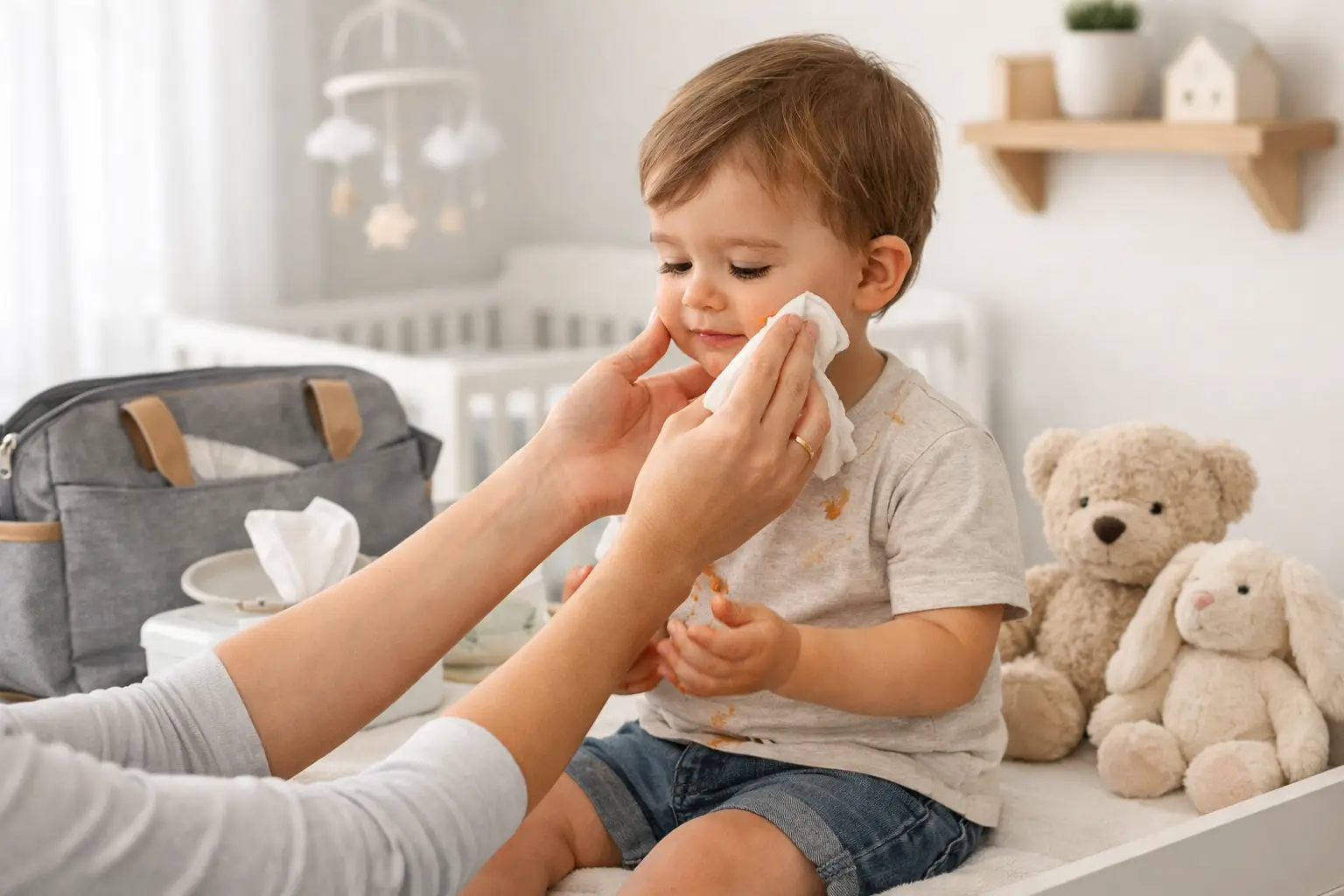
Think of the in-between moments: milk dribbling down a newborn’s neck, drool gathering in chin folds, mashed banana on a baby’s hands, or a preschooler arriving home with dusty shins after the park. Cleaning those areas promptly can help keep skin comfortable, particularly in warm, moist skin folds where milk, sweat, and moisture can linger.
A no-rinse body cleansing cloth can also make sense during travel, at grandparents’ homes, during hotel stays, after a beach outing, or when a child gets carsick. For parents recovering from birth, including after a C-section, a simple cleanup option can mean less lifting, bending, and managing a slippery baby near a sink or tub.
For a quick refresh, focus on the areas that collect the most mess: the face and hands, neck folds, behind the ears, underarms, diaper area, feet, and any visible dirt on legs or arms. Use a fresh section of the cloth as you move from cleaner areas to messier ones. Pat skin dry if it remains noticeably damp, especially between folds.
When Your Child Needs More Than Wipes
Wipes and no-rinse cloths are helpful tools, not a requirement to avoid traditional bathing forever. There are times when a bath or running-water rinse simply does a better job.
A full wash is useful after a muddy outdoor adventure, a pool day, a major sunscreen application, or a mess that has spread through hair and clothing. Zinc-based mineral sunscreen can be particularly clingy. A gentle cleansing cloth may help remove much of it from arms, legs, and faces while you are out, but a bath later can be a more complete way to clear remaining residue.
Your child may also benefit from a bath if they are sweaty and uncomfortable, have sand caught in their scalp or clothing, or have residue that keeps transferring to pajamas and bedding. If skin looks red, feels itchy, develops a new rash, or has open areas, pause the usual routine and call your pediatrician for advice.
For newborns, there is another consideration: the umbilical cord stump. Until it falls off and the area heals, many families are advised to use sponge baths rather than submerging baby in water. Follow your child’s clinician’s recommendations, and keep the cord area clean and dry. Seek medical advice for redness spreading onto the skin, foul-smelling drainage, swelling, or fever.
Choosing a Cloth for Head-to-Toe Cleansing
Reading the front of a package matters. A product labeled as a diaper wipe may be perfectly fine for diaper changes but may not be intended to replace a body bath. If you want an option for a head-to-toe cleanup, look for a cloth specifically designed for bathing or body cleansing.
The material and formula both matter. A thicker cloth is easier to use on a squirming infant or sandy toddler because it is less likely to tear or require several sheets. Gentle, fragrance-free formulas can reduce unnecessary exposure to scent ingredients, which is especially welcome for newborns and children with easily irritated skin.
Also pay attention to how much moisture the cloth holds. A barely damp wipe may smear lotion or grime around rather than lift it away. On the other hand, skin should not stay overly wet after cleansing. A good routine is simple: wipe gently, check skin folds, and pat dry where moisture remains.
Baby Batherz® bathing cloths are made for this wider purpose, not just diaper changes. The extra-thick, 100% bamboo cloths are infused with 99% purified water, aloe, vitamin E, and a coconut-derived cleanser, with no fragrance or harsh chemicals. They offer a no-rinse head-to-toe option when a tub bath is impractical, from early newborn sponge-bath days to sticky toddler outings.
A Calm Way to Handle Everyday Messes
You do not need a complicated system to keep your child clean between baths. Keep a gentle body-cleansing option in the diaper bag, car, and a convenient spot at home. That small bit of preparation can turn a public blowout, a beach-day cleanup, or a surprise spill at Grandma’s house into a manageable moment.
When you use any cleansing cloth, keep it away from your child’s eyes and avoid vigorous scrubbing. Wipe the face with extra care, using a clean portion of the cloth. For the diaper area, clean from front to back and change the diaper promptly. If your child has a large mess, change soiled clothing too, since moisture and residue trapped against skin can lead to irritation.
Bath frequency is not a parenting scorecard. Many babies do not need a tub bath every day, and daily bathing can dry some children’s skin. Your child’s age, activity level, climate, skin needs, and tendency toward messes all shape what works. A toddler who spent the afternoon in sand and sunscreen may need more cleansing than a newborn who spent the day being cuddled indoors.
The goal is not perfection. It is comfortable, cared-for skin and a routine that works when life is busy. Whether you choose a tub bath, a sink rinse, or a gentle no-rinse cleanup, a calm response to the mess is often exactly what your child needs most.