
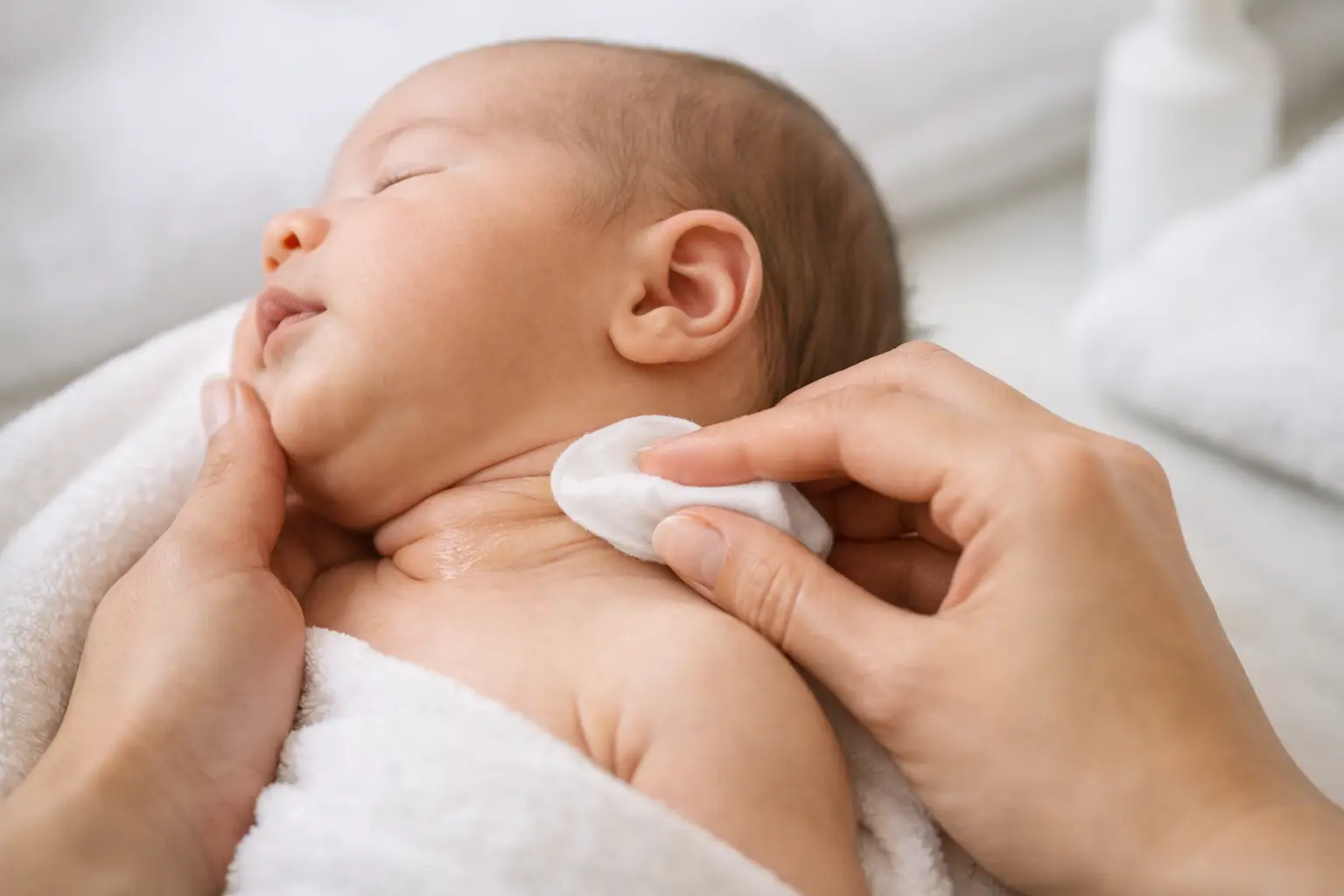
A sweet milk smell can turn sour surprisingly fast in the soft crease beneath a newborn’s chin. Spit-up, drool, breast milk or formula, and tiny bits of lint can settle there, especially when your baby spends much of the day curled up with their chin near their chest. It is common, and it does not mean you are doing anything wrong. Cleaning newborn neck folds is simply one small part of keeping delicate newborn skin comfortable.
The goal is not to scrub or bathe that area constantly. Newborn skin has a sensitive protective barrier, so gentle cleaning followed by careful drying is usually all it needs. A calm, simple routine can prevent moisture from lingering in the crease without adding one more stressful task to your day.
Why newborn neck folds need extra attention
Neck folds are warm, close together, and often damp. That combination can irritate skin quickly. Milk dribbles down during feeds, saliva gathers with normal newborn drooling, and sweat can collect under the chin. When moisture stays trapped, you may notice redness, a sour odor, flaky skin, or little bits of pale residue.
Babies with fuller cheeks or several skin folds may need a quick check more often, but every baby is different. Some need attention after nearly every feed or spit-up episode. Others do fine with a check during diaper changes and their usual bath routine. Let your baby’s skin guide you rather than following a rigid schedule.
A little pinkness that improves once the area is clean and dry can happen. Skin that becomes bright red, raw, cracked, weepy, or persistently smelly deserves a call to your baby’s pediatrician. Rashes in skin folds can have several causes, including irritation, heat rash, eczema, or yeast, and the right care depends on what is causing it.
How to clean newborn neck folds gently
Choose a time when your baby is calm, perhaps after a feed, during a diaper change, or while you are already doing a quick head-to-toe cleanup. Have your cloth and a dry, soft towel or clean corner of a cloth within reach before you begin. Keeping one hand on your baby at all times is essential if they are on a changing table or elevated surface.
Support the head and lift the chin softly
Lay your baby on a safe, flat surface or hold them securely in a supported position. With clean hands, gently support the back of the head and lift the chin just enough to see the crease. There is no need to stretch the skin or force their head back. A small opening is enough to clean what is there.
If your newborn is asleep in your arms and the fold looks dry and clean, let them sleep. This task can wait. If there is visible milk, spit-up, or moisture, use a quiet moment after they wake instead of trying to clean deeply while they are resting.
Wipe with a soft, gentle cloth
Use a clean cloth dampened with plain warm water, or a gentle no-rinse bathing cloth made specifically for a baby’s skin. Wipe the fold with light strokes, moving from the cleaner outer skin toward the crease. If you see dried milk or residue, hold the damp cloth against it for a few seconds first. Softening it is kinder to the skin than rubbing.
Avoid adult body wipes, fragranced wipes, alcohol-based products, and strongly scented soaps in this tender area. Standard diaper wipes may be useful for diaper changes, but they are not always designed for a complete newborn bath or repeated use on sensitive areas such as the neck and face. Less product is often better when newborn skin is healthy.
For families who need a bath alternative during postpartum recovery, travel, or the umbilical cord stage, Baby Batherz offers pediatrician-approved, no-rinse bamboo bathing cloths made with 99% purified water, aloe, vitamin E, and gentle coconut soap. The cloth can be used for a quick neck cleanup or as part of a full bath when a tub is not practical.
Dry the fold thoroughly, but do not rub
Drying is the part parents often rush, yet it is what helps prevent moisture irritation. Use a clean, dry portion of the cloth or a soft towel to gently pat inside the crease. Keep the chin lifted for a moment so the area can air-dry before settling your baby back into their usual position.
Do not rub the skin briskly. Friction can make an already pink fold more irritated. You also do not need to use powder to dry the area. Powders can be inhaled by babies and may clump in moist skin folds. If you are considering a cream, ointment, or medicated product for a rash, ask your pediatrician first. Some products can trap moisture or make certain fold rashes worse.
When should you check your baby’s neck?
A quick look at the neck fold after feeds is helpful for babies who spit up often. You can also check during diaper changes, when changing clothes, and after time in a warm car seat or carrier. This is not about creating a perfect schedule. It is about catching wetness before it sits against the skin for hours.
A full bath is not required every time there is a little milk under the chin. In fact, frequent soap-and-water baths may dry a newborn’s skin. Spot cleaning is the practical middle ground: clean the mess, pat dry, and move on with your day.
Warm weather, heavier drooling, reflux, and longer stretches in a car seat can all mean you need to check more frequently. In cooler weather, neck folds may stay dry longer. Your baby’s routine will change week to week, so it is okay for your cleanup routine to change too.
What not to do when cleaning neck folds
It can be tempting to use more pressure when you see buildup, but newborn skin does not need a deep scrub. Do not dig into the fold with a fingernail, cotton swab, or rough washcloth. Avoid leaving a wet cloth tucked beneath the chin, even briefly, because trapped dampness is the problem you are trying to solve.
Skip perfume, essential oils, deodorizing sprays, and home remedies. A fold that smells unpleasant may need better drying, but a strong odor that returns after gentle cleaning may also signal irritation or infection. Covering it with fragrance does not address the cause.
Also, resist the urge to diagnose every red patch yourself. A mild moisture rash may improve with gentle cleaning and drying, while a yeast rash can need different treatment. Your pediatrician knows your baby’s age, medical history, and skin concerns, and can tell you whether an in-person visit is needed.
Signs it is time to call the pediatrician
Call your baby’s pediatrician if the skin is worsening instead of improving after a day or two of keeping it clean and dry. Reach out sooner if you see open skin, bleeding, blisters, pus, swelling, a spreading rash, or a fever. Newborns deserve prompt medical guidance when they seem unwell.
You should also ask for advice if the rash has distinct small bumps around its edges, a shiny bright-red appearance, or a persistent odor. These details can help the clinician identify whether moisture is the only issue or whether another type of rash is involved. Take a photo before cleaning if the appearance changes throughout the day, since that can be useful when you call.
Most neck-fold care comes down to a gentle touch, a clean cloth, and a dry finish. In the early newborn days, small routines like this can feel like a lot, especially when you are recovering too. Keep it simple: clean what you see, dry what you clean, and give yourself permission to ask for help whenever your baby’s skin does not look or feel right.