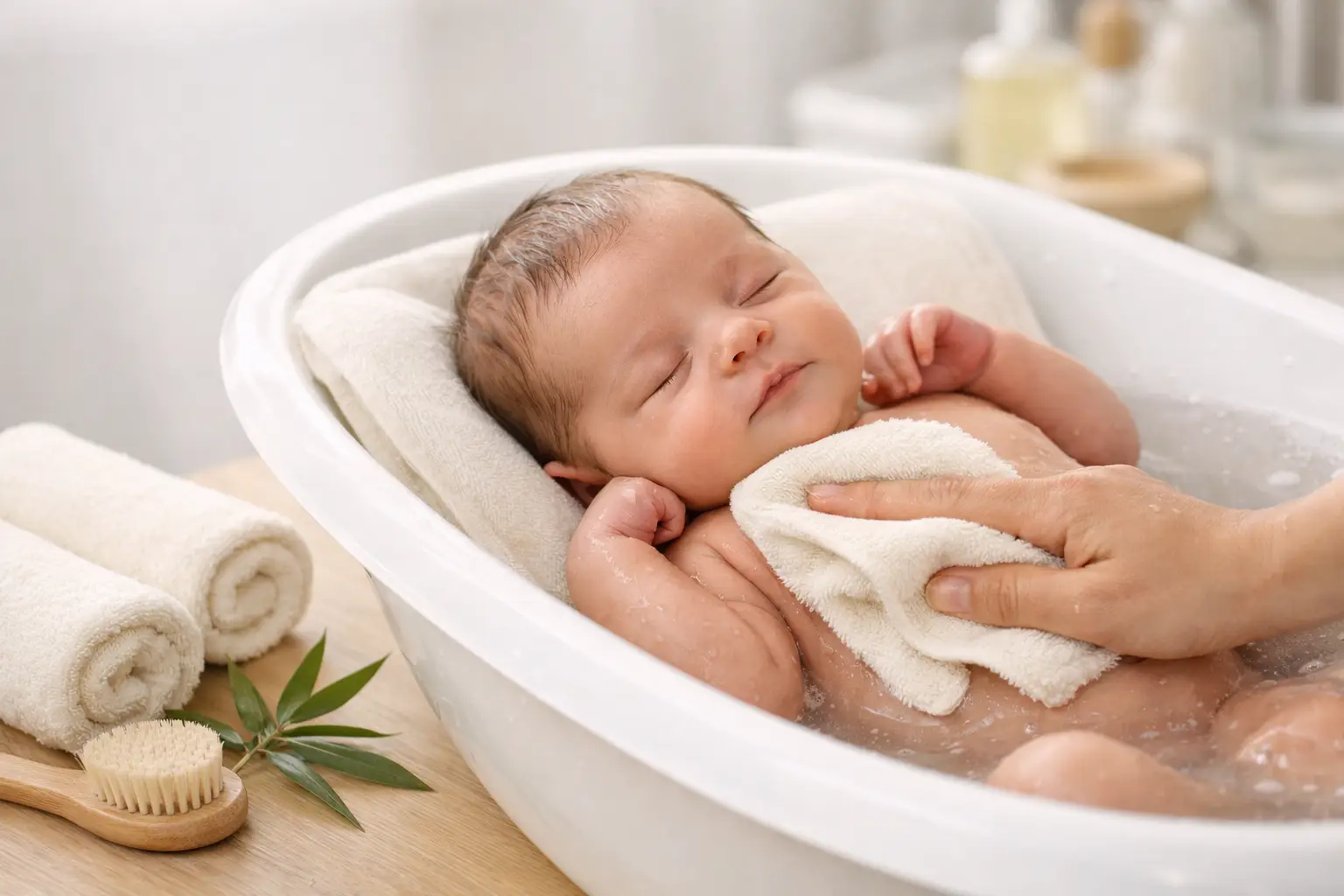
The first days home can make a simple question feel big: can newborns use bamboo cloths for bathing? Yes, when the cloth is made specifically for delicate baby skin and used gently. A soft, no-rinse bamboo bathing cloth can make those early cleanups feel far more manageable, especially when your baby’s umbilical cord is still healing and a traditional bath is not practical.
Newborns do not need a full tub bath every day. In fact, gentle spot-cleaning and sponge-style baths are often the easiest approach in the early weeks. The goal is not perfection. It is keeping baby comfortable, clean, and dry in the places that need attention, without creating more work for an already tired parent.
Can Newborns Use Bamboo Cloths Safely?
The short answer is yes, but the details matter. Newborn skin is thinner and more sensitive than adult skin, so the cloth and the ingredients touching that skin should be chosen with care. A bamboo cloth intended for baby bathing should feel soft, hold enough moisture to cleanse without rubbing, and be free from harsh ingredients that can irritate delicate skin.
Look beyond the word “bamboo.” Some bamboo cloths are dry washcloths, while others are marketed more like standard wipes. For a head-to-toe newborn cleanup, choose a bathing cloth designed for that specific job. It should be generously sized, extra thick, and moist enough to lift milk dribbles, diaper-area messes, and the little bits of lint that gather in neck folds and behind ears.
A gentle formula matters just as much as the material. Baby Batherz® are pediatrician-approved, 100% bamboo, single-use bathing cloths made with 99% purified water, aloe, vitamin E, and a mild coconut soap formula without fragrances or harsh chemicals. They are designed as a no-rinse bathing solution, not simply as a diaper wipe. That distinction matters when you are cleaning baby from scalp to tiny toes.
No product can replace your pediatrician’s advice for a baby with a skin condition, a premature baby with special care instructions, or a newborn whose provider has given specific bathing guidance. But for most healthy newborns, a gentle cloth bath is a practical option between traditional baths.
Why the Umbilical-Cord Stage Calls for a Simpler Routine
Until the umbilical cord stump falls off and the area has healed, many parents are advised to stick with sponge baths rather than submerging baby in water. This is one reason a ready-to-use bathing cloth can be such a relief. There is no filled tub to manage, no sink setup, and no need to balance a slippery newborn while you search for a clean washcloth.
Clean around the cord area gently, rather than scrubbing the stump. If the area becomes wet, pat it dry with a clean, soft cloth and keep the diaper folded below the stump when possible. Call your baby’s healthcare provider if you notice spreading redness, swelling, foul-smelling drainage, pus, fever, or bleeding that does not stop with gentle pressure. A little drying, darkening, or a small spot of blood as the stump separates can be normal, but your instincts matter.
Cord care is also a reminder that newborn bathing does not have to be all-or-nothing. Some days, baby may only need the face, neck, hands, diaper area, and skin folds cleaned. On another day, a full no-rinse wipe-down may be exactly what your family needs.
A Gentle Way to Give a No-Rinse Newborn Bath
Set up before you undress baby. Choose a warm, draft-free spot and keep a fresh diaper, clean outfit, and blanket within reach. If you would like a warmer cloth, warm the unopened package according to its instructions. Always test the cloth on the inside of your wrist first. It should feel comfortably warm, never hot.
For a calm head-to-toe cleanup, follow four simple steps:
- Start with the cleanest areas. Wipe baby’s face with care, avoiding direct contact with the eyes. Move to the neck, behind the ears, hands, arms, chest, and legs.
- Open skin folds gently. Milk, sweat, and lint can collect under the chin, in thigh creases, under arms, and around little fingers and toes. Lift and wipe softly, then make sure the area is dry.
- Save the diaper area for last. Clean front to back, especially for baby girls. Use a fresh section of the cloth as needed and avoid bringing bacteria from the diaper area to other parts of the body.
- Dress and cuddle. Pat any damp spots dry if needed, put on a clean diaper and clothes, and settle in for the best part: a warm, clean baby against your chest.
There is no need to over-clean. If your newborn has dry skin, bathing less often and using gentle products may help. Ask your pediatrician before adding lotions, oils, powders, or fragranced products to a newborn routine.
When Bamboo Bathing Cloths Make Real Life Easier
Newborn messes rarely arrive when the tub is clean and you have a full hour to spare. They happen after a 2 a.m. diaper blowout, during a cluster-feeding stretch, or five minutes after you finally buckled everyone into the car. A no-rinse cloth gives you a way to handle the mess without turning a quick cleanup into a major production.
They are especially useful for spit-up caught in neck rolls, milk on a newborn’s hairline, and diaper leaks that travel farther than expected. A thick bathing cloth can clean more effectively than a thin wipe when you need to freshen a larger area, and it can be easier on baby than repeated rubbing with multiple small wipes.
Travel is another moment when parents appreciate a backup plan. At grandma’s house, in a hotel, after an appointment, or during a long day of errands, you may not have access to a clean tub or a convenient sink. Keep cloths in the diaper bag, car, or postpartum care basket so a sudden mess does not become an emergency.
They remain useful well beyond the newborn stage, too. Toddlers have a talent for finding sand, dirt, sunscreen, sticky snacks, and every puddle within reach. A quick no-rinse cleanup can bridge the gap until bath time when a traditional bath is simply not an option.
Less Lifting, Less Setup During Postpartum Recovery
Early newborn care should not require a recovering parent to stand at the sink, bend over a tub, carry water, and manage a wiggly baby all at once. For a new mom recovering from a C-section, a difficult delivery, or the everyday exhaustion of postpartum life, reducing those steps is not a luxury. It is practical care.
A partner can take the lead by creating a small bathing station near the couch, bed, or changing area. Place the cloths, diapers, clean sleepers, and burp cloths together before baby needs them. This gives the recovering parent one less decision to make and one more chance to rest.
Bamboo bathing cloths also make a thoughtful addition to a baby shower gift, hospital bag, or new-mom basket. The most appreciated gifts are often not the showiest ones. They are the items that help at 3 a.m., after an unexpected mess, or when a new parent realizes they cannot face one more complicated task.
A Few Smart Safety Checks
Even gentle products deserve a careful first use. Test a small area of skin if your baby has a history of sensitivity, and stop using any product that seems to cause redness, rash, or discomfort. Keep bathing cloths out of baby’s reach, never leave your newborn unattended during a cleanup, and avoid using a cloth on broken or infected skin unless your healthcare provider recommends it.
Use only as directed, and remember that a no-rinse cloth is for cleansing, not for treating diaper rash, eczema, or a possible infection. Persistent rashes, weeping skin, blisters, fever, poor feeding, or a baby who seems unusually sleepy or unwell deserve a call to your pediatrician.
A newborn bath does not need to look like the picture-perfect version you imagined before delivery. Sometimes it is a warm cloth, a clean sleeper, and a few quiet minutes together on the couch. No tub, no stress, just love – and a gentle beginning for the baby in your arms.