The lights may be out, the tap may be off, and your baby may choose that exact moment for a diaper blowout. Baby hygiene during a water outage does not have to become another emergency. With a few safe supplies and a simpler definition of “clean,” you can keep your newborn or toddler comfortable until water service returns.
For most babies, a missed tub bath is not harmful. During an outage, focus first on diaper changes, hands, faces, skin folds, and anything your baby has spit up or soiled. No tub, no stress, just love and a practical plan.
Start With the Priorities, Not a Full Bath
Babies do not need a traditional bath every day, especially newborns. In fact, frequent bathing can dry delicate skin. If your water is unavailable, it is completely reasonable to postpone a tub bath for a day or several days while keeping the areas that need attention clean.
Your highest priorities are a clean diaper area, dry skin folds, and a comfortable baby. Check the neck, underarms, behind the ears, groin, and between little toes, where milk, drool, sweat, or moisture can collect. Change wet or soiled diapers promptly, and gently clean after each bowel movement.
For a newborn, pay extra attention to the umbilical cord stump. Keep it clean and dry, and avoid soaking it unless your pediatric clinician has given different instructions. If urine or stool gets on the area, gently clean the surrounding skin and pat dry. Call your baby’s pediatrician if you notice spreading redness, swelling, foul-smelling drainage, pus, fever, or tenderness around the cord.
Build a Small No-Water Baby Care Station
When you are dealing with an outage, gathering supplies in one spot lowers stress. Set up where you can safely lay your baby down, such as a changing table, floor mat, or bed with a hand on baby at all times. Keep a clean towel or blanket underneath for warmth and easy cleanup.
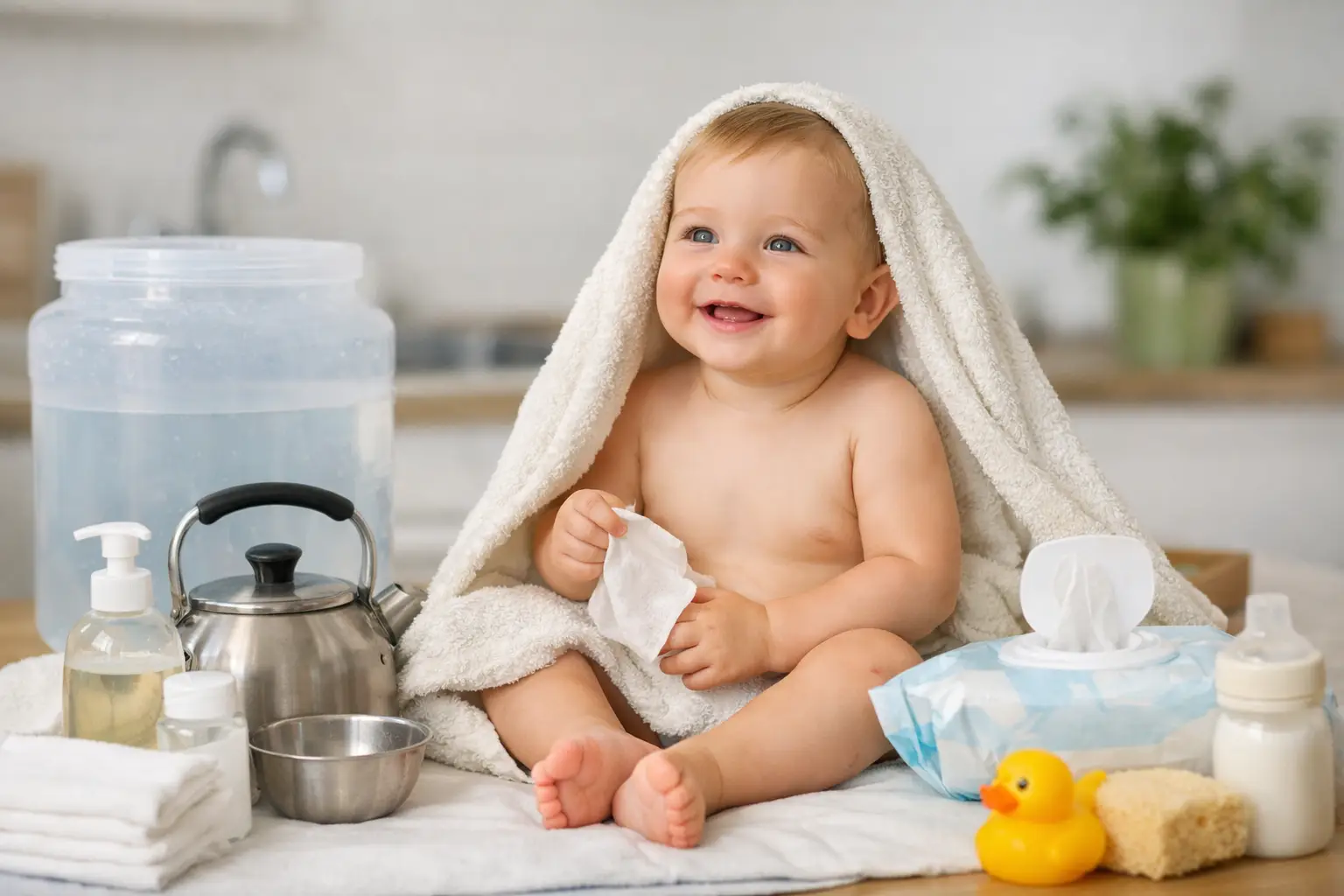
A useful station includes clean diapers, diaper cream if your baby uses it, a change of clothes, a dry towel, a bag for waste, and gentle no-rinse cleansing cloths made for a baby’s full body. If you have safe bottled or stored water, reserve it primarily for drinking and formula preparation rather than routine bathing.
For families who prefer a ready-to-use option, Baby Batherz cloths are designed for a gentle head-to-toe clean without a tub, sink, or separate water source. Their extra-thick bamboo cloths are infused with 99% purified water, aloe, vitamin E, and coconut soap, without harsh chemicals. One cloth can make a meaningful difference when traditional bathing is simply not possible.
How to Clean Baby Without Running Water
A calm, brief clean is usually best. Keep baby warm by closing drafts, laying out clothing beforehand, and uncovering only the area you are cleaning. If your home is cool, warm a no-rinse cloth according to its package directions and always test it on the inside of your wrist first. It should feel comfortably warm, never hot.
Clean From Cleanest to Messiest
Begin with your baby’s face. Use a fresh corner of a gentle cloth and wipe from the center of the face outward. Clean around the eyes carefully, using a separate clean area for each eye, and do not put soap or cleansing product directly into the eyes.
Move to the neck, behind the ears, hands, arms, chest, back, legs, and skin folds. Lift folds gently, wipe away any moisture or residue, and pat the area dry if it remains damp. A no-rinse product should leave skin clean and comfortable, not wet or sticky.
Save the diaper area for last. Clean from front to back, especially for girls, and take your time in skin creases. If your baby has a diaper rash, use a soft touch rather than scrubbing. Let the skin air-dry for a moment when possible, then apply the diaper cream recommended by your pediatric clinician before putting on a fresh diaper.
Keep Hair Care Simple
There is no need to wash your baby’s hair during every outage. If hair is visibly soiled or has spit-up in it, gently wipe the scalp and hairline with a no-rinse bathing cloth. Avoid making the scalp overly wet, particularly if you cannot fully dry it afterward.
For babies with cradle cap, resist the urge to pick at flakes. A normal bathing routine can resume once safe water service returns, but a short interruption will not undo your usual care.
Use Water Only When You Know It Is Safe
A water outage and a boil-water advisory are not the same thing, but both require extra caution. If your local utility says tap water is unsafe, do not use it for mixing formula, washing bottles, preparing food, brushing teeth, or bathing your baby unless local authorities specifically say it is safe for that purpose.
Boiling water can make it safe for some uses when public health guidance says to do so, but boiling does not remove every type of chemical contamination. Follow the instructions issued for your area. If the water is off entirely, use commercially bottled water or a safely stored emergency supply for feeding needs.
Formula-fed babies have particularly specific safety needs. Prepare formula exactly as directed by your pediatrician, the formula manufacturer, and local public health guidance. Do not dilute formula to stretch your supply, and do not substitute homemade formula or plain water for feedings. If you have questions about safe preparation during a prolonged outage, call your pediatrician or local health department.
Protect Your Hands Before You Touch Baby
The cleanest bathing cloth cannot replace caregiver hand hygiene. Wash hands with soap and safe running water whenever it is available, especially after diaper changes and before preparing a bottle. When it is not, use an alcohol-based hand sanitizer with at least 60% alcohol, rubbing hands together until dry.
Hand sanitizer is useful when hands are not visibly dirty. If you have stool, dirt, grease, or other visible debris on your hands, wipe away the soil first with a clean disposable cloth, then use sanitizer. Keep sanitizer out of your baby’s reach, and let your hands dry fully before picking them up.
If your baby has started solids and is old enough to explore everything with their hands, wipe hands before meals and after outdoor play. During an outage, this small habit may matter more than whether they get a complete bath.
When a Quick Clean Is Enough and When to Call
A quick no-rinse cleanup is enough for ordinary spit-up, drool, a sweaty neck, a messy diaper, sand after a park visit, or sunscreen and grime after an outing. Toddlers can be cleaned in sections, too, especially when a full bath would be impractical or the water supply is unreliable.
But an outage should not keep you from seeking medical guidance when your baby seems unwell. Call your pediatrician promptly for a fever in a baby younger than 3 months, fewer wet diapers than usual, signs of dehydration such as a very dry mouth or no tears when crying, repeated vomiting, a rapidly spreading rash, or a diaper rash with blisters, open sores, or fever.
If your baby has been exposed to floodwater, sewage, or unknown contaminated water, do not rely on a routine wipe-down alone. Remove wet clothing, gently clean as best you can with a safe no-rinse option or confirmed safe water, and contact your pediatrician for advice based on the exposure.
Prepare Before the Next Outage
Once life feels normal again, restock before you need to. Keep a small supply of diapers, no-rinse baby bathing cloths, diaper cream, hand sanitizer, extra outfits, and safe drinking water together in an easy-to-reach place. Include these essentials in your diaper bag if you travel often or live in an area prone to storms.
The goal is not a picture-perfect routine. It is a clean, dry, well-fed, comforted baby and a parent who knows that a disrupted day does not mean they are falling behind. Gentle care can happen wherever you are, even when the water does not.