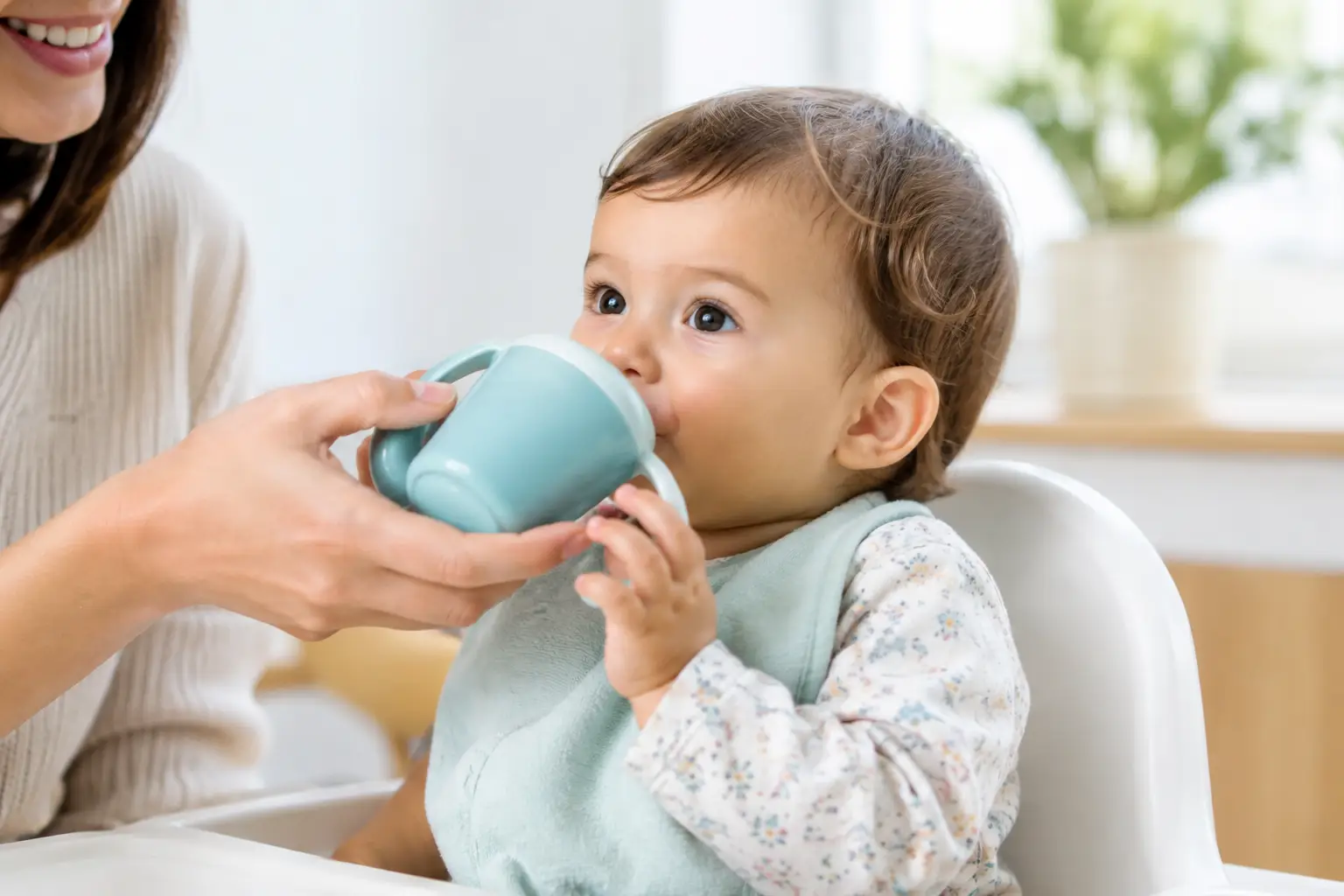
A baby reaching for your water glass can make this milestone feel urgent. But when parents ask, “when can babies drink water and start using a cup?” the answer has two parts: babies can begin practicing with a cup around 6 months, while water should stay a small addition to breast milk or formula, not a replacement for it.
That distinction takes pressure off. Your baby does not need to master a cup overnight, and they do not need much water at first. A few supervised sips at meals are plenty of practice for a new skill that will grow over the months ahead.
When Can Babies Drink Water and Start Using a Cup?
For most babies, about 6 months is the right time to offer small sips of plain water in an open cup or straw cup. This usually lines up with the start of solid foods, when babies are sitting with support, showing interest in food, and learning how to move tastes and textures around their mouths.
Before 6 months, breast milk or infant formula provides the fluid your baby needs, even in warm weather. Giving young infants extra water can fill their very small stomachs, reduce the amount of breast milk or formula they take in, and in large amounts disrupt the balance of salts in their body. If your baby is sick, has a fever, is vomiting, or seems dehydrated, call their pediatrician instead of offering extra water on your own.
Once solids begin, water has a simple supporting role. It can help a baby get used to drinking from something other than a bottle or breast, and a few sips with meals may be helpful as their diet changes. Breast milk or formula remains the main source of nutrition and hydration throughout the first year.
How Much Water Is Safe?
At 6 to 12 months, many babies do well with roughly 4 to 8 ounces of water across the entire day. Some will take less, especially at the beginning. That is completely normal. Think of water as mealtime practice, not a beverage your baby needs to finish.
After your child turns 1, water can become a more regular drink as whole milk and solid foods take on a larger role. A toddler’s needs vary with their activity level, weather, diet, and individual health. Offer water routinely, especially with meals and snacks, but let thirst and wet diapers guide you rather than pushing a specific number of cups.
Your child’s pediatrician may give different advice for medical conditions, premature birth, feeding difficulties, or concerns about growth. Personalized guidance always comes first.
Why Cup Practice Can Start Before Bottle Weaning
Starting a cup around 6 months does not mean you need to remove bottles or stop breastfeeding. It simply gives your baby time to learn. Cup drinking uses new muscles and coordination, and early, low-pressure practice can make the eventual transition away from bottles less dramatic.
Many babies spill, sputter, blow bubbles, and tip the cup upside down at first. Those messy attempts are part of learning, not a sign that your baby is failing or not ready. Offer a tiny amount of water and stay close. If they seem frustrated, pause and try again another day.
An open cup is often a wonderful first option because babies can see and control the water. A small, lightweight training cup with two handles can be easier for little hands. Hold it with your baby at first and let them take one or two small sips. A straw cup is another good choice, particularly for babies who enjoy sucking and need a less spill-prone option for outings.
Traditional sippy cups can work for some families, but choose one that encourages sipping rather than prolonged sucking whenever possible. The goal is not to find one perfect cup. The goal is repeated, relaxed practice.
Signs Your Baby Is Ready to Practice
Readiness is less about a birthday on the calendar and more about development. Your baby may be ready to explore a cup when they can sit upright with support, bring objects to their mouth, show interest while you drink, and have started solids safely.
Keep cup practice seated and supervised. A baby should not crawl, cruise, ride in a stroller, or lie down with a cup. Even water can lead to coughing if a baby takes in more than they can comfortably manage, and drinks in bed can become an unhelpful sleep habit later on.
A Calm Way to Introduce Water and a Cup
Choose one predictable meal each day, such as breakfast or dinner. Put a small amount of water in the cup, sit your baby securely in their high chair, and offer it after a few bites of food. You can hold the cup together and say something simple, such as, “Here is water. Take a little sip.”
Do not worry if most of the water lands on the bib, tray, or floor. A towel under the high chair can make the learning stage easier on everyone. At home or away, keep the focus on comfort rather than cleanliness perfection. Babies learn through repetition, and a calm adult response helps them stay curious.
If your baby refuses the cup, avoid forcing it. Try a different cup style, a different time of day, or a few days off. Some babies love an open cup right away; others need more time with a straw. Both paths are normal.
Drinks to Avoid During the First Year
Plain water in small amounts is enough for a baby who has started solids. Babies do not need juice, sweetened drinks, sports drinks, soda, herbal teas, or flavored water. These can add sugar, crowd out nourishing milk or food, or introduce ingredients that are not suitable for infants.
Cow’s milk should not replace breast milk or formula as a main drink before 12 months. It does not provide the nutrient balance young babies need. Plant-based milks also are not a substitute for infant formula unless your pediatrician has specifically advised one for your child.
Honey should not be added to water or drinks for babies under 1 year old. Even a small amount can carry a risk of infant botulism.
Once your child is 1, juice is still not necessary. Whole fruit and water are better everyday choices. If you do serve juice occasionally, keep portions small and offer it in a cup with a meal, never in a bottle or as a bedtime drink.
Keeping Cup Time Clean and Safe
Cups can trap milk residue, food particles, and moisture in straws, valves, and lids. Take them apart fully and wash all pieces after use, following the manufacturer’s instructions. Let every part dry completely before putting it back together. A clean cup matters even more when your baby is still building familiarity with drinking skills and may leave a cup half-finished for later.
For water at home, refill the cup fresh each day. When you are out, bring a clean cup and safe drinking water rather than sharing an adult bottle. This is especially useful during travel, park days, and visits with grandparents, when routines are already a little different.
Mealtime learning can also be messy in all the expected ways: water dribbles, avocado reaches the elbows, and sunscreen or sand somehow appears at dinner. Keep a simple cleanup plan nearby. A gentle, no-rinse Baby Batherz cloth can be useful for wiping sticky hands, food-smeared cheeks, and everyday on-the-go messes when a full bath is not practical.
When to Call the Pediatrician
Most cup learning bumps are harmless, but some situations deserve a call. Reach out to your child’s pediatrician if your baby regularly coughs, chokes, gags intensely, or seems distressed with small sips; refuses feeds along with cup practice; has noticeably fewer wet diapers; or seems unusually sleepy, dry-mouthed, or difficult to wake.
Get urgent medical care if your baby has trouble breathing, turns blue or gray, or appears to be in significant distress after choking. For a child who is sick with diarrhea, vomiting, or fever, ask the pediatrician what fluids are appropriate. Their advice may differ based on your child’s age and symptoms.
A cup is not just another item to check off before toddlerhood. It is a small daily invitation to practice independence while your baby still has you close by. Offer a little water, expect a little mess, and let those early sips happen at your family’s pace.