A baby who topples sideways after two seconds of sitting is not behind. They are practicing. Sitting up is a full-body skill that develops through months of head control, tummy time, rolling, reaching, and plenty of wobbly attempts. If you are wondering, “when do babies sit up? helping baby build the skills” starts with giving them safe opportunities to move rather than trying to rush the milestone.
When Do Babies Sit Up? Helping Baby Build the Skills
Many babies begin sitting with support between 4 and 6 months. They may lean against your legs, sit in your lap, or use their hands on the floor for balance. Independent sitting often happens closer to 6 to 8 months, though some babies take a little longer. By around 9 months, many can sit steadily without support and use their hands to play.
Those ranges are helpful, but they are not a deadline. A baby born early may follow their adjusted age for developmental milestones. Temperament matters, too. One baby may be eager to sit but cautious about rolling; another may spend more time moving across the floor before settling into a stable seated position.
The bigger picture is how your baby is progressing over time. Are they gaining head control, tolerating tummy time, reaching for toys, rolling, or becoming steadier when supported? These are the building blocks that make sitting possible.
The Skills That Come Before Sitting
Sitting is not only about a strong back. Your baby needs enough head and neck control to keep their head centered, trunk strength to resist gravity, and balance reactions to correct themselves when they tip. They also need practice shifting weight from side to side as they reach for a toy or look toward a familiar voice.
That is why floor play is so valuable. Time on a firm, clear surface lets babies use their whole body in ways that a reclined seat, swing, bouncer, or infant carrier cannot. Baby gear can be useful for short periods when you need a safe place to set baby down, but it should not replace daily free movement.
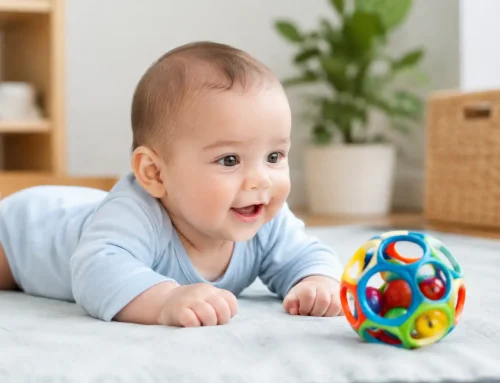
Tummy time remains one of the most helpful ways to prepare for sitting. It strengthens the neck, shoulders, arms, and trunk while encouraging your baby to lift their head and shift their weight. If your baby protests, start small. A few minutes after each diaper change, chest-to-chest on you, or with a rolled towel under the chest can be more manageable than one long session.
Simple Ways to Encourage Sitting at Home
You do not need special equipment to help your baby learn. The best practice often looks like ordinary play on the floor with you nearby.
Let baby practice supported sitting
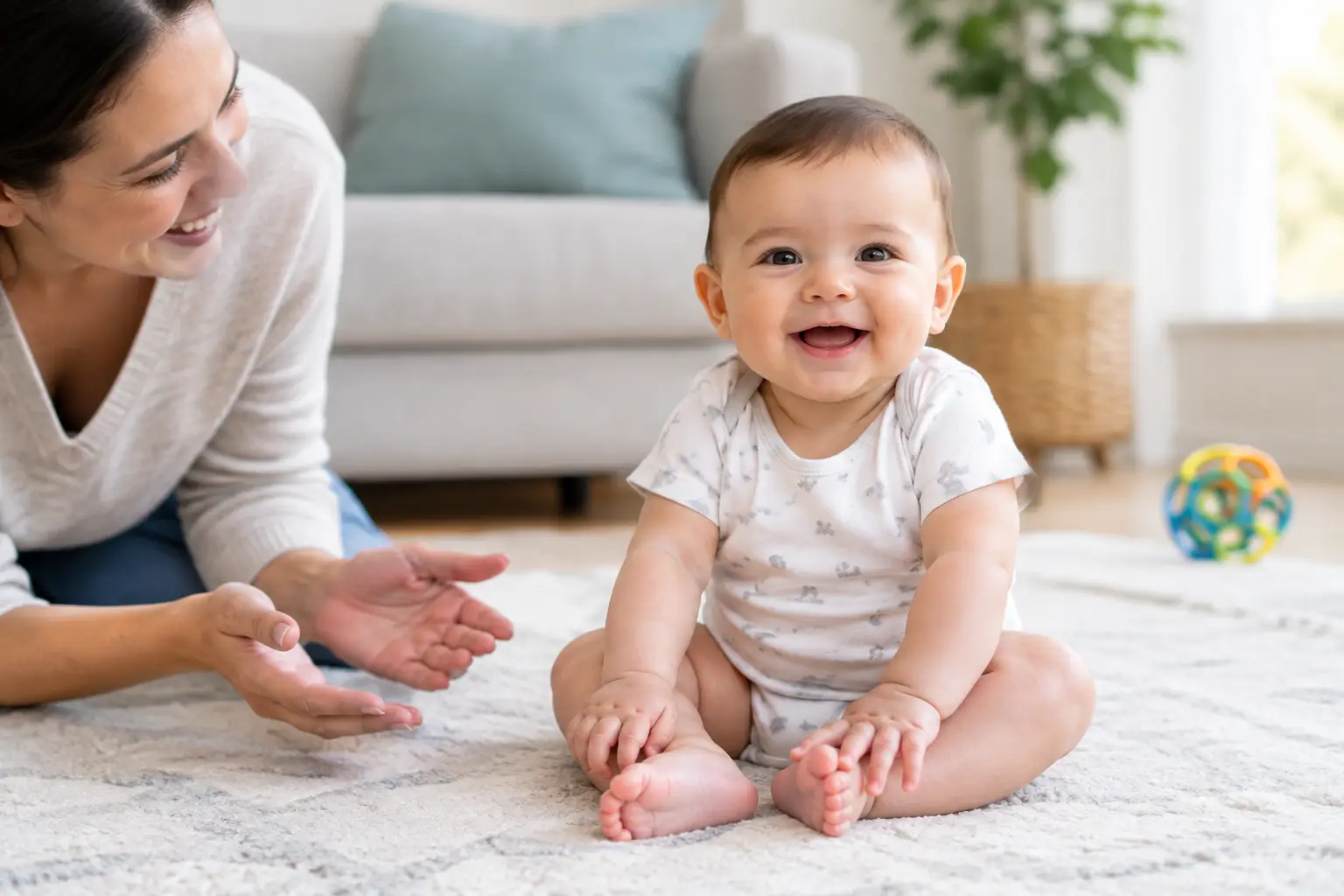
Sit on the floor with your baby between your legs, with your hands lightly at their hips or lower trunk rather than holding them rigidly around the chest. This gives them room to make small corrections while still feeling secure. As they become steadier, reduce your support little by little.
You can also sit baby on your lap facing outward or sideways while you sing, read a board book, or talk about what is happening around them. Keep sessions short and stop when they begin to slump, fuss, or seem tired. Good practice is calm practice, not endurance training.
Put interesting toys slightly out of reach
Place a soft toy in front of baby while they are supported in sitting or during tummy time. Reaching encourages them to use their core and shift their weight. Start with the toy close enough to succeed. If it is too far away, baby may simply fall forward and become frustrated.
Try offering a toy first at the center, then a little to each side. This gentle movement helps your baby learn that their body can respond when their balance changes.
Make room for rolling and reaching
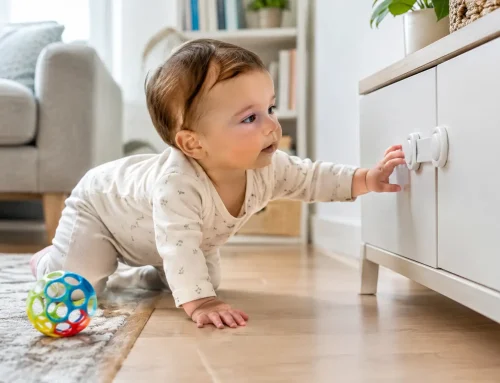
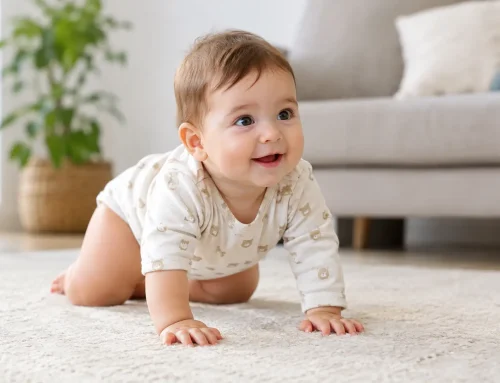
Rolling is often part of the path to sitting. A baby who rolls from back to tummy and tummy to back is learning coordination, strength, and how to move through different positions. Resist the urge to place baby in a sitting position for long stretches before they can get there with some help. Their own movement teaches them far more.
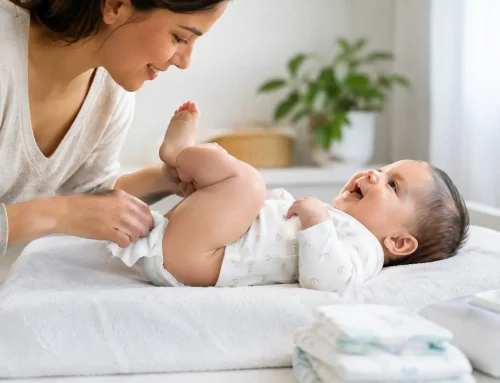
A clean blanket or play mat on the floor is enough. For babies who are drooling heavily, spitting up, or getting messy during floor play, a quick gentle cleanup can keep the moment comfortable without turning every little mess into bath time.
Use pillows carefully, not as a substitute for supervision
A nursing pillow or firm pillows placed around baby can soften a small topple during closely supervised practice, but they do not make independent sitting safe. Soft surfaces can shift, and a baby can still tip into an awkward position. Stay within arm’s reach, and always practice on the floor, never on a bed, sofa, changing table, or other raised surface.
What Not to Do When Baby Is Learning to Sit
It is tempting to prop a baby upright for photos, meals, or play, especially when they seem interested in seeing the world from a new angle. Briefly supported sitting is fine when you are right there. Still, avoid leaving baby propped with pillows, placing them in a seated device for extended periods, or using equipment that forces their body into a position they cannot yet maintain.
Avoid pulling your baby up by their hands to “exercise” them. Gentle hand-holding during play is okay, but their shoulders and joints should not be used to lift their body weight. Let strength develop through natural floor movement.
Bath time needs special care, too. Sitting skills on the floor do not mean a baby can safely sit alone in the tub. Water changes the equation quickly. Keep one hand on a baby who is still unsteady, stay within arm’s reach at all times, and never leave them unattended, even for a moment.
Sitting Up and Starting Solids
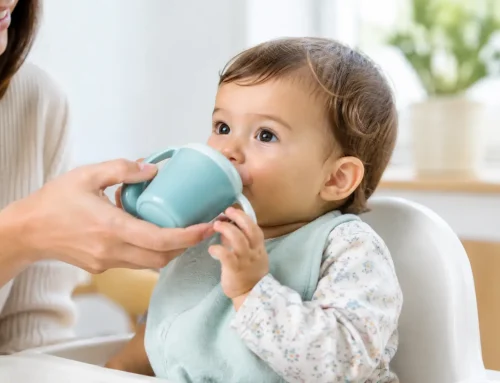
Parents often hear that babies need to sit up before starting solid foods. The key is not simply whether your baby can sit on the floor alone. For feeding, they should be able to sit upright in a high chair with appropriate support, hold their head steady, and avoid slumping or leaning far to one side.
This posture helps protect the airway and makes swallowing easier. If your baby is not yet ready to maintain a safe upright position for meals, waiting is usually the right call. Your pediatrician can help you decide when your baby is developmentally ready for solids, especially if they were born prematurely or have feeding concerns.
When to Check In With Your Pediatrician
Every baby develops at their own pace, but trust your instincts if something feels off. Bring it up with your pediatrician if your baby has very poor head control by about 4 months, seems unusually floppy or stiff, consistently uses only one side of their body, loses skills they once had, or is not making progress toward sitting by around 9 months.
You do not need to wait for a well visit if you are worried. Early support, when needed, can be reassuring and effective. Your pediatrician may simply confirm that your baby is developing normally, or they may recommend a developmental evaluation or physical therapy to help build strength and confidence.
Keeping Practice Comfortable for Everyone
Learning to sit can be messy work. Babies drool, chew on toys, spit up after a feed, and somehow find the one dusty corner of the play mat. Keep a simple cleanup option nearby so you can focus on play instead of interrupting the day for a full bath. Baby Batherz no-rinse bamboo bathing cloths are a gentle option for wiping hands, neck folds, legs, and little post-play messes when a tub bath is not practical.
The goal is not to make your baby sit sooner than they are ready. It is to give them a safe floor, your steady presence, and enough time to discover what their growing body can do. One day, the wobble that had you hovering close will turn into a confident sit, with both hands free to explore the world.