The first trip to the bathroom after birth can make postpartum recovery hygiene feel far more real than any hospital checklist ever could. You may be sore, bleeding, exhausted, learning to feed a baby, and suddenly responsible for tiny skin folds, diaper changes, and a newborn who seems to spit up the moment you sit down.
This is not a season for complicated routines. It is a season for clean basics, gentle care, and accepting help.
Why Hygiene Can Feel Harder After Birth
Before having a baby, taking a shower may have been one of the simplest parts of your day. After delivery, even that can feel like an accomplishment.
Your body is recovering from pregnancy and childbirth. You may be dealing with soreness, postpartum bleeding, stitches, swelling, a C-section incision, breast tenderness, milk leakage, sweating, and profound fatigue—all while feeding and caring for a newborn around the clock.
Standing for a long shower may be uncomfortable. Bending can hurt. You may finally get the baby settled only to realize that taking a shower means giving up ten precious minutes of sleep.
That does not mean your hygiene has to be all or nothing.
During postpartum recovery, think in terms of small, manageable ways to stay clean and comfortable while your body heals. A shower when you are able, a fresh pair of pajamas, clean breast pads, gentle perineal care, or simply freshening sweaty skin can make a surprisingly big difference in how you feel.
The goal is not to feel polished. It is to feel clean, comfortable, and supported enough to heal.
Postpartum Bleeding and Perineal Hygiene
Postpartum vaginal bleeding, called lochia, is a normal part of recovery after childbirth and can occur whether you delivered vaginally or by C-section.
Follow the postpartum instructions provided by your obstetric clinician or midwife, since your needs may differ depending on your delivery, stitches, tearing, swelling, or other complications.
Change sanitary pads regularly and wash your hands before and after bathroom care. Avoid tampons or inserting anything into the vagina until your healthcare professional says it is safe.
After a vaginal delivery, a peri bottle filled with warm water can make bathroom visits much more comfortable. Gently rinse the area as directed by your care team, wipe or rinse from front to back, and pat rather than rub when drying.
This is not an area that needs perfume or aggressive cleaning. Avoid douches, heavily fragranced feminine products, harsh soaps, and scented cleansing products around healing tissue. Gentle care is enough.
Breathable underwear and loose-fitting clothing can also help reduce friction and keep you more comfortable while you heal.
C-Section Incision Care Is Different
Recovering from a C-section brings a different set of hygiene challenges because you are also healing from abdominal surgery.
Follow the incision-care and showering instructions provided by your surgical team. Once you have been cleared to shower, you may be instructed to allow water to run gently over the incision and then carefully pat the area dry with a clean towel.
Do not scrub the incision or apply lotions, powders, oils, cleansing cloths, antibiotic ointments, or other products directly to it unless your healthcare professional has specifically instructed you to do so.
Loose clothing can help reduce rubbing and pressure around the incision. Some moms also find it helpful to keep frequently used supplies at waist level so they do not have to repeatedly bend or reach.
Your incision should gradually improve rather than become increasingly painful, red, swollen, or irritated.
Postpartum Sweating and Body Odor Are Normal
One postpartum change that can surprise new moms is how much they sweat.
Hormonal changes and the body’s process of eliminating some of the extra fluid retained during pregnancy can contribute to increased sweating, particularly at night. You may wake up with damp pajamas or feel as though you need another shower shortly after taking one.
Add breast milk, spit-up, interrupted sleep, and hours spent holding a warm newborn against your chest, and feeling less than fresh can happen quickly.
Keep an extra nightgown or pajamas nearby and change damp clothing when needed. Fresh underwear, a clean nursing bra and pad, and breathable clothing can also make you more comfortable.
When another shower is not practical, gently freshening areas such as your neck, underarms, under the breasts, abdomen, hands, and feet can help you feel cleaner until you are ready to shower.
And remember: postpartum sweating is not a hygiene failure. Your body is recovering from an enormous physical event.
Breast and Breastfeeding Hygiene
Whether you are breastfeeding, pumping, combination feeding, or experiencing milk production while choosing another feeding method, your breasts may need a little extra attention during the postpartum period.
Milk can leak onto your skin, bra, pajamas, and bedding. Damp fabric sitting against the skin can become uncomfortable, so change wet breast pads and bras as needed.
For routine hygiene, gentle washing during a regular shower is generally enough. The nipples and areola do not need vigorous scrubbing or repeated washing with soap.
If your nipples are cracked, bleeding, increasingly painful, or showing other signs of a problem, contact your healthcare professional or lactation specialist for guidance rather than experimenting with multiple cleansing products. They may recommend nipple shields or creams to help you. You may also want to consider breastfeeding classes if available.
When You Cannot Manage Another Shower
Some days you will shower. Some days the baby will need you at exactly the moment you planned to get in.
And after a difficult vaginal delivery or C-section, there may be days when standing, bending, getting undressed, showering, drying off, and getting dressed again simply feels like too much.
A gentle no-rinse bathing cloth can be useful for freshening intact skin between showers. Areas such as the neck, underarms, chest, beneath the breasts, abdomen, hands, and feet can become sweaty or sticky during those long newborn days and nights.
This is also one of the unexpected ways Baby Batherz® can be useful during the postpartum period. Although Baby Batherz® was created for gentle newborn bathing, moms may appreciate having the same soft, fragrance-free, no-rinse cleansing option within reach when a full shower has to wait.
Baby Batherz® should not be used internally, as a douche, or directly on a C-section incision, open wound, or healing perineal tear or episiotomy unless your healthcare professional has specifically advised you that the product is appropriate for that area.
Sometimes you do not need another complete shower. You just want to feel clean again.
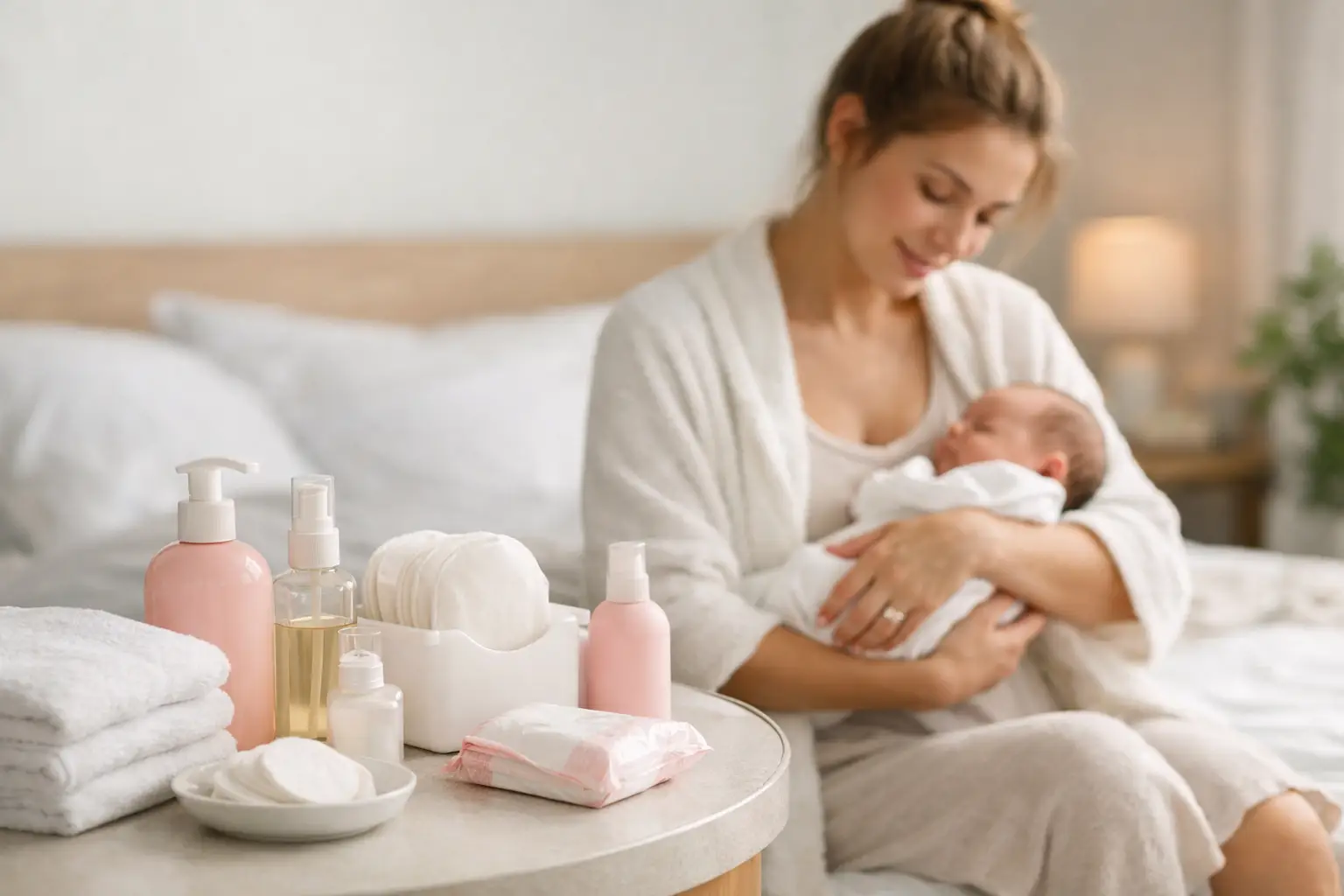
Create a Postpartum Recovery Station – For Mom and Baby
Include the supplies your care team recommends for your recovery, plus a baby-changing supplies nearby, too. Every avoided trip across the room is a small kindness when you are moving carefully or holding a precious baby.
Before the baby arrives—or with the help of a partner once you are home—create a small postpartum station beside the bed or wherever you spend most of your time.
Consider keeping these basics within easy reach:
- Sanitary pads and the postpartum supplies recommended by your care team
- Peri bottle
- Clean underwear
- Breast pads
- Clean nursing bra
- Fresh pajamas or nightgown
- Burp cloths
- Water bottle and nourishing snacks
- Phone (place in silent mode) extra phone charger
- Hand sanitizer for appropriate situations
- Gentle no-rinse bathing cloths for intact skin
- A small bag or basket for used clothing
The purpose is simple: reduce unnecessary trips across the house while your body is recovering. After a C-section in particular, having supplies within easy reach can mean less bending, lifting, and repeatedly getting up when you are uncomfortable.
What Not to Use During Postpartum Recovery
When you are sore or worried about odor, it can be tempting to reach for products promising to make you feel extra clean or fresh. More is not necessarily better during postpartum healing.
Unless your healthcare professional recommends otherwise, avoid using douches, heavily fragranced feminine products, harsh soaps, deodorizing sprays, or scented wipes on sensitive or healing areas.
Do not put cleansing products, lotions, powders, oils, or ointments directly onto a C-section incision, open wound, episiotomy, or healing tear unless instructed by your healthcare professional.
Postpartum discharge and sweating are normal body processes. They do not need to be covered with perfume.
When a Hygiene Problem May Actually Be a Warning Sign
There is an important difference between the normal messiness of postpartum recovery and symptoms that deserve medical attention.
Contact your maternity care team promptly if you develop symptoms such as fever, foul-smelling vaginal discharge, increasing rather than improving pain, worsening redness or drainage from an incision, or bleeding that concerns you.
Some postpartum symptoms require urgent medical attention. Severe headache, chest pain, difficulty breathing, fainting, seizures, thoughts of harming yourself or your baby, or very heavy bleeding should never be dismissed as simply part of being tired after childbirth.
Your discharge instructions should tell you whom to contact and which symptoms require immediate care. Keep that information somewhere both you and your support person can easily find it.
You know how you normally feel. If something seems significantly wrong or suddenly changes, contact a healthcare professional rather than assuming it is simply part of postpartum recovery.
Caring for Mom Makes Caring for Baby Easier
Postpartum hygiene is not about getting back to your pre-baby routine as quickly as possible.
It is about keeping healing areas appropriately clean, staying comfortable, recognizing when something needs medical attention, and finding simple ways to care for yourself while you are caring for someone else around the clock.
Once your own basic needs are within reach, you can use the same philosophy for your newborn: keep it gentle, keep it simple, and have what you need close by.
Set Up a Newborn Quick-Care Station
One of the easiest ways to make those first weeks at home more manageable is to create a newborn quick-care station near the place where you spend most of your time with baby.
When you are recovering from childbirth—especially after a C-section—the last thing you need is to walk across the house every time baby spits up, needs a diaper change, or has milk tucked into those tiny neck folds.
Keep a small basket or rolling cart within easy reach with:
- Diapers and diaper wipes for routine diaper changes
- Diaper rash prevention/barrier cream to help protect baby’s skin from moisture and irritation
- A portable changing pad
- Clean sleepers or onesies
- Burp cloths
- Baby Batherz® no-rinse bathing cloths for gentle head-to-toe bathing and larger cleanups when a tub bath isn’t practical
- A few soft, dry cloths for patting skin folds dry
- A small bag or container for soiled clothing
- Any other newborn-care items you reach for throughout the day
Baby Batherz® can be especially convenient at a bedside newborn station because you don’t need to prepare a tub or carry a newborn to the bathroom for every little mess. A ready-to-use bathing cloth can help with spit-up, milk around the neck and chest, messy diaper changes, or a gentle head-to-toe cleanup when bath time isn’t practical — especially helpful when Mom is sore, exhausted, or recovering from a C-section..
Consider setting up two stations if your home has more than one level or you spend significant time in different rooms. Keep one beside your bed or favorite chair and another in the main living area.
The goal isn’t to create a picture-perfect nursery station. It’s to put the things you use most within arm’s reach so you can conserve your energy for healing, feeding, resting, and enjoying your new baby.
While you are recovering, your newborn’s bathing routine does not need to be complicated. Newborns generally do not need a full tub bath every day, and during the early days, simple spot cleaning or sponge bathing can help keep baby comfortable and clean.
Pay particular attention to areas where milk and moisture collect, such as the neck folds, behind the ears, under the arms, hands, thigh creases, and diaper area. Clean gently and pat skin folds dry rather than rubbing.
Until the umbilical cord stump falls off and the area heals, follow your pediatric provider’s bathing and cord-care instructions. Keep the stump clean and dry and avoid unnecessary soaking.
The goal for both Mom and baby during these first weeks is much the same: keep hygiene gentle, simple, and manageable while everyone adjusts and heals.