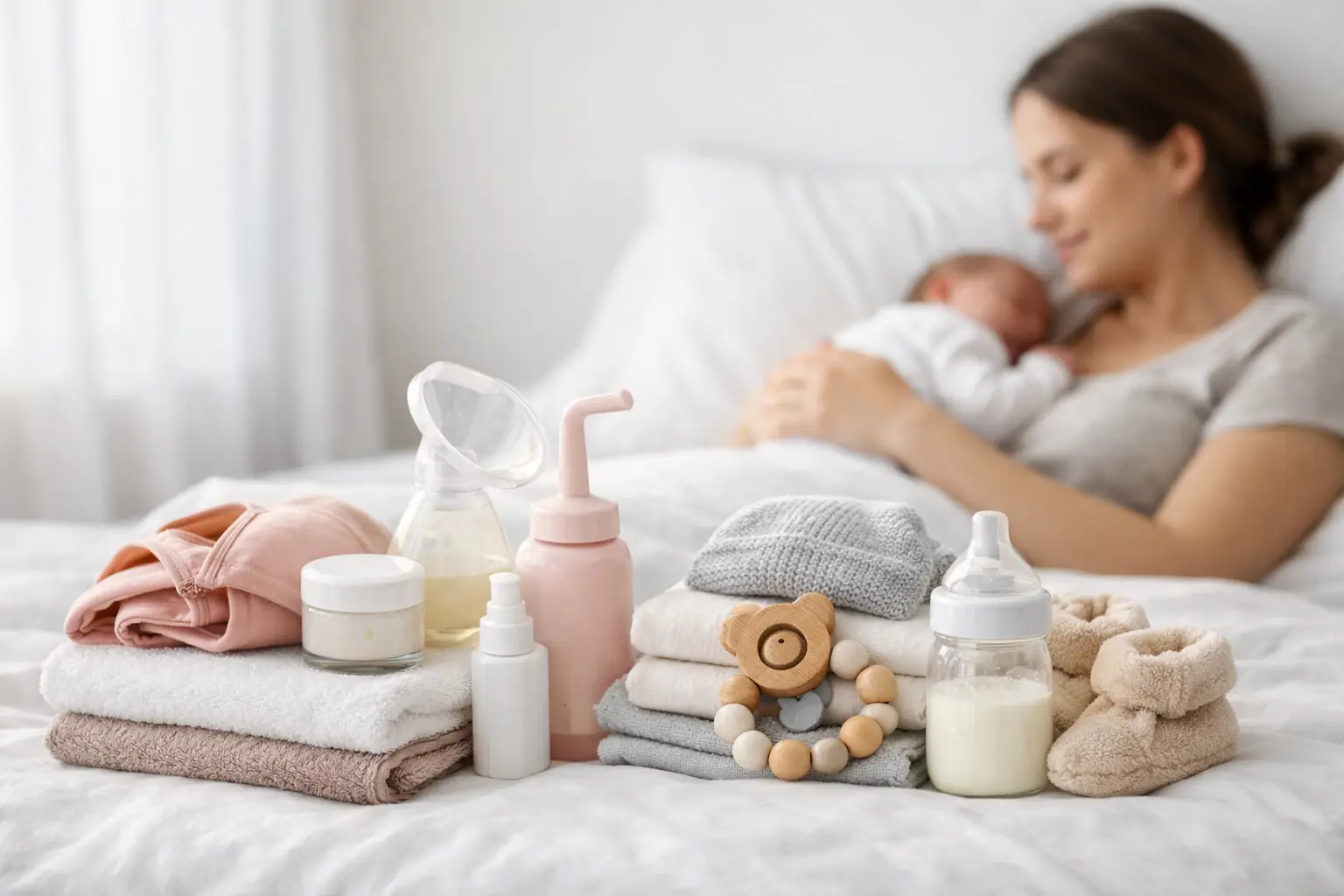
The first trip home with a newborn can make a fully stocked nursery feel surprisingly incomplete. What matters most in those early days is not having more stuff. It is having a few postpartum recovery baby essentials that make feeding, changing, resting, and gentle newborn care feel more manageable when your body is healing and everyone is running on very little sleep.
The best essentials reduce steps without asking you to compromise on baby safety. They support the reality of a healing parent who may be sore, bleeding, recovering from a vaginal or C-section delivery, learning to breastfeed, or simply trying to stand up without discomfort. They also help a newborn stay comfortable during the days when a traditional bath is not the easiest choice.
Start With Essentials That Protect Your Recovery
Postpartum care is personal. A vaginal birth, a C-section, a complicated delivery, and an uncomplicated birth can all create very different needs. Still, most new parents benefit from setting up one easy-to-reach recovery station near the bed or favorite feeding spot.
Include the supplies your care team recommends for your recovery, plus a large water bottle, nourishing snacks, extra phone charger, burp cloths, diapers, and a place to rest your feet. Keep baby-changing supplies nearby, too. Every avoided trip across the room is a small kindness when you are moving carefully or holding a precious baby.
For C-section recovery especially, think about what requires bending, lifting, twisting, or reaching. A portable caddy can keep necessities at waist height. Partners and visitors can help by refilling it before it is empty, bringing meals and water, taking care of laundry, and handling the setup for diaper changes. Practical support is often more meaningful than asking a new parent what they need in the moment.
Call your maternity care provider promptly if you have concerns about heavy bleeding, worsening pain, fever, incision changes, severe headache, chest pain, shortness of breath, or troubling mood symptoms. A well-stocked basket is helpful, but it never replaces medical guidance.
Gentle Newborn Care Without Making More Work
Newborns do not need a full tub bath every day. Their skin is delicate, and during the early umbilical-cord stage, simple spot cleaning is often all that is needed. The goal is to clean visible messes and skin folds gently while keeping the cord area dry, following the instructions from your baby’s pediatric clinician.
Look closely at the places milk, moisture, and lint like to hide: under the chin, behind the ears, in neck creases, under arms, around the diaper line, and between little fingers and toes. Pat those areas dry rather than rubbing. If your baby has ongoing redness, cracking, drainage, a rash that concerns you, or an umbilical cord that smells foul or becomes increasingly red around the skin, contact the pediatrician.
A simple no-rinse bathing cloth can be particularly useful during this stage. Baby Batherz® are extra-thick, 100% bamboo cloths made for a complete head-to-toe cleanup without a tub, sink, or separate water source. They can be gently warmed in 5-7 seconds for comfort. They are infused with 99% purified water, aloe, vitamin E, and coconut soap, without fragrances or harsh chemicals. For a newborn, that means one gentle item can help clean a spit-up neck fold, umbilical cord area, a diaper-area mess, or the rest of the body without turning a small cleanup into a full bath routine.
That distinction matters. Standard diaper wipes are made primarily for diaper changes. A full-bath cloth should be soft enough and large enough to support gentle, more complete cleansing when a tub bath is not practical.
A calm four-step cleanup routine
Keep the routine simple. Start by washing your hands and placing baby on a stable, flat surface where you can keep one hand on them at all times. Then:
- Begin with the cleanest areas, including the face and outside of the ears. Avoid putting any product inside ears, nose, or eyes.
- Clean the neck, hands, arms, torso, legs, and skin folds with gentle strokes. Clean around the umbilical cord.
- Clean the diaper area last, using front-to-back motions for babies assigned female at birth.
- Pat skin dry if needed, put on a fresh diaper and clothing, and make sure the cord area remains clean and dry.
If you prefer a warmer cloth, follow the package warming directions carefully and always test the temperature on the inside of your wrist first. Warm should feel comfortably neutral, never hot. A newborn’s skin can burn more easily than an adult’s.
Real-Life Messes Do Not Wait for Bath Time
Early parenthood has a way of producing messes at the least convenient possible moment. There is the blowout five minutes after a fresh outfit, the 2 a.m. spit-up that reaches both baby and you, and the car-seat snack or sandbox cleanup once baby is older. A bath may be available, but it may not be the right answer right then.
Keeping gentle cleansing supplies in the nursery, diaper bag, purse, car, and recovery station lets you respond quickly without carrying a tired baby to the bathroom or wrestling with a tub setup. This is especially helpful during nighttime feeds. A quick cleanup, clean pajamas, and a fresh swaddle can help everyone get back to rest sooner.
For travel, a no-rinse option is useful at grandma’s house, in a hotel, at the park, during a long drive, or after an unexpected illness. Toddlers and young children can benefit, too. Dirt, sand, zinc sunscreen lotion, sticky fingers, and playground grime do not always need a full bath before the next activity. Gentle cleanup cloths can bridge the gap until bath time at home.
Convenience should not mean cutting corners. Use clean supplies, discard single-use cloths after use, and avoid sharing a cloth between children. If your child has eczema, very sensitive skin, broken skin, or a persistent rash, ask their pediatric clinician which cleansing routine and products fit their needs.
Postpartum Recovery Baby Essentials for Partners
A partner cannot heal for a new mom, but they can remove obstacles that make healing harder. The most useful support is specific: bring the baby for a feed, take the baby afterward for a diaper change, reset the changing station, fill the water bottle, warm food, and protect a window for sleep.
Newborn bathing is another area where partners can step in with confidence. They can gather supplies, make sure the room is warm, keep the process short, and handle cleanup afterward. A gentle no-rinse bath can feel less intimidating than managing a slippery newborn over a sink, particularly when one parent is recovering physically.
It also gives partners a quiet caregiving ritual. A slow wipe of tiny hands and feet, a clean onesie after spit-up, and a few calm minutes of eye contact are not just chores. They are part of learning your baby’s cues together.
What Belongs in a Thoughtful New-Mom Gift Basket
The most appreciated baby shower, hospital, or new-grandparent gifts solve ordinary problems before they become stressful. Instead of filling a basket with novelty items, choose practical supplies that will be used during the first week home.
A helpful basket may include newborn diapers, soft burp cloths, easy snacks, a water bottle, lip balm, a comfortable robe, a nipple shield if breastfeeding and gentle baby cleansing supplies. Add a note offering a real task: a grocery run, a load of laundry, a meal drop-off, or an hour holding the baby while the parent showers or sleeps.
For grandparents, a small stash of baby care basics and a change of clothes at their house makes visits easier. It signals something valuable to new parents: you are prepared to help, not expecting them to pack their entire home for an afternoon visit.
The early weeks are not about doing every routine perfectly. They are about keeping baby clean, fed, safe, and loved while giving the recovering parent time to heal. Choose postpartum essentials that make the next small task feel lighter, then let that extra bit of ease become rest.