The first few weeks at home can make even a simple bath feel like a big task. Between feedings, diaper changes, visitors, and postpartum recovery, newborn cleansing essentials should bring comfort and confidence, not another complicated routine. Your baby does not need a full tub bath every day. What they need is gentle, consistent care for the spots that get messy, while protecting delicate skin and allowing the umbilical cord area to stay clean and dry.
What newborn skin really needs
Newborn skin is thinner and more sensitive than adult skin. It is still learning how to hold moisture and respond to its new environment, which is why less is often more. A strong fragrance, harsh cleanser, rough washcloth, or too-frequent bath can leave skin dry or irritated.
For many families, a gentle wipe-down is the practical choice during the early days, especially before the umbilical cord stump falls off. A sponge bath or no-rinse cleanse can keep baby fresh without soaking the cord area or requiring you to lean over a tub when your body is still recovering from childbirth.
Pediatric guidance can vary based on your baby’s health, skin condition, and cord care instructions. If your baby was born prematurely, has a rash that concerns you, or has special medical needs, ask your pediatric provider what routine is best. For most healthy newborns, calm and gentle beats frequent and elaborate.
The newborn cleansing essentials worth having nearby
You do not need a cabinet full of products. Keeping a few well-chosen supplies at the changing table, beside your bed, and in the diaper bag makes cleanups much easier when you are tired or away from home.
Start with soft, clean cloths made for a baby’s skin. For a quick refresh, a no-rinse bathing cloth with mostly purified water and mild skin-loving ingredients can be especially helpful. Look for an option without harsh chemicals and avoid products that feel heavily perfumed. Standard diaper wipes are designed primarily for diaper-area messes. They may be convenient in a pinch, but a full-body cleansing cloth is a better fit when you want to gently clean baby’s face, neck, hands, folds, back, legs, and feet.
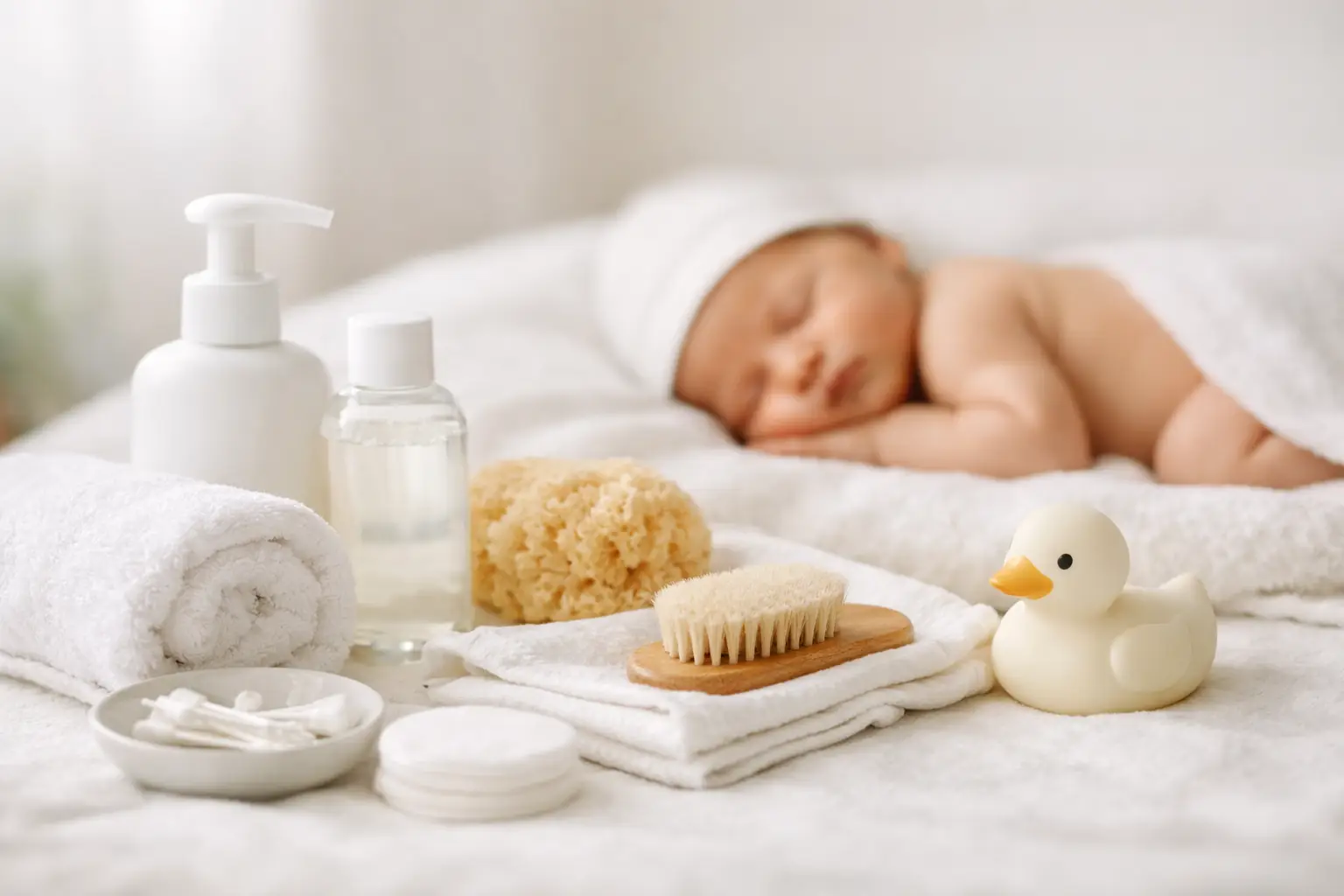
You will also want clean diapers, soft towels, cotton pads or a clean cloth for the outer eye area, and a fresh change of clothes. A small bowl of warm water can work for a traditional sponge bath, but it is not required every time. The best setup is the one you can use safely while keeping one hand close to your baby.
For parents who want a ready-to-use option, Baby Batherz® bathing cloths are made for a complete no-rinse, head-to-toe clean when a tub, sink, or separate water source is not practical. The extra-thick, 100% bamboo cloths are infused with 99% purified water, aloe, vitamin E, and coconut soap, giving families a simple option for the newborn stage and beyond.
How to clean a newborn without overdoing it
Choose a warm, draft-free space and gather everything before undressing your baby. A changing pad, bed, or other stable flat surface can work well as long as you stay within arm’s reach at all times. Keep the room comfortable, and uncover only the area you are cleaning so your baby does not get chilled.
Use this gentle order for a quick head-to-toe cleanse:
- Begin with the face. Wipe softly around the forehead, cheeks, chin, and behind the ears. Use a clean section of the cloth for each eye, moving from the inner corner outward. Do not put cleanser directly into the eyes, nose, or mouth.
- Move to the neck, hands, and skin folds. Milk dribbles, lint, and moisture often collect under the chin, in neck creases, under the arms, and between tiny fingers. Pat rather than scrub.
- Clean the torso, back, legs, and feet. A gentle wipe is enough for ordinary newborn dirt and sweat. Pay attention to creases without rubbing repeatedly.
- Finish with the diaper area. Clean front to back, especially for girls, and use a fresh part of the cloth as needed. Put on a clean diaper and dry clothing when you are finished.
If you use a no-rinse cloth, there is usually no need to rinse or towel-dry afterward unless your baby is very damp or your provider has given different instructions. If you prefer, you can warm the unopened package according to its instructions before use. Always test the cloth against the inside of your wrist first. It should feel comfortably warm, never hot.
Umbilical cord care calls for a lighter touch
The umbilical cord stump does not need to be scrubbed. In fact, keeping it dry is usually the goal until it falls off naturally. Fold the front of the diaper down so air can circulate and the diaper does not rub the stump. When you cleanse the rest of your baby, work carefully around the cord area rather than soaking it.
A little dried blood or mild crusting can be normal as the stump separates. Call your baby’s pediatric provider if you notice spreading redness on the skin around the cord, swelling, a foul smell, pus-like drainage, or fever. Trust your instincts if something does not look right.
This is one reason no-rinse cleansing can be so useful during the first days at home. It helps you care for the areas that need attention without turning every cleanup into a wet bath.
When a quick clean is enough and when a bath makes sense
A full bath is not a daily requirement for most newborns. Two or three baths a week is often plenty, with spot cleaning in between. Daily cleansing may make sense after a diaper blowout, a messy spit-up episode, warm weather, or a particularly sweaty day. But a simple wipe-down is usually all that is needed after ordinary feeds and naps.
As your baby grows, the need for quick cleanup does not disappear. Toddlers and young children can come home with sand, grass, sticky hands, zinc sunscreen, and snack crumbs at the least convenient moment. A gentle bathing cloth can make it easier to clean up after the park, a restaurant outing, travel day, or daycare pickup when a traditional bath has to wait.
The trade-off is simple: a no-rinse cleanse is ideal for daily freshness and unexpected messes, while a tub bath can be a relaxing part of your family’s routine when you have the time, setup, and energy for it. One does not replace the other forever. Both can have a place in real family life.
Ingredients and materials matter more than fancy claims
When choosing cleansing products for a newborn, read the label with a practical eye. Parents often look for water-based formulas, gentle cleansing ingredients, and no harsh chemicals. Fragrance may smell pleasant, but it is not necessary for a clean baby. If your baby has eczema-prone or easily irritated skin, simplicity is especially valuable.
Material matters, too. A soft, thick cloth is less likely to require repeated rubbing than a thin wipe that tears or dries out quickly. Bamboo can offer a soft feel, and biodegradable or compostable materials may be a thoughtful choice for families trying to reduce disposable waste. Still, always follow local disposal guidance rather than assuming every item can go into a home compost pile.
New parent life is full of choices. Your cleansing routine does not need to be one of the stressful ones. Keep a gentle option within reach, follow your pediatric provider’s advice when questions come up, and remember that a warm, clean baby in your arms is more than enough for today.