The first days home with a newborn can make even small tasks feel big. You may be sore, sleep-deprived, learning feeding cues, and wondering how to keep your baby comfortably clean without managing a slippery tub bath. This waterless infant cleansing guide offers a calm, practical approach for those moments: no tub, no stress, just gentle care.
A no-rinse clean-up can be especially useful during the umbilical cord stage, after a diaper blowout, while traveling, or when your little one needs freshening up between baths. The goal is not to overdo it. Newborn skin is delicate, and a simple, gentle routine is often exactly what baby needs.
When Waterless Infant Cleansing Makes Sense
For many healthy newborns, a traditional bath does not need to happen every day. In fact, frequent bathing can dry sensitive skin. Until the umbilical cord stump falls off and the area has healed, families are commonly advised to use gentle sponge-style bathing rather than submerging baby in a tub.
Waterless cleansing gives you a ready-to-use option when a sink or tub is inconvenient. It can be helpful during postpartum recovery, when bending and lifting feel difficult; during late-night diaper changes; at grandparents’ homes; in hotel rooms; or after an outing. It also works well for toddlers who come home covered in sand, snack crumbs, dirt, or sunscreen and cannot get to a bath right away.
There is a useful distinction here: a full-bath cloth is not simply a standard diaper wipe. A product intended for head-to-toe cleansing should be soft, generously sized, and made with ingredients appropriate for broader skin contact. Always read the package directions and use a product designed for baby skin.
Choose a Cloth Made for Delicate Skin
Newborn skin has a more vulnerable barrier than adult skin. That is why ingredient transparency matters. Look for a no-rinse bathing cloth made with mostly purified water and without harsh chemicals, strong fragrance, or unnecessary ingredients that may irritate sensitive skin.
The cloth itself matters, too. Thin wipes can tear, feel rough, or leave you reaching for several at once. A thicker bamboo cloth can hold enough moisture to clean gently without repeated rubbing. Bamboo is also a thoughtful material choice for parents who value biodegradable and compostable options, though disposal should always follow the instructions on the package and local guidelines.
Baby Batherz bathing cloths are designed for this specific job: a complete no-rinse bath for newborns and babies, using an extra-thick 100% bamboo cloth infused with 99% purified water, aloe, vitamin E, and gentle coconut soap. The formula is pediatrician-approved and made without harsh chemicals, so parents can focus on comforting baby rather than gathering a sink, washcloth, soap, towel, and clean water.
Even with gentle products, every baby is different. If your child has eczema, broken skin, a rash that is not clearly from irritation, or a known ingredient sensitivity, ask your pediatrician what cleansing routine is best. Stop using any product that causes redness, discomfort, or a new rash.
How to Give a No-Rinse Baby Bath
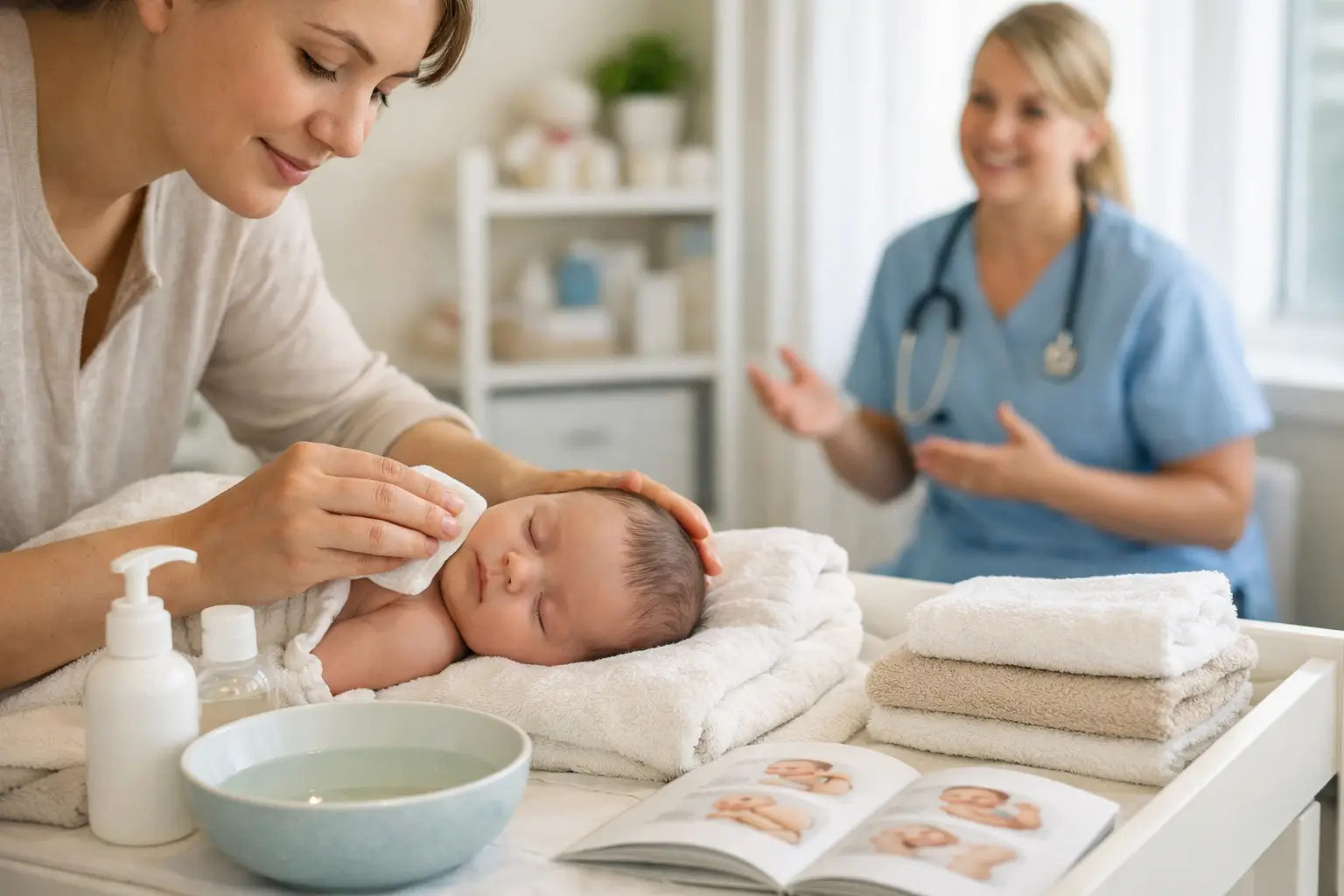
Set up first so one hand can stay near your baby at all times. Use a changing pad, firm bed, or other stable, flat surface. Keep a clean diaper, clothes, and a dry towel within reach. Never leave baby unattended, even for a few seconds.
1. Warm the room, then warm the cloth if desired
Babies lose heat quickly, so choose a comfortably warm room and uncover only the area you are cleaning. A room-temperature cloth is perfectly fine. If you prefer a warmer experience, warm the unopened package according to its directions. Never microwave a bathing cloth, and always test the temperature on the inside of your wrist before it touches baby.
2. Start with the cleanest areas
Gently wipe the face first, avoiding direct contact with the eyes. Use soft strokes around the cheeks, neck folds, ears, and hairline. For the eye area, use a clean section of the cloth and wipe from the inner corner outward. Do not put cleanser directly into the eyes, nose, mouth, or ears.
Move down to the chest, arms, hands, belly, legs, and feet. Take a moment to check the little places that collect milk dribbles, lint, and moisture: under the chin, behind the ears, in wrist folds, and between toes. There is no need to scrub. A light pass is usually enough.
3. Keep the cord stump clean and dry
During the umbilical cord stage, use care around the stump. Clean the skin around it only if needed, and avoid soaking or tugging at the area. Pat it dry if moisture remains. Your pediatrician may have specific guidance for cord care, especially if baby was born early or has a medical condition, so follow that plan first.
Call your baby’s health care provider if the area develops spreading redness, swelling, a foul smell, pus-like drainage, or persistent bleeding. These signs deserve professional advice rather than extra cleaning at home.
4. Finish with the diaper area
Clean the diaper area last. Wipe front to back, especially for baby girls, and clean carefully in the folds. For uncircumcised boys, do not force the foreskin back. For circumcised babies, follow the aftercare instructions provided by your clinician.
Put on a fresh diaper and clean clothes, then cuddle baby close for a few minutes. For many newborns, the warmth, gentle touch, and familiar sound of your voice matter just as much as getting clean.
What Waterless Cleansing Cannot Replace
A no-rinse cloth is a practical tool, not a reason to ignore situations that need more care. If your baby has been exposed to stool across a large area, has vomited heavily into clothing and hair, or has a significant sticky mess, you may need a more thorough clean with warm water when it is safe and practical.
Likewise, waterless cleansing is not medical treatment. It will not resolve a persistent diaper rash, yeast rash, infected-looking skin, or a fever-related concern. Keep the routine simple and contact your pediatrician when something does not look or feel right.
For everyday use, it depends on your baby’s needs. Some families use a no-rinse cloth for a complete newborn freshening-up between occasional tub baths. Others rely on it during travel, recovery, power outages, camping, or busy days out. Toddlers may need it after the playground or beach. The best routine is the one that keeps baby comfortable without creating more work for you.
Small Details That Make the Routine Easier
Keep a pack where real life happens: beside the changing table, in the diaper bag, near the couch, and in your travel bag. When you have everything ready before a mess occurs, a cleanup feels less like a crisis.
Use one cloth thoughtfully. Fold it to create clean sections as you move from face and body to the diaper area. This simple habit helps you avoid moving mess from one area to another while making the most of a single, thick bathing cloth.
Most of all, release the idea that baby care has to look picture-perfect. A calm clean-up on a changing pad can be loving, hygienic care. Every baby deserves a gentle beginning, and every new parent deserves tools that make that care feel a little lighter.