A newborn can need a cleanup at the exact moment a tub bath feels least manageable: after a diaper leak, during a late-night feeding, or while you are recovering from birth. So, are no rinse baths safe? They can be a safe, gentle option for babies when the product is made for infant skin, used as directed, and chosen with the same care you would give any product that touches your baby.
The key is not simply whether a cloth says “no rinse.” Safety comes down to the formula, the material, how you use it, and your baby’s individual skin needs. A well-made no-rinse bathing cloth can make everyday newborn care calmer: no running water, no slippery tub, no stress, just a clean and comfortable baby.
Are no rinse baths safe for newborns?
For many healthy newborns, a no-rinse bath can be a practical alternative when a traditional bath is not convenient or appropriate. This is especially true in the first days at home, when parents may be protecting the umbilical cord area from unnecessary moisture, managing postpartum recovery, or simply learning the rhythm of caring for a new baby.
Newborn skin is thinner and more sensitive than adult skin. That is why the safest no-rinse options are specifically designed for babies and made with a short, gentle ingredient list. Look for a cloth that is soft, free from harsh chemicals, and moist enough to cleanse without repeated rubbing. Products made primarily with purified water and skin-friendly ingredients such as aloe and vitamin E can offer a gentler experience than heavily fragranced or alcohol-based cleansing products.
No-rinse bathing is not about scrubbing a baby until they are squeaky clean. It is about lifting away milk dribbles, spit-up, diaper-area messes, sweat, and everyday grime with as little friction as possible. For a baby with healthy skin, that approach can be both effective and reassuring.
Not every “wipe” is meant for a full bath
A standard diaper wipe and a no-rinse bathing cloth do not always serve the same purpose. Diaper wipes are usually designed for quick diaper changes. A full-body bathing cloth should be larger, thicker, and gentle enough to use from head to toe, while still being appropriate for delicate infant skin.
Read the package rather than relying on broad claims. If a product is not labeled for newborns or sensitive skin, has a strong fragrance, or leaves a noticeable residue, it may not be the best choice for a full-body clean. A no-rinse product should make your baby feel fresh, not sticky, overly perfumed, or irritated.
What makes a no-rinse bath a safer choice?
Start with the ingredients. Parents do not need a chemistry degree to make a thoughtful choice, but simple formulas are usually easier to evaluate. Avoid products with alcohol, harsh detergents, or strong added fragrances, especially for newborns and babies with dry or reactive skin. Fragrance can smell comforting, but it is not needed for a baby to be clean.
The cloth itself matters, too. A rough or thin cloth may require more pressure and more passes over the skin. Soft bamboo cloths are naturally a comfortable option because they can hold moisture while feeling gentle against small hands, feet, neck folds, and cheeks. A single-use cloth also avoids the question of whether a reusable washcloth was fully cleaned and dried between uses.
Water quality is another meaningful detail. Because a no-rinse formula stays on the skin, parents should know what they are applying. Purified water and carefully selected skin-conditioning ingredients provide a more reassuring foundation than a long list of unnecessary additives.
Finally, choose products made with babies in mind. Pediatrician-approved products and formulas created with clinical input can provide added confidence, though “approved” should never replace your own observation. You know your baby best. If their skin becomes red, dry, bumpy, or uncomfortable after use, stop using the product and check with their pediatrician.
How to give a gentle no-rinse bath
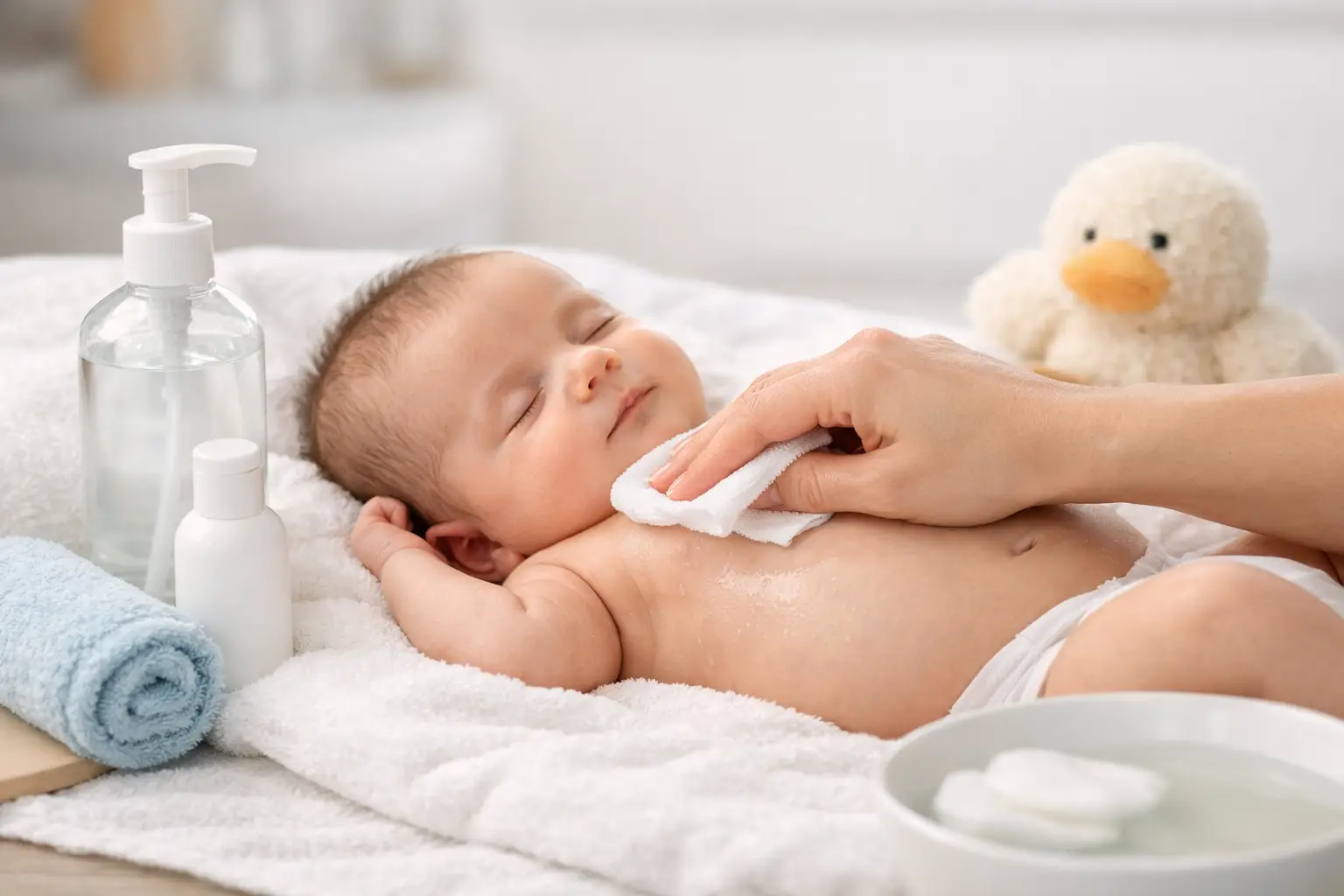
A calm setup makes the process easier. Place your baby on a secure changing pad, a clean towel on the floor, or another safe flat surface. Keep one hand on your baby whenever they are elevated, and gather a clean diaper, fresh clothes, and the bathing cloth before you begin.
If you prefer a warm cloth, follow the package instructions exactly. Test it on the inside of your wrist before it touches your baby’s skin. It should feel comfortably warm, never hot. Babies can burn more easily than adults, so when in doubt, use the cloth at room temperature.
Begin with the cleanest areas first. Gently wipe the face, avoiding the eyes and the inside of the nose or mouth. Then move to the neck, behind the ears, hands, arms, torso, legs, and feet. Pay extra attention to soft folds where milk, lint, and moisture can collect, but do not rub aggressively.
Save the diaper area for last. Clean from front to back, use fresh sections of the cloth as needed, and apply your usual diaper cream if your baby needs it. Dress your baby in a clean diaper and comfortable clothes once their skin is dry to the touch.
Baby Batherz bathing cloths were designed for this kind of complete, head-to-toe care: an extra-thick bamboo cloth infused with 99% purified water, aloe, vitamin E, and gentle coconut soap, without harsh chemicals. The goal is simple – make a baby cleanup feel less like another complicated task and more like a small, caring moment.
Umbilical cord care and no-rinse bathing
The umbilical cord stage is one reason many parents look for an alternative to a traditional tub bath. In general, the cord stump should be kept clean and dry until it falls off. A gentle no-rinse bath can help you clean the rest of your baby without soaking their body or creating more moisture around the stump.
Use the cloth around, not over, the cord area unless your baby’s clinician has given you different instructions. If urine or stool gets on the area, clean it gently and pat dry. Call your pediatrician if you notice spreading redness, swelling, foul-smelling drainage, pus, fever, or skin that seems painful around the cord. Those signs need medical guidance, not more cleaning.
When should you skip a no-rinse bath?
No-rinse baths are useful, but they are not the right choice for every skin concern. Do not use a cleansing cloth on open cuts, severe diaper rash, weeping eczema, burns, or skin that looks infected unless your child’s clinician tells you it is appropriate. For babies with eczema, allergies, or a history of skin reactions, ask the pediatrician which ingredients are best for your child.
It also helps to separate cleaning from treating. A gentle cloth can remove dirt and residue, but it cannot treat a rash, fungal infection, or bacterial skin problem. If a rash lasts more than a few days, worsens, blisters, or comes with fever or unusual fussiness, call your pediatrician.
For a first use of any new product, try a small area of healthy skin and watch for a reaction. Redness that does not quickly fade, hives, swelling, or unusual crying during use are reasons to stop. Seek urgent care for trouble breathing, swelling of the lips or face, or widespread hives.
How often does a baby need a bath?
Most newborns do not need a full traditional bath every day. In fact, bathing too often can dry sensitive skin. Many families find that cleaning the diaper area at each change, wiping milk or spit-up from the face and neck as needed, and doing a gentle full-body no-rinse bath a few times a week is plenty.
The right frequency depends on your baby and your day. A hot day, a messy feeding, a diaper blowout, travel, or an active toddler’s sandy playground adventure may call for a quick cleanup. On a quiet day at home, there may be no need for more than normal diaper and face care.
A safe no-rinse bath is not meant to add pressure to your routine. It is there for the moments when water, a tub, and extra effort are not what your family needs. With a gentle formula, clean hands, a soft touch, and attention to your baby’s skin, caring for them can stay simple: one warm, clean moment at a time.