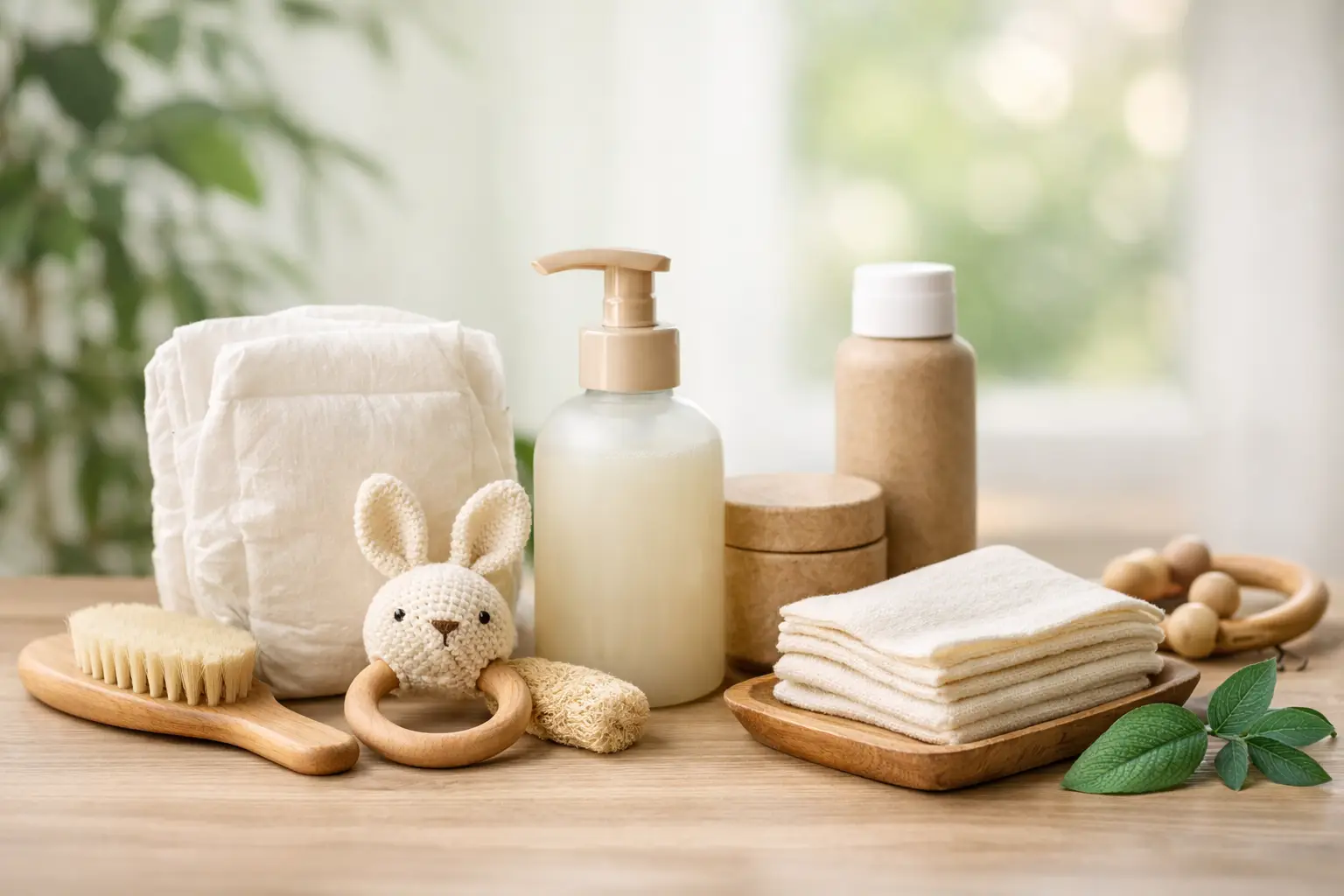
A newborn can go through an astonishing number of diapers, wipes, cloths, and little cleanup moments before the first month is over. Choosing biodegradable baby products can be one way to make those daily routines feel a little gentler on the planet, without asking exhausted parents to compromise on safety, cleanliness, or convenience.
The key is knowing what a product claim really means. “Biodegradable” is not a promise that something disappears overnight in every trash can or landfill. It describes a material’s ability to break down over time under the right conditions. For parents, that distinction matters just as much as soft texture, simple ingredients, and a product that works when a tub bath is not practical.
What biodegradable means in baby care
A biodegradable material can be broken down by natural microorganisms into simpler substances. Bamboo, cotton, wood pulp, and some plant-based fibers are common examples used in baby-care items. They can be preferable to products made primarily from petroleum-based plastic fibers, which may persist in the environment for a very long time.
But biodegradable and compostable are not interchangeable terms. A compostable product is designed to break down into natural elements under specific composting conditions. Some materials need a commercial composting facility with carefully managed heat, moisture, and airflow. A product may be compostable in those conditions but still not break down quickly in a home compost pile, sewer system, or landfill.
That does not make the choice meaningless. It simply means parents deserve clear, honest labeling. Look for brands that identify the material used, explain whether the product is biodegradable or compostable, and give disposal guidance that fits real life.
Why material matters for babies and parents
When you are caring for newborn skin, the first question should always be, “Is this gentle enough for my baby?” Environmental considerations come next, not because they are unimportant, but because babies need products that are safe, effective, and appropriate for their delicate skin.
Plant-based materials such as bamboo can offer a soft, cloth-like feel that many parents prefer for bath time and cleanup. Material alone, however, does not tell the whole story. A bathing cloth or wipe may contain lotions, cleansers, preservatives, fragrances, or other ingredients that affect how it feels on skin. Read the complete ingredient list, especially if your baby has eczema, very sensitive skin, or a history of reactions.
For newborn care, simpler is often more reassuring. Products made with purified water and gentle skin-supporting ingredients such as aloe and vitamin E may help parents avoid harsh cleansers during those early weeks. If you are unsure about a new product, test it on a small area of skin first and speak with your pediatrician about any persistent dryness, rash, or irritation.
Biodegradable baby products worth considering
The most useful sustainable choice is usually the one your family can use correctly and consistently. For baby care, that may include diapers, wipes, bathing cloths, feeding accessories, clothing, and toys. Each category has different trade-offs.
Diapers and training pants
Disposable diapers are one of the largest sources of household baby waste, so it is natural to look for plant-based or biodegradable options. Still, diapers are complicated products. They need to absorb moisture, prevent leaks, and protect skin, which means many contain a blend of materials. A diaper marketed as biodegradable may have biodegradable components rather than being fully biodegradable as a whole.
Cloth diapers reduce disposable waste but require water, detergent, and energy for laundering. They can be an excellent fit for some families, while disposable options may be more realistic during travel, illness, daycare, or a demanding postpartum season. There is no need for perfection. Even using reusable options part-time can be a practical step.
Wipes and bathing cloths
Many conventional wipes contain synthetic fibers, often plastic-based polyester or polypropylene. These wipes should never be flushed, even if a package suggests otherwise. They can contribute to plumbing clogs and pollution in waterways.
For everyday messes, look for cloths made from clearly identified plant-based fibers and formulated without harsh chemicals. A thick, no-rinse bathing cloth can also reduce the need for multiple separate products when your baby needs more than a quick diaper-area wipe. During the umbilical cord stage, after a spit-up, during postpartum recovery, or on a trip, a full-body cleanup can be much more manageable than setting up a sink or tub bath.
Baby Batherz bathing cloths are made with 100% bamboo and infused with 99% purified water, aloe, vitamin E, and gentle coconut soap. They are designed for a complete no-rinse bath when water, time, or energy are in short supply. For a warmer experience, parents can follow the package warming instructions and always check the cloth’s temperature against the inside of their wrist before use.
Feeding and household items
Feeding products made from silicone, stainless steel, or durable glass may be reused for years and are often more practical than single-use alternatives. For disposable items, plant-based materials can be helpful, but only when they meet your needs for safety and food contact.
For toys, storage, and clothing, durability matters. A well-made cotton sleeper handed down to another child may have a lighter overall footprint than a poorly made item labeled “eco-friendly” that wears out quickly. Buy fewer items when possible, wash them according to care instructions, and pass along what is still safe and usable.
How to read labels without getting overwhelmed
Packaging can make sustainability claims sound simpler than they are. You do not need to become a materials scientist to shop thoughtfully. Start with three practical questions: What is the product made from? What touches my baby’s skin? How should it be disposed of where I live?
Be cautious with vague terms such as “natural,” “green,” or “earth-friendly” when there is no detail behind them. More useful labels identify the fiber, such as bamboo or cotton, and clarify whether the entire item or only part of it is biodegradable. If a package says compostable, look for instructions that specify commercial composting or home composting.
Also consider the product’s purpose. A single-use item can still be a thoughtful choice when it solves a real hygiene or caregiving need. A parent recovering from delivery, managing a fussy newborn, or traveling without easy bath access should not have to choose between caring for their baby and caring about waste. The goal is a calmer routine with fewer unnecessary trade-offs.
Disposal is part of the decision
Even biodegradable materials should be disposed of responsibly. Unless local guidance specifically says otherwise, used wipes, bathing cloths, and diapers belong in the trash, especially after contact with urine or stool. Do not flush them. “Biodegradable” does not mean safe for plumbing or septic systems.
If your community offers commercial composting, check its accepted-material rules before placing any baby-care product in a compost bin. Many programs do not accept personal-care items, and products soiled with human waste often require regular trash disposal. This can feel frustrating, but it is better to follow local rules than contaminate a compost stream.
For reusable items, make the sustainable choice easier by keeping a simple system. Store clean cloths where you use them, keep a small wet bag in the diaper bag, and wash reusable products in full loads when possible. Small routines are more likely to last than complicated ones.
A gentler standard for everyday choices
The best biodegradable baby products are not the ones with the loudest claims. They are the products that clearly explain their materials, treat baby skin with care, and fit the realities of your family’s day. Some days that may mean a reusable washcloth and a quiet bath at home. Other days it may mean a gentle, no-rinse cloth at the changing table, in the car, or beside the bed.
Every baby deserves a gentle beginning, and every parent deserves practical support while providing it. Choose transparency over buzzwords, safety over trends, and products that bring a little more calm to the moments when you need it most.