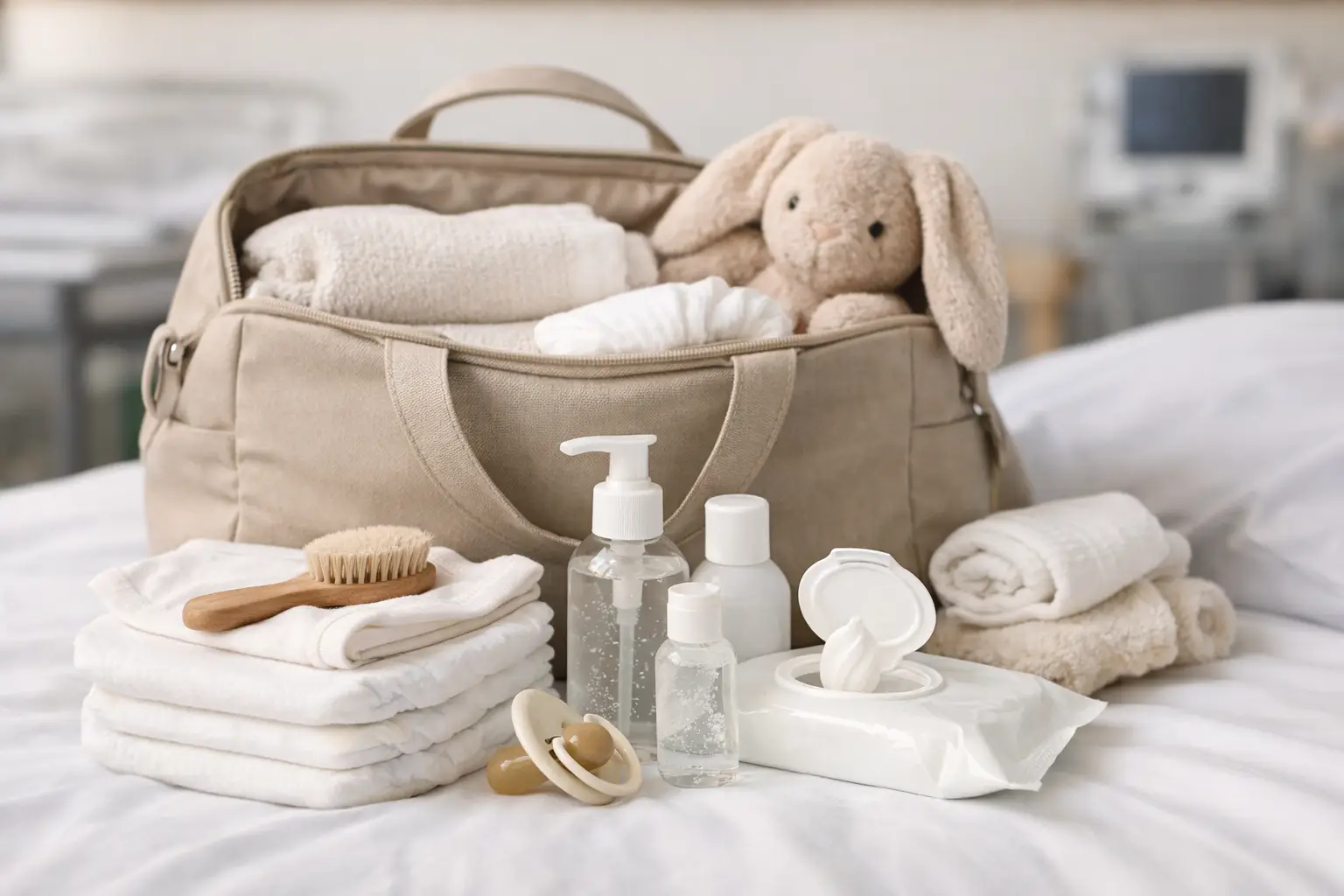
A hospital bag can feel like a small suitcase carrying a very big moment. Thoughtful baby hospital bag hygiene is not about packing every possible product. It is about having a few clean, gentle essentials ready when your newborn needs a diaper change, a spit-up cleanup, or a fresh start before heading home.
Hospitals usually provide many basics, but their supplies and routines vary. Packing a simple hygiene kit gives you options without creating clutter around your recovery space. The goal is calm, practical care: clean hands, clean surfaces, and gentle products made for brand-new skin.
Start With the Hygiene Basics That Matter Most
Newborns do not need a complicated bathing routine in the hospital. In fact, your care team may recommend waiting before a full bath and keeping the umbilical cord area clean and dry until it falls off. Your baby may have vernix, a white protective coating, on their skin after birth. That is normal, and it does not need to be scrubbed away.
What they will need is frequent diaper care, a way to handle milk dribbles or spit-up, and a clean layer between them and shared surfaces. Think in terms of small, repeatable moments rather than a full spa routine.
Your baby hygiene pouch should include a newborn-size diaper supply, gentle diaper wipes or soft cleansing cloths, diaper cream if you plan to use one, and a few disposable bags for used diapers or soiled clothing. Add a clean changing pad or waterproof changing pad cover. It creates a simple barrier on hospital furniture, in a bathroom, or later in the car on the trip home.
Bring two or three changes of baby clothes, plus an extra going-home outfit. Newborn messes are unpredictable, and clean backup layers are more useful than an overpacked wardrobe. A soft blanket and a clean swaddle can also help you create a comfortable, protected space for feeding and cuddling.
Clean Hands Do Most of the Heavy Lifting
The most effective part of baby hospital bag hygiene is also the easiest to overlook when you are tired: hand hygiene. Wash your hands with soap and water before feeding, changing diapers, handling the cord area, or preparing to leave the hospital. Ask visitors to do the same.
Hand sanitizer can be useful when a sink is not nearby, but soap and water are especially important after diaper changes and whenever hands are visibly soiled. Keep a travel-size sanitizer in an outer bag pocket for convenience, but do not rely on it as the only option.
You do not need to make the hospital room feel sterile. Babies benefit from loving contact with their parents, and you should not feel afraid to hold or comfort your child. The practical approach is simply to clean hands at key moments and keep dirty items separate from clean ones.
Give Clean and Used Items Their Own Space
A small amount of organization prevents a lot of stress. Use one zip pouch for fresh baby supplies and another washable or disposable bag for worn clothes, used burp cloths, and anything damp. If your bag has separate compartments, reserve one for clean items only.
Avoid placing clean pacifiers, bottle parts, or fresh clothes directly on the floor, bedside tray, or bathroom counter. A clean pouch, changing pad, or receiving blanket gives you a better temporary surface. If a pacifier falls onto a questionable surface, set it aside to wash rather than quickly wiping it on a blanket or your hand.
Pack Gentle Cleanup Options, Not Harsh Products
Newborn skin is thin, sensitive, and still adjusting to life outside the womb. Strong scents, heavily fragranced lotions, and products with harsh cleansing ingredients can make early skin care more complicated than it needs to be. Choose simple, fragrance-free options whenever possible, and introduce new products one at a time.
For routine diaper changes, use gentle wipes or soft cloths designed for a baby’s skin. Pat rather than rub, especially around skin folds. Let the area dry before applying diaper cream and fastening a fresh diaper. If your baby has a rash, broken skin, persistent redness, or discomfort, ask the hospital nurse or pediatric clinician what they recommend before trying multiple products.
No-rinse bathing cloths can be helpful for a gentle head-to-toe freshening when a traditional bath is not practical. They are particularly useful for cleaning milk dribbles in neck folds, sticky hands, feet, or a small mess on the way home. Baby Batherz cloths are made with 99% purified water, aloe, vitamin E, coconut soap, and extra-thick bamboo, offering a simple no-tub option for newborn cleanup.
Still, it depends on your baby’s needs and your hospital’s guidance. Do not use any cloth to saturate or scrub the umbilical cord stump. Keep that area dry unless your baby’s care team gives you different instructions. For a newborn with sensitive skin, a medical condition, or a history of prematurity, ask your clinician which cleansing products are appropriate.
A Simple Baby Hospital Bag Hygiene Checklist
It is easy to pack too much when you are preparing for delivery. These are the items that earn their space because they support everyday cleanup, not just a hypothetical emergency:
- Newborn diapers, gentle wipes or no-rinse cleansing cloths, and diaper cream
- A portable changing pad and disposable bags for diapers or soiled clothing
- Two or three clean outfits, socks if desired, and a weather-appropriate going-home layer
- Burp cloths or small cotton cloths for feeding messes
- A clean swaddle or receiving blanket
- A separate pouch for clean pacifiers, bottle parts, or feeding supplies
- Travel-size hand sanitizer for moments when you cannot get to the sink right away
If you are planning to formula feed or pump, check with the hospital before packing extensive feeding equipment. Many facilities provide what you need during your stay, and their staff can help you learn safe cleaning and storage practices. Your own water bottle, snacks, and postpartum essentials matter too. A parent who is hydrated, fed, and more comfortable has more energy for newborn care.
Keep Bathing Expectations Realistic During Your Stay
Many parents picture a perfectly clean, freshly bathed baby before the drive home. Real life may look different. Your newborn may be sleepy, cluster feeding, or enjoying skin-to-skin time while you recover. A full bath is rarely the priority in those first hospital hours.
Spot cleaning is usually enough. Gently clean visible milk, diaper messes, or damp skin folds, then change baby into dry clothes as needed. If the hospital offers a newborn bathing demonstration, use it as a chance to ask questions about cord care, water temperature, baby skin, and how often your baby truly needs a bath.
When you do bathe your baby at home, keep the room warm, gather supplies before you begin, and never leave your baby unattended near water. A bath does not need to happen daily. For many newborns, a few baths a week plus careful diaper-area care and spot cleaning is plenty. Your pediatric clinician can offer guidance tailored to your baby.
Warming a Cleansing Cloth Safely
A warm cloth can feel comforting, especially during a late-night cleanup. If you choose to warm a sealed no-rinse bathing cloth, follow the product instructions exactly. Test the cloth on the inside of your wrist before it touches your baby. It should feel comfortably warm, never hot.
Do not microwave a loose cloth or use any product that feels overheated. Newborn skin can burn quickly, and warmer is not better. If you are unsure, room temperature is completely fine.
Watch for Signs That Need More Than Routine Care
Hospital staff are there to support you, so speak up when something does not look right. Ask for help if your baby has worsening skin redness, blisters, oozing, a rash that spreads quickly, trouble feeding, unusual sleepiness, or a temperature concern. Contact your pediatric clinician promptly after discharge if you notice redness spreading from the cord stump, foul-smelling drainage, or ongoing bleeding.
You are not expected to know every answer before your baby arrives. A well-packed bag gives you a starting point, while your care team helps you make decisions for the baby in front of you.
The best hospital bag is not the fullest one. It is the one that lets you reach for a clean diaper, a gentle cloth, and a fresh outfit without adding another task to an already tender day. No tub, no stress, just the small caring moments that help your baby begin life feeling clean, comfortable, and close to you.