A sunny stroller walk can feel like the easiest way to reset a long day, until you notice how quickly the light reaches tiny cheeks, hands, and legs. So, when should babies use sunscreen? For most babies, the answer depends primarily on age: sun avoidance and protective clothing come first for newborns and young infants, while sunscreen becomes a regular part of outdoor care after 6 months.
That distinction matters because baby skin is thinner, more sensitive, and less able to handle heat and sun exposure than adult skin. The goal is not to make every outdoor moment stressful. It is to create a simple, shade-first routine that lets your family enjoy fresh air while protecting your little one.
When should babies use sunscreen by age?
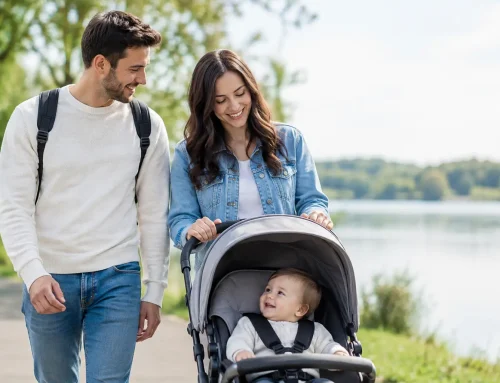
For babies younger than 6 months, experts generally recommend keeping them out of direct sun rather than relying on sunscreen. Their skin can absorb ingredients more readily, and babies this young can overheat quickly. Use a stroller canopy, a wide-brimmed hat, lightweight long sleeves and pants, and shaded areas whenever possible.
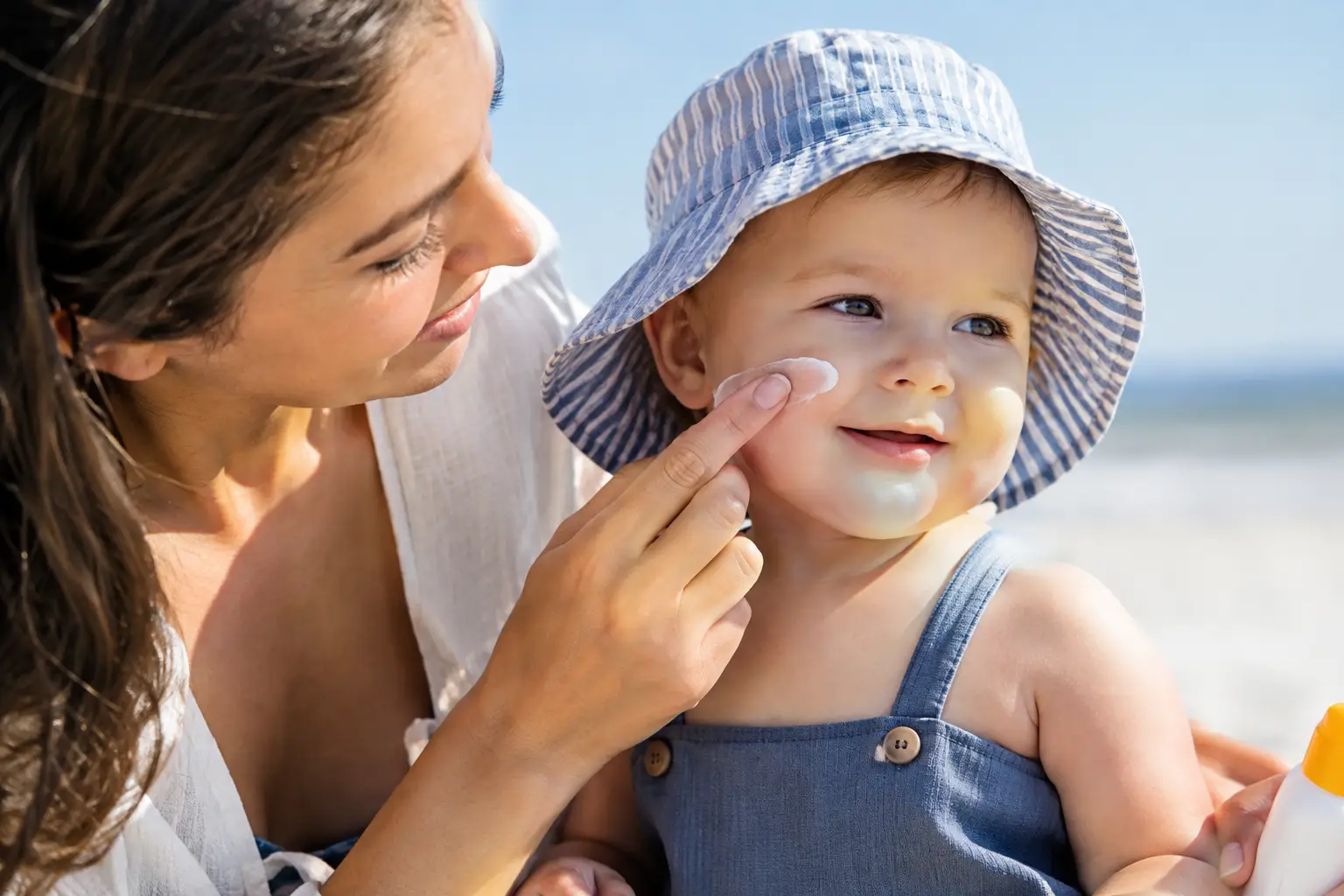
Once your baby is 6 months old, you can begin using sunscreen on exposed skin as part of your outdoor routine. Choose a broad-spectrum sunscreen with SPF 30 or higher that protects against both UVA and UVB rays. For babies and toddlers with sensitive skin, a mineral sunscreen containing zinc oxide and/or titanium dioxide is often a practical first choice. These ingredients sit on top of the skin to help block the sun, rather than being absorbed in the same way as chemical filters.
Age is not the only consideration. A baby who was born prematurely, has eczema, takes medication that increases sun sensitivity, or has a history of skin reactions may need more personalized guidance. In those situations, ask your child’s pediatrician what is appropriate before your next beach day, park visit, or family vacation.
Babies under 6 months: shade is the main protection
It is easy to assume a stroller canopy handles all sun protection, but a few details can make a big difference. Position the stroller in shade whenever you can, and check on your baby frequently. The sun moves, and reflected light from pavement, water, sand, and even light-colored concrete can still reach exposed skin.
Dress your baby in breathable, lightweight layers that cover the arms and legs. A soft, brimmed sun hat can protect the face, ears, and neck, as long as it fits securely and comfortably. Plan outdoor errands, walks, and visits for early morning or later afternoon when the sun is less intense. Midday, usually between 10 a.m. and 4 p.m., is when UV exposure is strongest.
DO NOT DRAPE A BLANKET OVER A STROLLER TO CREATE SHADE. Even a thin cover can limit airflow and trap heat inside. A canopy designed for the stroller or a breathable sun shade made for that purpose is a safer option.
What if there is no shade and your young baby has a small area of skin exposed? The American Academy of Pediatrics advises that parents may use a small amount of sunscreen on limited areas, such as the backs of hands or face, when clothing and shade are not available. This is a backup plan, not a reason to extend time in direct sunlight. Move to shade, offer a feed if it is time, and cool down indoors as soon as you can.
How to use sunscreen safely after 6 months
After 6 months, sunscreen is helpful, but it works best alongside clothing, hats, shade, and sensible timing. Think of it as one layer of protection, not permission to stay in hot sun all day.
Before using a new sunscreen widely, try a small patch on your baby’s inner arm or leg. Watch for redness, bumps, or irritation over the next day. If your child has eczema or very reactive skin, check with their pediatrician before trying a new formula.
Apply sunscreen about 15 minutes before heading outdoors, following the directions on the product label. Use enough to cover all exposed skin, including easy-to-miss spots: the tops of feet, backs of hands, ears, neck, hairline, and the part in the hair if your child’s scalp is exposed. Keep sunscreen away from the eyes and mouth. For a wiggly baby, it can help to apply a small amount at a time while they are secured in a high chair, stroller, or on a towel.
Reapply at least every two hours, and sooner after swimming, sweating, toweling off, or active water play. Water-resistant does not mean waterproof, and even the best sunscreen needs refreshing. If your child rubs their face repeatedly or gets sunscreen in their eyes, gently wipe it away with water and a soft cloth, then move them out of the sun for a moment.
Sprays can be convenient for older, active children, but creams and sticks are usually easier to control around babies and toddlers. If you do use a spray, NEVER spray directly onto your child’s face. Spray it into your hands first, then apply it carefully. Avoid using aerosol sprays near your baby’s face or where they may breathe in the mist.
Sunscreen will not prevent overheating
A baby can be wearing sunscreen and still become too hot. Heat illness and sunburn are separate concerns, which is why a shaded break matters even when everyone is protected with SPF.
Watch for flushed skin, unusual fussiness, rapid breathing, lethargy, or skin that feels hot to the touch. Move your child to a cooler place, remove extra layers, and offer breast milk, formula, or water if your child is older than 6 months and already drinks water. For babies under 6 months, breast milk or formula is the right hydration choice unless your pediatrician has given different instructions.
If your baby seems weak, very sleepy, difficult to wake, is vomiting, or has a high temperature after heat exposure, seek urgent medical care. Trust your instincts. Babies can worsen faster than adults, and it is always okay to ask for help.
Gentle cleanup after a sunny day
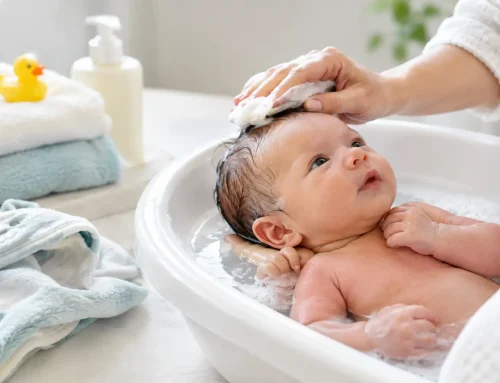
After outdoor play, rinse or gently cleanse sunscreen, sweat, sand, chlorine, and grime from your child’s skin, especially around the neck, wrists, behind the knees, and other little folds. You do not need a long bath every time. A warm washcloth and mild cleanser are often enough, followed by a fragrance-free moisturizer if skin seems dry.
For travel days, grandparent visits, beach parking lots, or the moments when a tub simply is not an option, a Baby Batherz no-rinse bamboo bathing cloth can make a quick head-to-toe cleanup easier. Its 99% purified water, aloe, vitamin E, and gentle coconut-derived cleanser are made for bathing and cleansing, not just diaper changes. Be especially gentle around the eyes, and avoid scrubbing irritated or sunburned skin.
If your child does get sunburned, bring them indoors, cool the skin with a lukewarm bath or cool damp cloth, and offer fluids appropriate for their age. Avoid ice, numbing sprays, and heavily scented products. Call your pediatrician for blistering, significant pain, fever, a burn over a large area, or any sunburn in a young infant.
Build a routine that travels with you
The most useful sun-safety routine is one you can repeat when you are tired, packing in a hurry, or handing your child over to a grandparent for the afternoon. Keep a sun hat, a lightweight cover-up, and age-appropriate sunscreen near the diaper bag or car seat supplies. Before you leave, take one quick look at the forecast and your plan for shade.
You do not have to keep your baby indoors all summer. Fresh air, family outings, and messy play are part of childhood. With shade as your first move, sunscreen after 6 months, and a calm plan for cleanup afterward, you can make room for sunny memories while caring for the skin your child is still growing into.