Red, rough patches can turn a perfectly ordinary diaper change into a worry spiral. If you are wondering what to do for newborn / infant eczema, start with this reassurance: eczema is common in babies, and a simple, gentle skin routine often makes a meaningful difference. You do not need to scrub more, buy a shelf full of products, or assume you caused it.
Baby eczema, also called atopic dermatitis, can show up as dry, scaly, or itchy areas. On young babies, it often appears on the cheeks, scalp, chest, arms, or legs. As babies become more mobile, it may settle into creases such as the elbows, knees, wrists, and ankles. A pediatrician can confirm what you are seeing and help you make a plan, especially when skin is cracked, weepy, or making your baby very uncomfortable.
Start with a simple eczema routine
Eczema is tied to a weakened skin barrier. When that barrier is dry or irritated, skin loses moisture more easily and reacts to things that might not bother another baby. The goal is not to make skin perfectly dry or perfectly clean. The goal is to protect moisture and avoid unnecessary irritation.
For many infants, the most helpful routine is short baths or gentle cleanups, followed right away by a plain, fragrance-free moisturizer. This approach is often called “soak and seal.” Water gives the outer layer of skin a brief chance to hydrate, and moisturizer helps hold that hydration in.
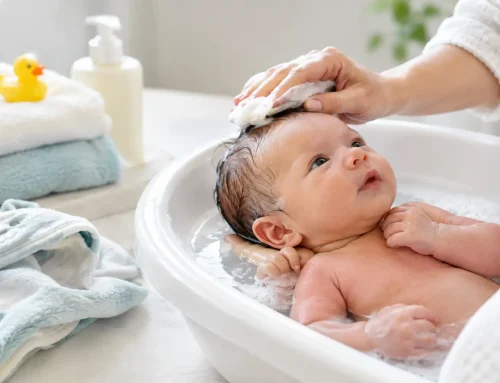
Use lukewarm water, not hot water. Hot baths can feel soothing in the moment but may dry skin further. Keep a tub bath brief, usually about five to 10 minutes, and skip bubbles, scented bath products, and strong cleansers. You do not need soap over your baby’s whole body every day. Focus cleanser only on areas that truly need it, such as the diaper area, hands, neck folds, or visible dirt.
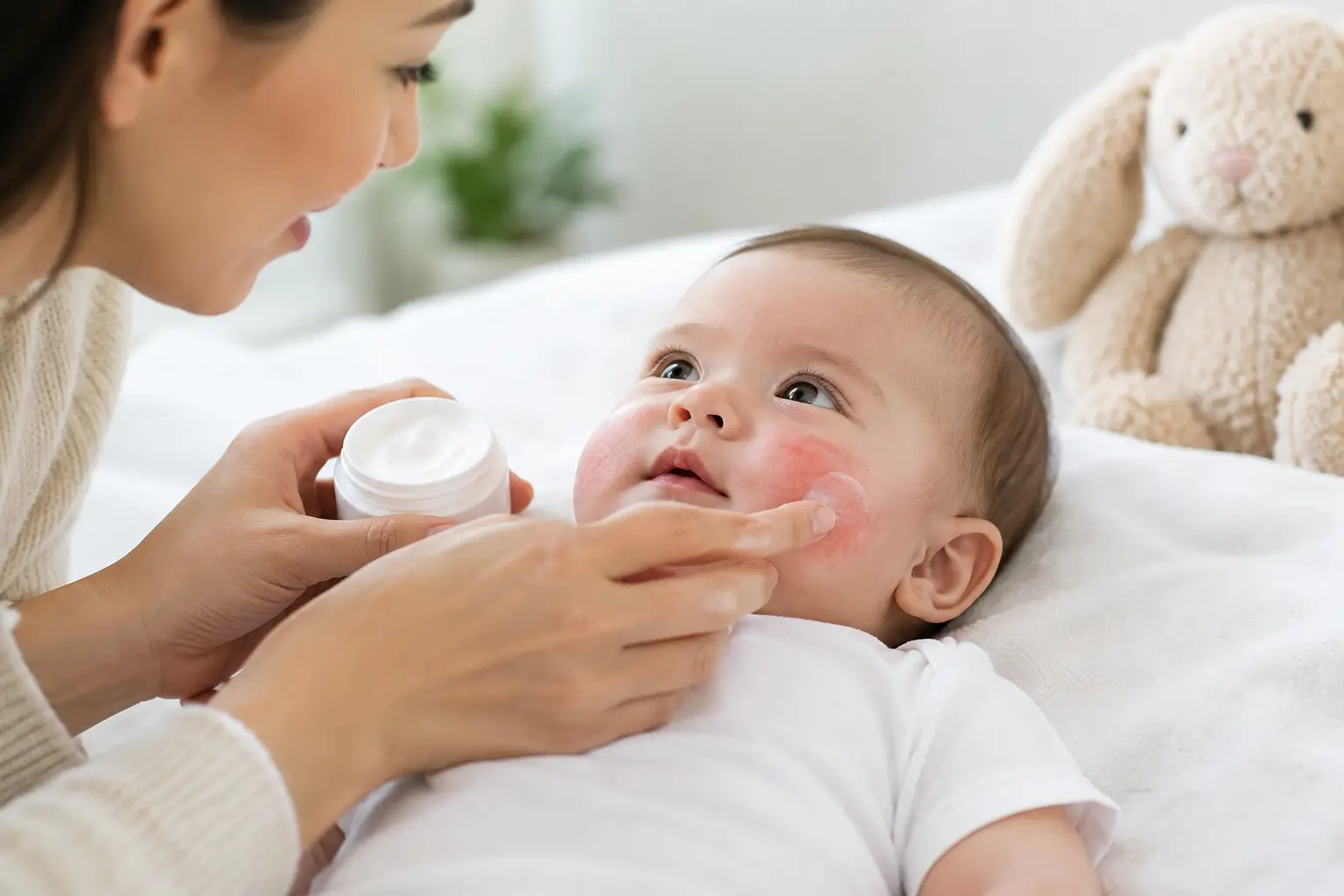
Afterward, pat – do not rub – with a soft towel. Within a few minutes, apply a thick, fragrance-free cream or ointment while skin is still slightly damp. Lotions can work for some babies, but they contain more water and are usually thinner. For very dry eczema patches, a cream or ointment often provides more staying power.
Moisturize more often than bath time
For newborn and infant eczema, moisturizing is usually the daily habit that matters most. Apply it at least twice a day and whenever your baby’s skin looks dry. Many families find that diaper changes, getting dressed in the morning, and bedtime are practical reminders.
Choose products labeled fragrance-free rather than simply unscented. “Unscented” products can still contain ingredients used to mask a scent. Keep the ingredient list short and avoid products with essential oils, perfumes, or exfoliating ingredients. Natural does not always mean gentle for eczema-prone skin.
If your baby has a few stubborn spots, apply moisturizer to the whole body and use an extra layer on the driest areas. Moisturizing surrounding skin matters too. Eczema often expands beyond the first small patch parents notice.
What about oils and home remedies?
Some families use plain petroleum jelly or a pediatrician-recommended ointment because they create a protective barrier with few ingredients. Plant oils are more complicated. While some may feel moisturizing, they can irritate sensitive skin or worsen symptoms in certain babies. Avoid experimenting with multiple new products at once. If a reaction happens, it becomes hard to know what caused it.
Food-based remedies, harsh antiseptics, and over-the-counter anti-itch products are not a good first step for a newborn. Check with your child’s pediatrician before using medicated creams, even ones sold without a prescription.
Keep bathing gentle, not frequent and harsh
A baby with eczema still needs normal hygiene. The difference is in how you clean, how long it takes, and what touches the skin. Daily bathing may work well for one baby and cause dryness for another. It depends on your child’s skin, climate, sweat, spit-up, and diaper messes. If daily baths seem to trigger flares, try bathing less often while continuing daily gentle cleansing of soiled areas and regular moisturizing.
Between baths, use a soft cloth with lukewarm water for small messes when possible. During the newborn stage, this can be especially useful when you are caring around the umbilical cord area or when a full bath feels like more than anyone needs that day.
For quick head-to-toe cleanups when a tub or sink is not practical, Baby Batherz® no-rinse bamboo bathing cloths offer a fragrance-free option made with 99% purified water, aloe, vitamin E, and a coconut-derived cleanser. As with any new skin-care product, test it on a small area first, avoid open or weeping eczema, and stop using it if redness or stinging increases.
Avoid vigorous rubbing, whether you are washing off milk dribbles, drool, sunscreen, sand, or a blowout. Gentle pressing and wiping is kinder to already irritated skin. Once the area is clean, add moisturizer if the skin seems dry.
Could your water be irritating your baby’s skin?
If you are doing everything “right” and your baby’s eczema still seems worse after bathing, it may be worth taking a closer look at your water.
Water itself is not considered a primary cause of eczema, but water quality may influence sensitive or eczema-prone skin. Research has found an association between hard household water and a higher risk of atopic dermatitis in infants and young children. Hard water contains higher concentrations of minerals, particularly calcium and magnesium. These minerals can interact with cleansers, leave residue on the skin, and may contribute to dryness and irritation of an already vulnerable skin barrier.
Chlorine is another consideration. Municipal water is commonly disinfected with chlorine or chloramine to keep drinking water safe. These disinfectants are important for public health, but some babies with very sensitive skin may seem drier or more irritated after bathing. This does not mean that properly treated city water is unsafe for babies.
Some parents also report that their baby’s skin improves after switching to filtered water. I have seen families notice similar changes. However, improvement after changing the water does not necessarily prove that chlorine, minerals, or another component of the water caused the eczema. Research has not yet established filtered water as a standard treatment for infant eczema.
If your baby consistently becomes redder, drier, or itchier after bathing, consider the entire bathing environment. Keep baths short and lukewarm, minimize cleansers, moisturize immediately afterward, and find out whether your home has particularly hard water. You can also discuss your observations with your pediatrician or pediatric dermatologist.
If you want to experiment with water quality, keep the rest of your baby’s skin-care routine the same for a period of time. Changing the water, cleanser, detergent, moisturizer, and bathing schedule all at once makes it difficult to tell what actually helped.
Most importantly, do not assume that your city water is “bad” or unsafe because your baby has eczema. Eczema is a complex skin-barrier condition influenced by genetics, the immune system, environment, and irritants. Water quality may be one piece of that puzzle for some babies rather than the underlying cause.
Reduce common eczema triggers at home
You cannot always identify one clear cause of eczema, and that is okay. Often, the best strategy is reducing the everyday irritants that can add up.
Dress your baby in soft, breathable cotton layers and avoid overheating. Heat and sweat can make itching worse, so use lighter sleepwear when rooms run warm. Wash new clothes, sheets, burp cloths, and towels before use with a fragrance-free detergent. Skip fabric softener and scented dryer sheets, which can leave residue on fabrics that touch your baby all day.
Keep fingernails short and smooth. Babies may rub their face on a caregiver’s shirt or scratch while sleepy, and tiny nails can quickly break delicate skin. If nighttime scratching is a problem, ask your pediatrician whether soft mittens or pajamas with fold-over cuffs make sense for your baby’s age and sleep situation.
Saliva can also aggravate eczema around the cheeks, chin, and neck. Gently blot drool rather than repeatedly wiping it away, then use a thin layer of a pediatrician-approved barrier ointment if recommended. Change damp bibs and wet shirt collars promptly.
When eczema needs a pediatrician’s help
It is reasonable to call your baby’s pediatrician when you are unsure whether a rash is eczema. Several other infant skin conditions can look similar, including cradle cap, heat rash, contact irritation, yeast rashes, and infections. A diagnosis helps you avoid treating the wrong problem.
Call promptly if the rash is spreading quickly, painful, warm, swollen, oozing, crusted, or covered with yellow scabs. These signs can point to infection and deserve timely medical guidance. Also contact the pediatrician if your baby has a fever, seems unusually fussy or lethargic, is feeding poorly, or has blisters.
Make an appointment if consistent gentle care is not helping after a week or two, if sleep is disrupted by itching, or if eczema covers large areas. Your pediatrician may recommend a specific moisturizer, a short course of prescription treatment, or a referral to a pediatric dermatologist. When medication is needed, using it exactly as directed can calm inflammation and help protect the skin barrier. The trade-off is that treatment plans must be tailored to a baby’s age, location of the rash, and severity, especially on the face or in skin folds.
Do foods cause infant eczema?
Parents often wonder whether eczema means a baby is allergic to something in breast milk, formula, or later foods. Eczema and food allergies can occur together, but eczema alone does not prove a food is the cause. Do not remove foods from your diet or switch formula without guidance from your child’s clinician. Unnecessary elimination can make feeding harder without improving skin.
If your baby develops hives, vomiting, facial swelling, coughing, wheezing, or sudden behavior changes after a food, seek medical advice right away. Those symptoms need a different kind of evaluation than a typical dry eczema flare.
Make the routine doable on hard days
The best eczema routine is one you can repeat when you are tired. Keep a moisturizer where you usually dress your baby and another near the changing table. Use clean, soft washcloths. Choose one or two dependable, fragrance-free products instead of constantly changing products in search of a fast fix.
Take a quick photo when a flare begins, particularly if it changes after a new detergent, product, season, or illness. Pictures can help your pediatrician see patterns that are hard to describe during an appointment.
Your baby’s skin may have calm weeks and flare weeks, even when you are doing everything carefully. That does not mean you have failed. Gentle cleaning, steady moisturizing, and timely medical help when symptoms escalate give your little one the support their skin needs – and give you a calmer, more confident next step.