That first bath can feel surprisingly high-stakes. Your baby is tiny, sleepy, and still getting used to life outside the womb, while you may be healing, running on little sleep, or simply nervous about getting every detail right. This newborn first bath checklist for gentle care keeps the moment simple: prepare first, keep baby warm, clean gently, and stop before either of you becomes overwhelmed.
A newborn does not need a long bath or a complicated routine. In fact, a few careful minutes are usually enough. Every baby deserves a gentle beginning, and calm preparation does more for that than a sink full of products ever will.
Before the First Bath: Know What Your Baby Needs
For most healthy newborns, the first full tub bath at home can wait until the umbilical cord stump falls off and the area has healed. Until then, pediatric providers commonly recommend sponge baths to help keep the stump clean and dry. If your hospital or pediatrician has given you different instructions, follow their guidance.
Newborns do not need daily baths. Two or three baths a week is often plenty, with gentle cleaning of the face, neck folds, hands, and diaper area as needed between baths. More frequent washing can dry delicate skin, especially during the first weeks.
Pick a time when your baby is awake, calm, and not frantic with hunger. If you bathe your baby after a feeding, give them some time to settle first. If your baby is overtired, has just spit up, or you are having a hard postpartum day, it is completely fine to skip the bath. Clean can be simple.
Newborn First Bath Checklist for Gentle Care
Set up everything within arm’s reach before undressing your baby. Once baby is in the water or on a secure bathing surface, keep one hand on them at all times. A prepared space matters more than a perfectly styled bath setup.
Gather these essentials:
- A clean, secure bathing area or infant tub
- Two soft washcloths, plus a clean towel for drying
- A fresh diaper and clean clothes
- Mild, fragrance-free baby cleanser, if needed
- Warm water and a cup for rinsing, if using a tub
- Diaper cream only if your baby needs it
Warm the room first and keep it free from drafts. Babies lose body heat quickly, so have the towel open and ready before you begin. Test bath water with your wrist or elbow. It should feel comfortably warm, never hot. If you use a baby tub, fill it with only a small amount of water and follow the tub manufacturer’s instructions.
Remove jewelry or anything that could scratch your baby’s skin. Keep your phone out of reach and silence distractions. A first bath is not the time to answer a text, start laundry, or step away to find a towel.
If the Umbilical Cord Stump Is Still Attached
A sponge bath is usually the simplest choice while the umbilical cord stump is still attached. Keep baby warm and secure, uncovering only the area you are washing. Use a soft, damp cloth to gently clean the face, body, and skin folds while taking care not to soak the cord stump.
If the stump gets damp, gently pat it dry. Do not pull it off or apply alcohol, ointments, or other products unless your baby’s healthcare provider has specifically instructed you to do so.
Contact your baby’s healthcare provider if you notice spreading redness around the cord, swelling, pus or drainage, a foul odor, persistent bleeding, fever, or if your baby appears unwell.
A Calm, Head-to-Toe Bath Routine
Start with the cleanest areas and work toward the diaper area. This approach is gentle, practical, and helps avoid moving germs from the diaper region to other parts of the body.
Begin with your baby’s eyes. Use plain water and a clean area of a soft cloth for each eye, gently wiping from the inner corner outward. Then clean the face, around the ears, and behind the ears. Nothing needs to go inside your baby’s ears or nose.
Wash the neck, under the arms, between fingers and toes, and through those little thigh folds where milk, lint, and moisture can collect. These small areas often need more attention than a baby’s arms or belly. Use a light touch rather than scrubbing. Newborn skin does not need to feel squeaky clean to be clean.
For hair, a damp washcloth is often enough during the early weeks. If you use cleanser, use only a small amount, rinse carefully, and keep water away from baby’s face.
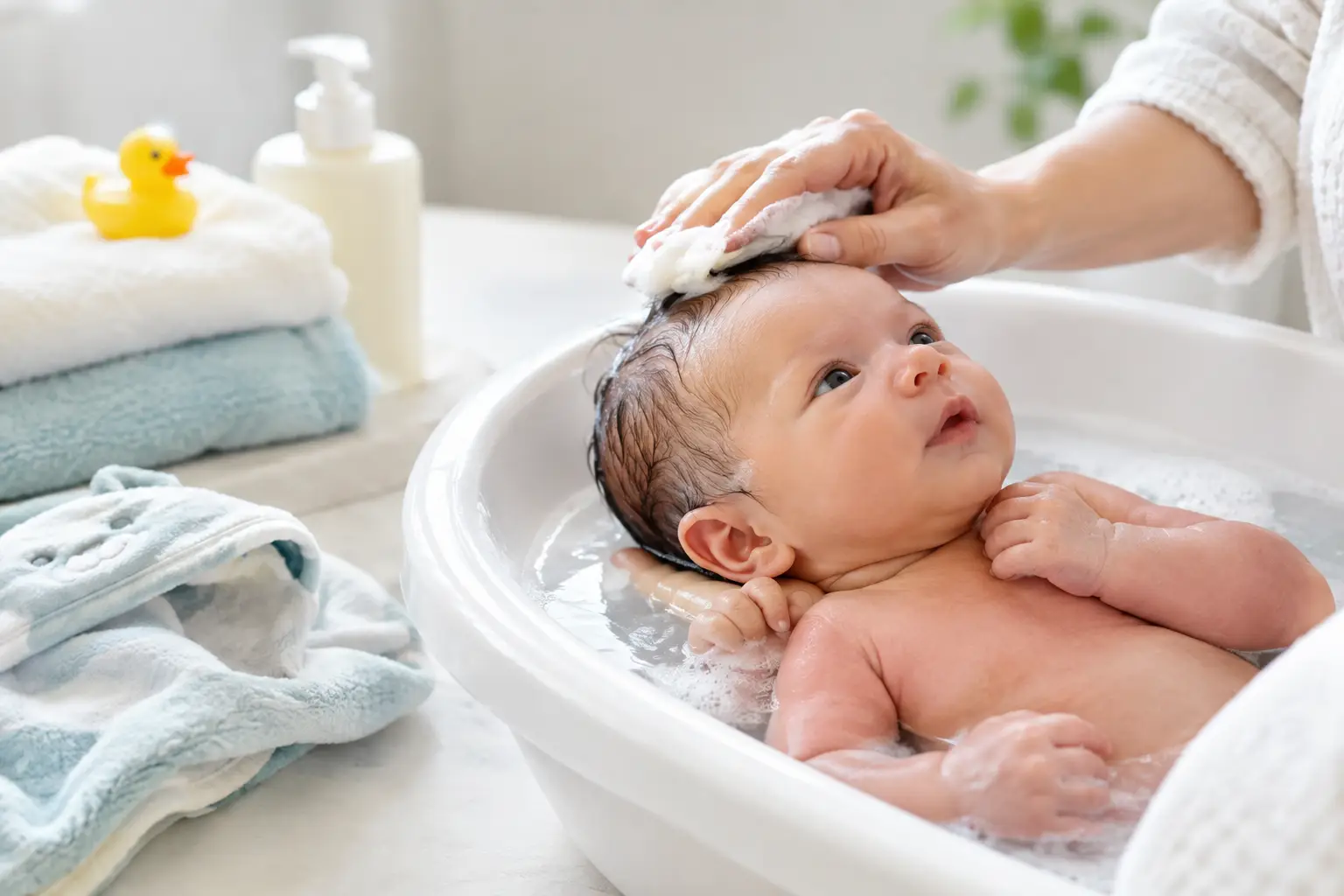
Support your baby’s head and neck throughout the bath. In a tub, keep one hand on baby at all times, even if the infant tub, insert, or bath support seems secure.
Clean the diaper area last. For girls, wipe from front to back. For boys, gently clean the outside of the penis and scrotum without forcing back an uncircumcised foreskin. If your baby has been circumcised, follow the aftercare instructions provided by your baby’s healthcare provider.
Keep the bath brief—about five to 10 minutes is usually plenty. If your baby becomes cold, begins shivering, seems distressed, or the water cools, end the bath. A calm, short bath is better than trying to finish every step.
Drying and Dressing Without Irritating Skin
Lift your baby securely into the waiting towel and gently pat the skin dry rather than rubbing. Take a moment to dry the skin folds, especially around the neck, underarms, groin, and behind the knees. Moisture trapped in skin folds can contribute to irritation.
Most newborns do not need lotion after every bath. If your baby’s skin looks dry, choose a simple, fragrance-free moisturizer formulated for babies. Avoid powders, strongly scented products, essential oils, and adult soaps, which can irritate delicate skin.
Dress your baby in a clean diaper and comfortable clothing appropriate for the room temperature. Rather than judging warmth by chilly hands or feet, check your baby’s chest or back. Newborn hands and feet can feel cool even when the rest of the body is comfortable.
When a No-Rinse Bath Makes More Sense
There are days when a tub bath simply is not practical: you are recovering from a C-section, your partner is back at work, baby has a 2 a.m. spit-up mess, or you are visiting grandparents without an infant bath setup. A gentle no-rinse cleanse can help keep baby fresh and comfortable without turning a small cleanup into a major event.
Baby Batherz® no-rinse bamboo bathing cloths were created specifically for head-to-toe baby cleansing—not just diaper changes. Nurse Practitioner created and pediatrician reviewed, each extra-thick cloth contains a water-based formula made with 99% purified water, aloe, vitamin E, and a coconut-derived cleanser. Baby Batherz® is unscented and formulated without fragrances, alcohol, sulfates, dyes, parabens, phthalates, phenoxyethanol, latex, PEGs, or polysorbates.
Use a cloth to gently clean the areas that need attention. No tub and no rinsing are needed. No-Tub. No-Rinse. No-Stress.
This kind of ready-to-use option can also be useful well beyond the newborn stage. Infants and toddlers have a way of finding sand, snack residue, dirt, zinc sunscreen, and mystery grime when a regular bath is hours away. A no-rinse cleanup can help after park outings, road trips, daycare pickup, grandparent visits, or an unexpected mess away from home.
It is another option in your parenting toolkit—not a replacement for regular bathing, but a convenient way to handle the moments when a traditional bath is not practical.
A Few Safety Rules Worth Repeating
Never leave a baby alone in or near water, even for a second. Do not rely on bath seats, siblings, or older children for supervision. If the doorbell rings or you need to leave the bathing area for any reason, wrap your baby securely in a towel and take them with you.
Keep the routine simple and limit unnecessary products. If your baby has eczema, persistent dryness, a rash, broken skin, or signs of a skin infection, talk with your pediatrician about bathing and skin-care recommendations specific to your child. Babies with sensitive skin may benefit from shorter, less frequent baths and carefully selected fragrance-free products.
Your baby’s first bath does not need to look like a social-media moment. It can simply be a warm room, a clean towel, two steady hands, and a baby who feels safe against your chest afterward.
That is more than enough.