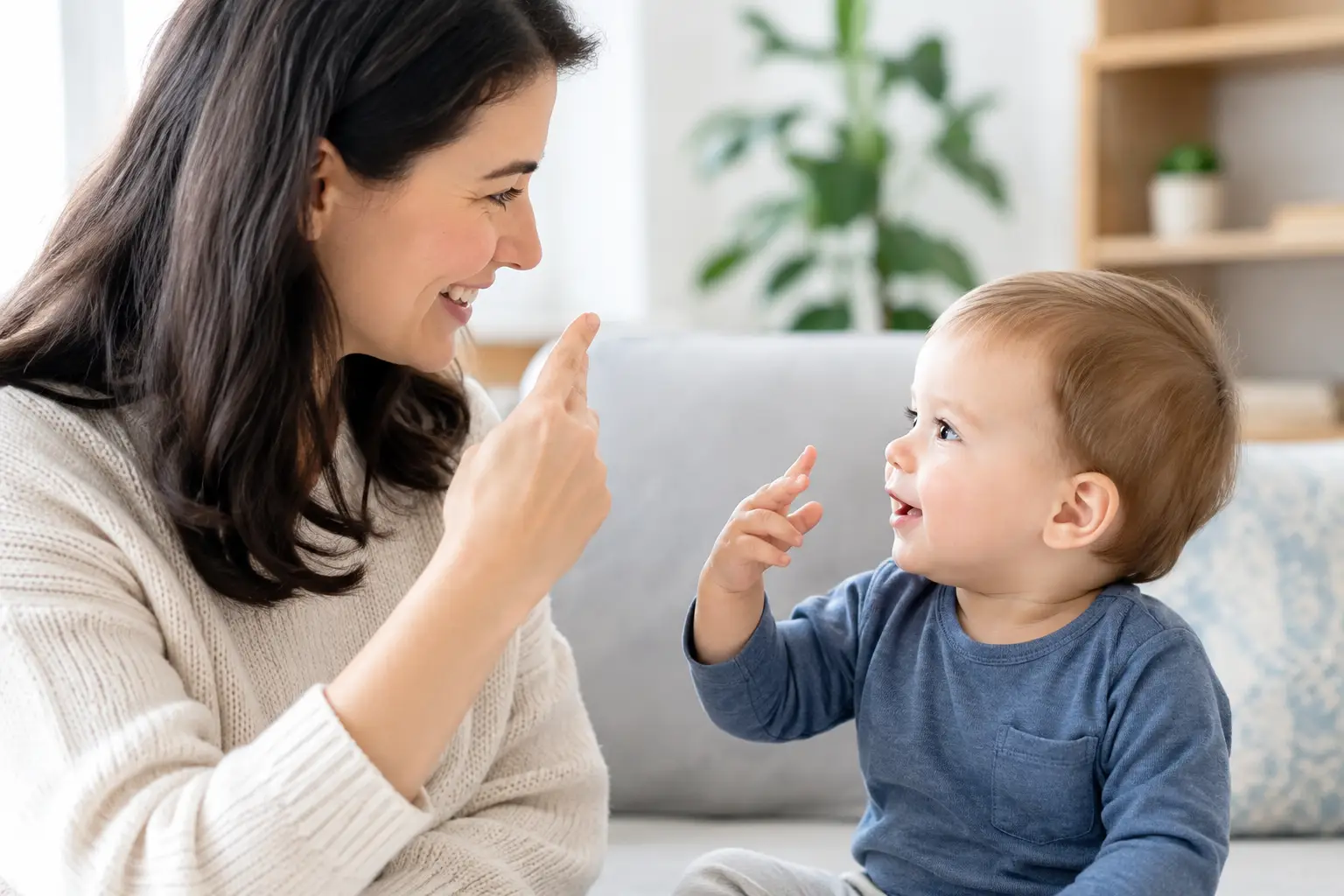
A baby who is rubbing tired eyes, reaching for a bottle, or melting down before lunch is communicating long before they can say the words. Baby sign language gives parents and caregivers one more way to understand those early messages – often with less guessing, less frustration, and more connection.
The goal is not to turn your baby into a tiny student or add another task to an already full day. It is simply to pair a few easy gestures with the words you already use: milk, more, all done, sleep. For many families, those small moments of understanding can make the infant and toddler months feel a little calmer.
What Baby Sign Language Is – and What It Is Not
Baby sign language is the practice of using simple hand signs alongside spoken words before a child can clearly speak. Some families use signs from American Sign Language (ASL). Others use a few consistent gestures that work for their household. Either approach can support communication, as long as caregivers use the same gesture and spoken word repeatedly.
It is not a test of intelligence, a replacement for talking, or a promise that your child will speak early. Babies develop on their own timelines. Signing is simply an additional tool for a stage when they often understand much more language than they can say.
Research and clinical guidance generally do not support the idea that signing delays speech. In fact, because signs are used with spoken language, they can encourage caregivers to slow down, make eye contact, name what is happening, and respond to a child’s attempts to communicate. Those are all valuable parts of early language development.
When Can Babies Start Signing?
You can begin modeling signs around 6 months, when many babies are becoming more interested in faces, routines, and hand movements. Most babies will not sign back right away. Many begin using recognizable signs somewhere between 8 and 12 months, though some start sooner and others later.
What matters most is readiness, not the calendar. Your baby may be ready to try when they can sit with support or independently, pay attention during familiar routines, reach toward desired objects, wave, clap, or imitate simple actions.
Think of the first several weeks as exposure, not performance. You may sign “milk” before every feeding for a month with no response. Then one day, your baby may make an imperfect version of the sign just before they are hungry. That is progress.
The Best First Baby Sign Language Signs
Start with signs that solve a real, repeated problem in your day. A baby is more likely to use a sign when it helps them get something meaningful or tell you something they feel.
For feeding, “milk,” “more,” “eat,” “drink,” and “all done” are useful choices. “More” can be especially helpful once solids begin, while “all done” gives a child a respectful way to signal they have finished without tossing every last blueberry to the floor.
For routines, consider “sleep,” “bath,” “diaper,” “help,” and “up.” For comfort and connection, “mom,” “dad,” “grandma,” “love,” and “hurt” may matter most to your family. If your baby spends time with another caregiver, choose signs everyone can remember and use.
You do not need a large vocabulary. Three to five signs used consistently are more useful than 20 signs used once in a while.
Keep the sign, word, and moment together
Show the sign as you say the word at the moment it makes sense. Sign “more” when you offer another bite. Sign “bath” as you start the evening cleanup. Sign “all done” when the meal or activity truly ends.
This pairing helps babies connect the gesture with meaning. Use a warm, natural voice. There is no need to drill, quiz, or hold your baby’s hands to force the shape of a sign. Modeling works better than pressure.
Accept your baby’s version
Early signs may be messy. A wrist flick, open hand, clap-like movement, or partial gesture can still be a genuine attempt to communicate. If it is consistent and happens in the right context, respond as though you understand: “More banana? Yes, you want more.”
That response is powerful. It teaches your child that communication works.
How to Make Signing Part of Daily Care
The easiest time to use signs is during routines you already repeat every day. Feeding, diaper changes, getting dressed, leaving the house, bath time, and bedtime all provide natural opportunities.
During a diaper change, you might say and sign “diaper” before beginning, then “all done” when you finish. Before a nap, sign “sleep” while saying, “It’s time to sleep.” At meals, hold the pace for a moment after your baby signs or gestures for “more,” then answer with words and action.
For toddlers, signs can remain helpful when big feelings outpace spoken language. “Help,” “stop,” “hurt,” and “all done” can give a young child a clearer way to communicate before frustration turns into a full-body protest. They will still have tantrums. Signing is not a cure for normal toddler emotions, but it can reduce a few avoidable misunderstandings.
Care routines can be communication moments, too. After a sandy playground visit, a sunscreen-covered afternoon, or a snack spill in the car, name what you are doing as you clean up: “Hands clean,” “all done,” “bath later.” For quick, no-rinse freshening when a tub is not practical, Baby Batherz can help make those transitions easier without turning a busy outing into a full bath routine.
Common Questions Parents Have
Should we use ASL signs or make up our own?
If you choose established ASL signs, learn them accurately and use them respectfully. ASL is a complete language used by the Deaf community, not merely a collection of baby gestures. Many families choose common ASL signs because they are widely recognized and easy to learn.
At the same time, everyday family gestures can be practical. The key is consistency. If one caregiver uses a sign for “more” and another uses a different movement for the same request, your baby may need more time to connect the meaning.
What if my baby never signs back?
Some babies watch and understand without using many signs themselves. Others move quickly from gestures to spoken words. Neither response means you have done anything wrong.
Keep talking, reading, singing, responding to babbles, and giving your child time to take turns with you. If you have concerns about speech, hearing, understanding language, or lost skills at any age, bring them to your child’s pediatrician. Early questions deserve early support.
Can signing replace words?
No. Continue saying the word every time you sign it. As your child begins to speak, celebrate the word and keep the sign available if it helps. Most children naturally rely less on signs as verbal language becomes easier.
A Gentle Approach Works Best
Baby sign language is most useful when it feels like a shared routine, not one more thing to get right. Use a few signs that fit your family’s real days. Repeat them often. Respond warmly to your child’s attempts, even when the gesture is not textbook-perfect.
Those little hands are already reaching, pointing, waving, and asking to be understood. Meeting them there can make daily care feel less like decoding and more like a conversation that has already begun.