A quick cleanup should not leave you wondering whether you made your baby’s skin worse. So, do waterless cleansers cause irritation? They can, but the answer depends far more on the formula, your child’s skin, and how the product is used than on the fact that it is waterless.
Baby skin is thinner and more reactive than adult skin, especially during the newborn months. A thoughtfully made no-rinse cleanser can be a helpful option when a tub bath is not practical. But fragrance, harsh surfactants, certain preservatives, rubbing, or repeated use on already-inflamed skin can all contribute to redness or discomfort.
Do Waterless Cleansers Cause Irritation? What Parents Should Know
Waterless cleansers are not one single type of product. Some are designed for hands, makeup removal, diaper changes, or surface cleaning. Those are not automatically appropriate for a baby’s head-to-toe skin. A product made for infant bathing should be gentle enough for delicate skin and clear about what it contains.
Irritation is also different from an allergy. Irritant contact dermatitis is a reaction to something that disrupts the skin barrier, such as a drying ingredient, too much friction, or cleanser left on sensitive skin. It may look like redness, rough patches, dryness, or tiny bumps. An allergic reaction involves the immune system and can include an itchy rash, hives, swelling, or symptoms that appear after repeat exposure.
Most babies will not react to every new cleanser. Still, a baby who has eczema, very dry skin, a history of skin reactions, or a current rash may need a simpler routine and extra care when trying anything new.
Ingredients and Product Choices That Matter
The word “gentle” on a package is reassuring, but an ingredient list tells a more useful story. For everyday cleansing, many families prefer fragrance-free products made without harsh chemicals. Fragrance is a common source of irritation, even when it smells light or is described as natural.
Alcohol can be drying in some formulas, particularly when it appears high on the ingredient list. Strong detergents and heavily scented botanical extracts may also be too much for sensitive baby skin. This does not mean every ingredient with a long name is harmful, or that every plant-based ingredient is automatically soothing. It means the full formula matters.
Look for a cleanser created specifically for babies, with a short, transparent ingredient approach and a clear intended use. A cloth that is soft and substantial can matter, too. Thin or rough material may require more passes across the skin, and extra rubbing can aggravate an already sensitive area.
Baby Batherz® no-rinse bamboo bathing cloths are designed for head-to-toe baby cleansing with 99% purified water, aloe, vitamin E, and a coconut-derived cleanser. They are fragrance-free, pediatrician-approved, and formulated without harsh chemicals. That distinction matters: bathing cloths are intended for broader skin cleansing, not simply as a substitute for a diaper wipe.
How to Try a New Cleanser More Safely
You do not need to make bath time complicated, especially when you are recovering from birth, managing a fussy newborn, or cleaning up after a long car ride. A small first test can provide useful reassurance.
Start by using the cleanser on a small area of intact skin, such as part of the leg or arm. Use gentle pressure rather than scrubbing, then watch the area over the next day for persistent redness, bumps, dryness, or signs that your child seems uncomfortable. Avoid testing on broken skin, active eczema patches, or an existing unexplained rash unless your pediatrician has advised you to do so.
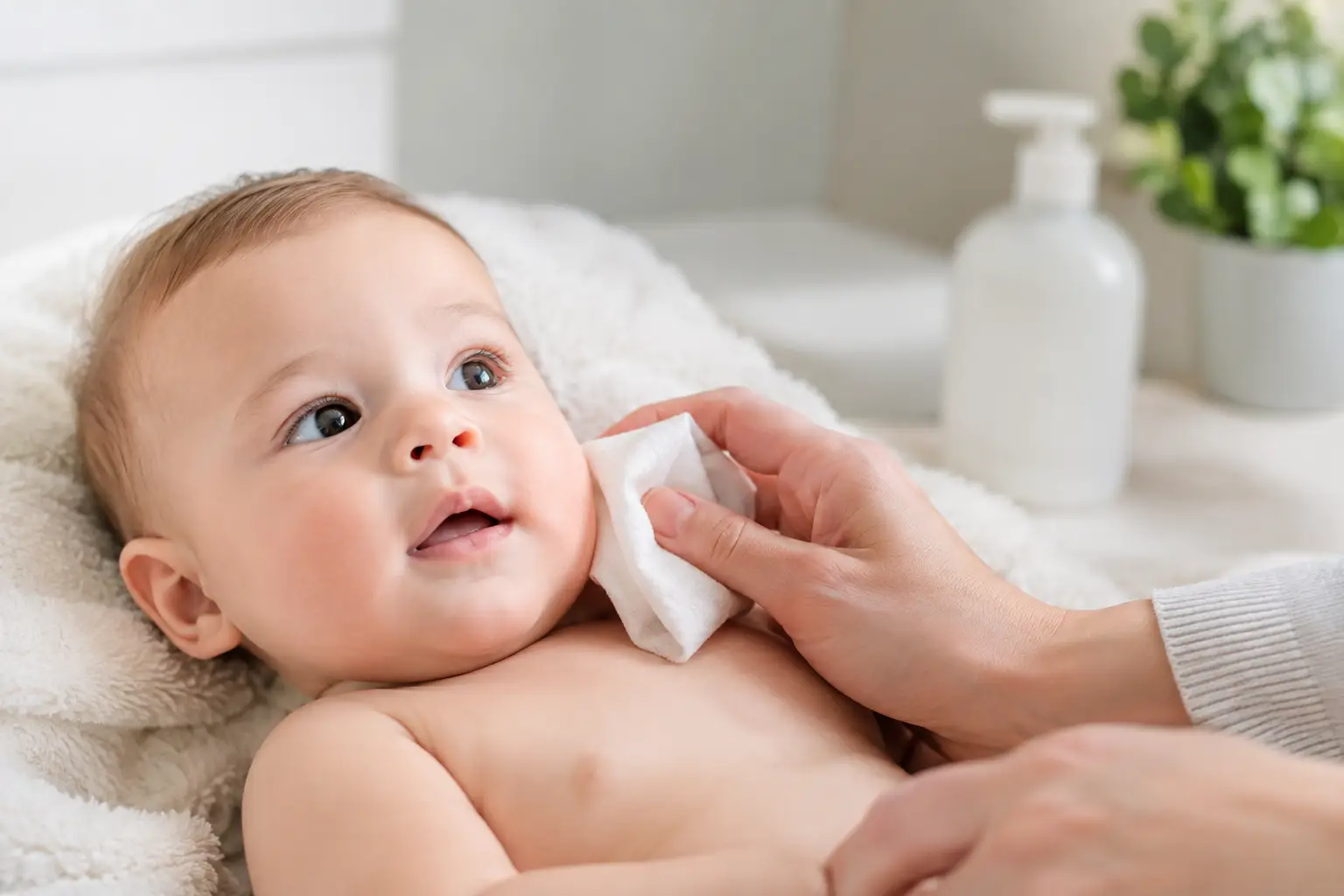
If the skin stays calm, use the product as directed. For a no-rinse cloth, that generally means wiping gently and allowing the skin to air dry. You do not need to follow with another cleanser or a vigorous towel dry. More cleaning is not always better for young skin.
Be especially gentle around the neck, underarms, behind the knees, wrist creases, and thigh folds. Milk, drool, lint, heat, and moisture can collect there, making these areas prone to irritation even when the cleanser itself is not the problem. Pat folds dry after cleaning so moisture does not stay trapped against the skin.
Newborns Need a Little Extra Caution
For newborns, fewer products are usually better. During the umbilical-cord stage, follow your pediatrician’s guidance and keep the cord area clean and dry. Avoid saturating the stump or adding lotions, powders, or cleansers there unless your clinician recommends them.
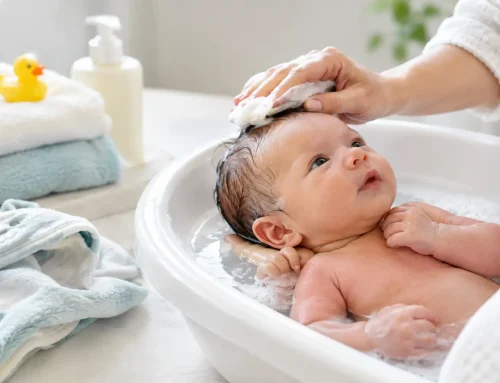
A no-rinse bath can be useful when you want to clean around the body without wrestling a slippery baby into a sink or tub. Work in sections and keep your baby warm: uncover one area, cleanse gently, dry if needed, then move on. No tub, no stress, just love and a simple routine.
When a Waterless Cleanser May Not Be the Best Choice
Even a gentle product may not be right for every moment. Skip a new cleanser if your baby has open sores, weeping skin, a severe diaper rash, or a rash that has not been evaluated. Clean water and a soft cloth may be the simplest option while you wait for medical advice.
For diaper-area messes, choose products intended for that use and change diapers promptly. Stool and urine exposure are major irritants on their own, so a rash after cleanup is not always caused by the cloth or cleanser. Letting the area dry fully and using a barrier ointment recommended by your pediatrician can be more helpful than switching products repeatedly.
Toddlers and young children bring different cleanup challenges: playground dirt, sand, sticky snacks, sunscreen, travel spills, and the mysterious grime that appears after five minutes at a grandparent’s house. A waterless cleanser can be practical for these moments, but avoid using it close to the eyes, inside the mouth, or on mucous membranes. If zinc sunscreen is thick or water-resistant, a traditional bath when you get home may still be the best way to remove it thoroughly.
What to Do If You See Redness or a Rash
If you suspect a product is irritating your child’s skin, stop using it. Gently rinse the area with lukewarm water if possible, pat dry, and avoid introducing another new product right away. Take a clear photo of the rash, particularly if it changes, because photos can help your pediatrician assess what happened.
Call your child’s pediatrician for a rash that persists, spreads, appears painful, oozes, crusts, or comes with fever. Seek urgent medical care for facial or lip swelling, widespread hives, trouble breathing, unusual sleepiness, or any sign of a serious allergic reaction.
A calm skin-care routine is often the kindest one: use only what your child needs, cleanse without scrubbing, and pay attention to patterns. When a product keeps skin clean and comfortable through spit-up, sandy feet, travel days, and middle-of-the-night messes, it earns a place in the routine. If your baby’s skin says otherwise, trust that signal and simplify.