A sink full of water is not always realistic when your newborn has spit up through their onesie at 2 a.m., your toddler is covered in playground sand, or you are recovering from birth and bending over a baby tub feels like too much. Bamboo wipes can make those moments feel more manageable, but the label alone does not tell you whether a wipe is right for your child’s skin or the mess at hand.
For babies and young children, the best cleanup solution is the one that is gentle, appropriate for the body area, and practical enough that you will actually use it when life gets messy. Here is how to think clearly about bamboo wipes, from the newborn days through toddler adventures.
What Are Bamboo Wipes?
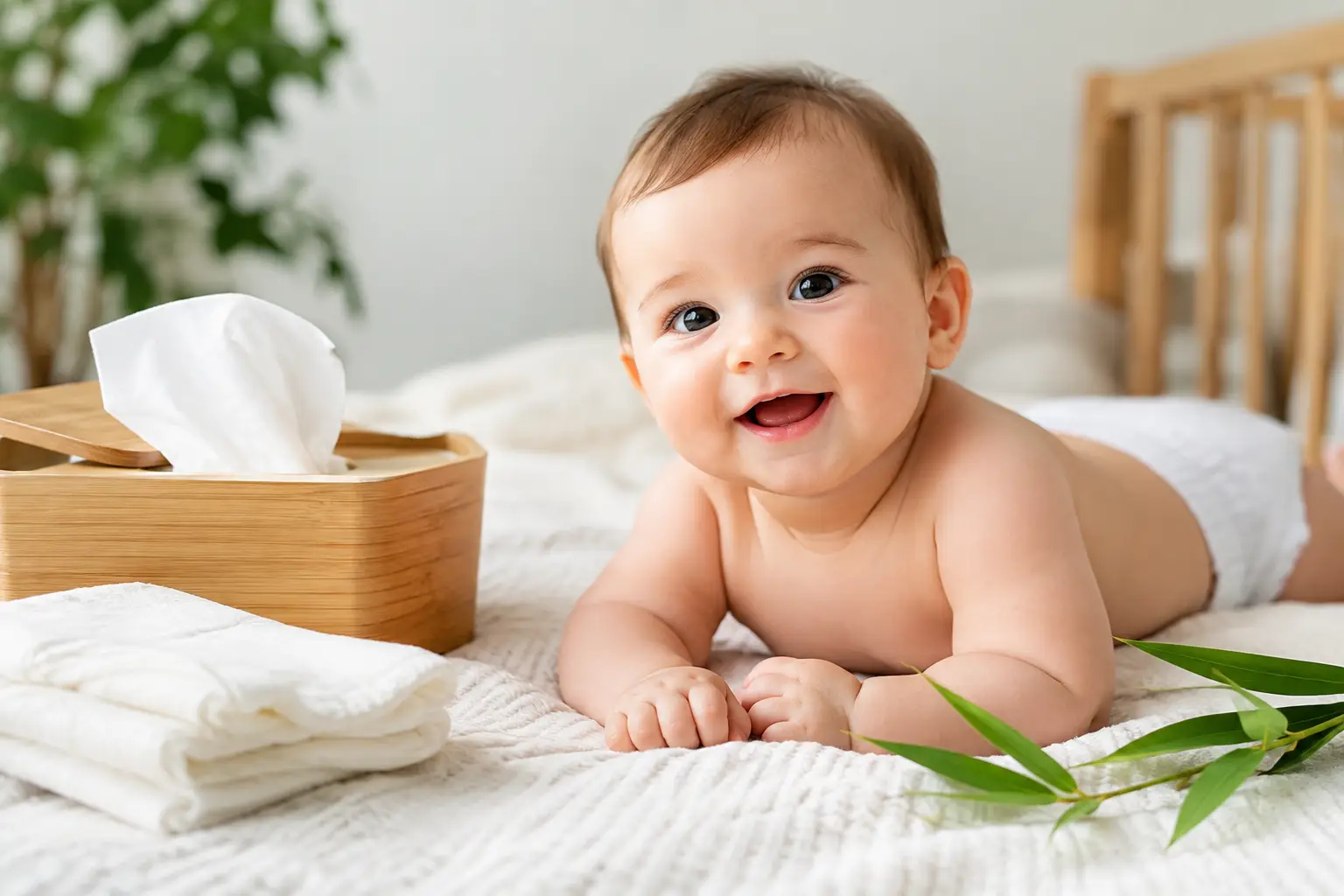
Bamboo wipes are disposable cleansing cloths made with bamboo-derived material. Parents may choose them because bamboo can feel soft against delicate skin and because the cloths are often positioned as a more plant-based option than conventional wipes.
Still, “bamboo” describes only part of the product. It does not automatically mean fragrance-free, hypoallergenic, free from harsh ingredients, or suitable for bathing. The cleansing liquid, additives, thickness of the cloth, and intended use all matter just as much as the material itself.
Some bamboo wipes are designed primarily for diaper changes. Others are made for hands and faces. A no-rinse bathing cloth is different again: it should be large and durable enough for head-to-toe cleansing, with an ingredient list designed for broader skin contact. Choosing the right kind helps prevent a quick cleanup from becoming an irritated-skin problem.
What to Look for in Bamboo Wipes for Babies
Babies have thinner, more sensitive skin than adults, particularly during the newborn stage. A simple formula is usually a welcome starting point. Look for products that clearly explain what is in the cleansing solution, rather than relying on broad marketing words alone.
For a head-to-toe cloth, 99% purified water can be a reassuring foundation. Gentle, familiar skin-supporting ingredients such as aloe and vitamin E may also be appropriate when they are included in a thoughtfully formulated product. A mild coconut-derived cleanser can help lift everyday dirt, milk dribbles, sunscreen, and sticky fingers without requiring a separate basin of water.
Just as important is what has been left out. Fragrance can smell pleasant, but it is not necessary for clean skin and can be a concern for babies with sensitive or easily irritated skin. Parents may also prefer to avoid harsh chemicals and heavily scented formulas, especially for frequent use.
Thickness matters more than it may seem. A thin wipe can tear halfway through a cleanup or require several cloths for one small mess. An extra-thick cloth gives you more control when cleaning skin folds, wiping sunscreen from little arms and legs, or freshening up a child after a long car ride.
If your child has eczema, a rash, broken skin, or a history of skin reactions, check with their pediatrician before introducing any new cleansing product. Even a gentle formula can be too much for skin that is already inflamed.
When a No-Rinse Bathing Cloth Helps Most
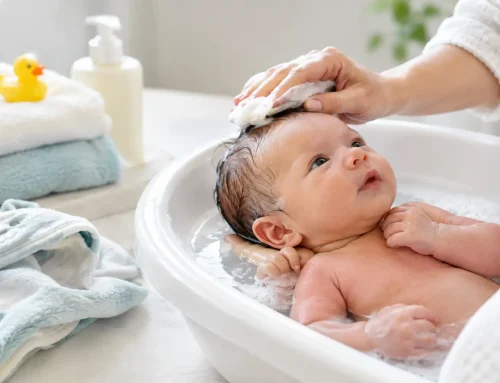
Traditional baths are wonderful when you have the time, water, and a cooperative child. They are not the only way to care for a baby’s hygiene. No-rinse bathing cloths can fill the gap between baths or take the place of a tub bath when circumstances make one impractical.
In the newborn period, parents often appreciate a simpler way to clean the face, neck, hands, diaper area, and little folds where milk, drool, and lint collect. This can be especially helpful during postpartum recovery, when standing at the sink or kneeling beside a tub may be uncomfortable. It also gives partners, grandparents, and visiting caregivers a straightforward routine to follow.
For a newborn with an umbilical cord stump, follow your pediatrician’s guidance. In many cases, the goal is to keep the cord area clean and dry while it heals. A bathing cloth can be useful for gently cleaning around the body without soaking the stump, but do not scrub the cord or apply products to it unless your child’s clinician has directed you to do so. Call the pediatrician for redness spreading from the stump, foul-smelling drainage, fever, or a baby who seems unwell.
As babies become more active, cleanup needs change quickly. Feeding practice means puree in eyebrows, yogurt on wrists, and mashed banana in the neck folds. A soft no-rinse cloth can help freshen skin after meals without turning every messy snack into bath time.
Toddlers and young children bring a different category of mess: grass stains, dusty knees, sand, sticky popsicle hands, and zinc-based sunscreen lotion that needs to come off before bed. On outings, at the beach, after the playground, or during travel, a full-size bathing cloth can clean more surface area than a standard diaper wipe.
Baby Batherz® are pediatrician-approved, fragrance-free, no-rinse bamboo bathing cloths made for this wider job. They are not diaper wipes. Their extra-thick 100% bamboo cloths are infused with 99% purified water, aloe, vitamin E, and a coconut-derived cleanser, giving caregivers a practical option for gentle head-to-toe cleanup when a traditional bath is not available.
How to Use Bamboo Wipes Without Overcomplicating It
Keep the process calm and simple. Start with clean hands, then place your baby on a stable, safe surface. For infants who are not yet mobile, keep one hand on your child at all times. Never step away, even for a moment, to grab a fresh cloth or answer a message.
Begin with the cleanest areas, usually the face and hands, and work downward. Use gentle strokes around the eyes and mouth. For neck, thigh, and arm folds, carefully open the fold, wipe away moisture or residue, then pat the skin dry if it still feels damp. Lingering moisture, especially in warm folds, can contribute to irritation.
Save the diaper area for last. Use a fresh portion of the cloth or a separate cloth when needed, and wipe front to back for girls. If your baby has a diaper rash, avoid rubbing. A rinse-free cloth may be useful for light cleanup, but a very sore or open rash may need a clinician’s advice and a more tailored care plan.
There is no need to use a bathing cloth for every small spot. A little drool on the chin may only need a soft dry cloth. For a bigger mess, a full-body freshen-up, or a situation with no convenient water source, a no-rinse cloth earns its place in the diaper bag.
A Few Smart Safety Checks
Before using a new product widely, try it on a small patch of skin and watch for redness or irritation. This is particularly helpful if your baby has sensitive skin or you are introducing a product after a rash has cleared.
Keep wipes and bathing cloths out of your child’s reach. Toddlers love to pull them out one by one, and they may mouth the material. These cloths are for external use only and should never be flushed.
If your child gets a rash that persists, develops blisters, has swelling, or seems uncomfortable after using a product, stop using it and contact their pediatrician. Trust your instincts. Parents know when a baby’s skin or behavior seems different.
A dependable cleanup routine does not have to involve a perfectly timed bath, a spotless nursery, or a long list of products. Sometimes it is simply a warm room, a soft cloth, and a few quiet minutes to help your child feel comfortable again. No tub, no stress, just love.